War vs Climate Change
War vs Climate Change: Which Is the Bigger Threat to Our Planet?
A Comparative Study of Environmental Damage, Health Risk, and Human Impact
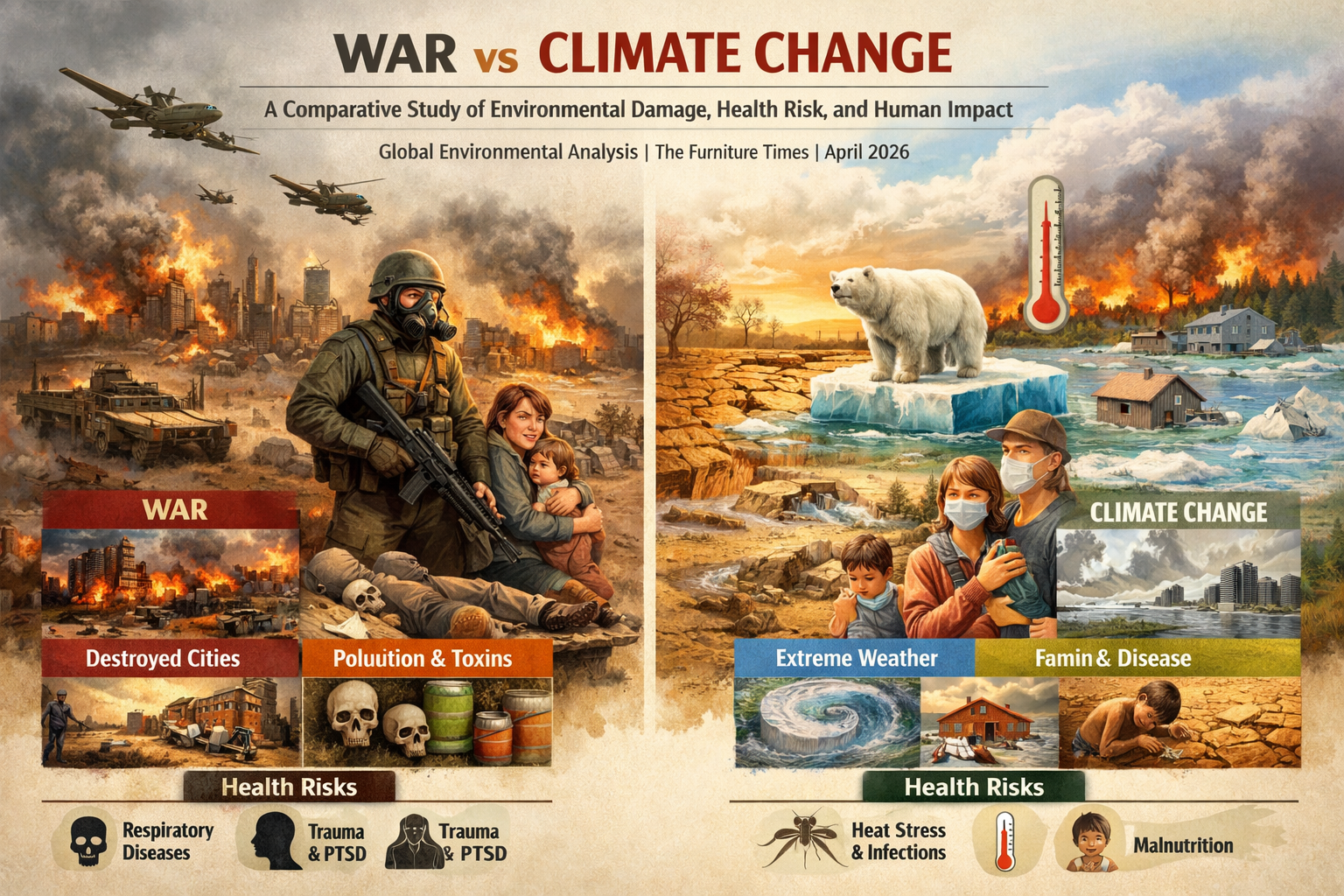
War and climate change are different kinds of crises, but they often damage the same systems: air, water, food, health, infrastructure, and human security. The difference is in speed, scale, and pattern. War tends to create sudden, concentrated, highly destructive environmental shocks in specific places. Climate change creates slower, global, compounding pressure across ecosystems and societies.
1. Speed of damage
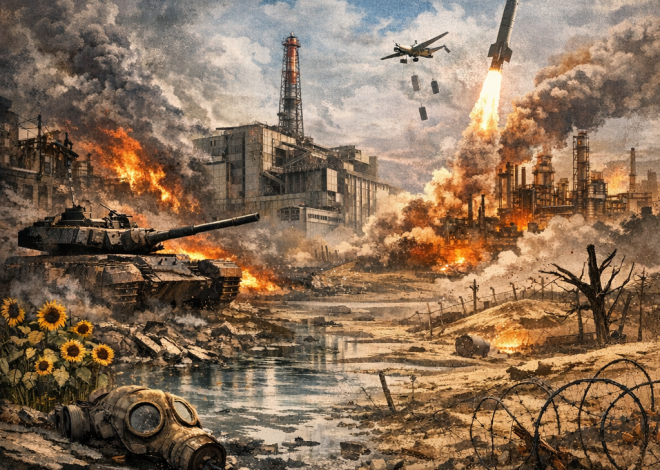
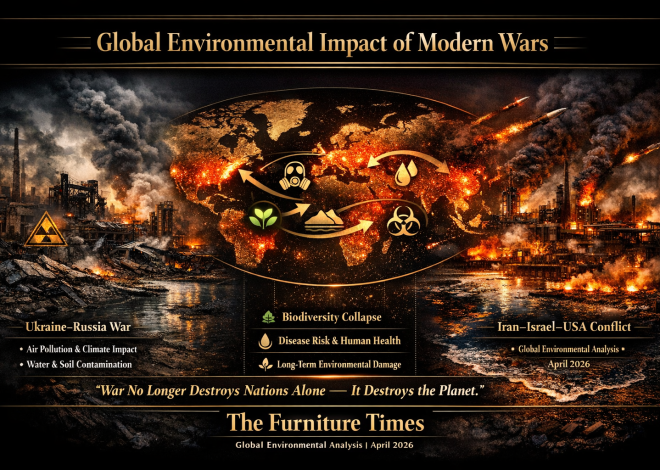
War is usually faster. A single strike on a fuel depot, dam, refinery, hospital, or water plant can produce immediate pollution, unsafe water, displacement, and public-health stress. UNEP warned in 2026 that conflict in the Middle East was already causing hazardous smoke and long-term environmental risk, while WHO says the war in Ukraine has severely damaged energy, water, and health systems.
Climate change is slower, but broader. WHO calls it a “fundamental threat to human health,” and the IPCC says it is driving widespread impacts across ecosystems, food systems, water security, and livelihoods. That makes climate change less visible day to day than war, but more persistent and more universal.
2. Geographic pattern
War damage is usually regional first, global second. Ukraine’s war has created concentrated environmental harm through rubble, fires, infrastructure destruction, and contamination. A 2026 assessment estimated total war-related emissions from Russia’s full-scale invasion since 2022 at 311 million tons CO2e, comparable to France’s annual emissions.
Climate change is global first, regional in expression. Every region is affected, but not in the same way or at the same intensity. The IPCC finds climate risks are widespread and interconnected, and the World Bank warns climate change threatens sustainable development and poverty reduction globally.
3. Environmental mechanism
War damages the environment mainly through:
- explosions and fires
- fuel and chemical releases
- destruction of water, sanitation, and power systems
- debris, unexploded ordnance, and soil contamination
- emergency shifts back toward dirtier fuels and disrupted environmental governance.
Climate change damages the environment mainly through:
- heat extremes
- drought
- floods
- storms
- sea-level rise
- ecosystem degradation and biodiversity loss.
Put simply: war breaks systems abruptly; climate change weakens systems continuously. This is an inference from the sources above.
4. Human health impact
War can trigger immediate health emergencies because it destroys hospitals, disrupts vaccines and treatment, contaminates water, and crowds displaced people into unsafe conditions. WHO’s Ukraine materials repeatedly link war damage to heightened health risk through damaged infrastructure and reduced service capacity.
Climate change acts more as a health-risk multiplier. WHO says it affects the physical environment, social conditions, and health systems, contributing to heat stress, malnutrition, infectious disease risk, and wider health burdens. The World Bank says climate’s negative health effects could push at least 44 million people into extreme poverty by 2030.
So if the question is “which kills faster in one place,” war often does. If the question is “which undermines health for more people over longer time horizons,” climate change is the larger systemic threat. That is an evidence-based inference from WHO, IPCC, and World Bank materials.
5. Carbon and climate effect
War is also a climate problem. The Ukraine war alone has generated very large greenhouse gas emissions, with the 2026 assessment putting the total at 311 million tons CO2e since the full-scale invasion began. The same research indicates war-related fires and reconstruction add substantially to the climate burden.
But climate change is still much larger in cumulative scale. EDGAR estimated global greenhouse gas emissions at 53.2 Gt CO2e in 2024, which shows that even a major war’s emissions, while huge, sit within a much larger planetary emissions system.
That makes war both an environmental disaster in itself and a force that worsens climate change, but not a replacement for the broader climate crisis.
6. Economic and poverty impact
War creates sharp shocks through energy markets, food trade, displacement, and destruction of productive capacity. Climate change creates longer-run drag through lower yields, infrastructure damage, health costs, and poverty traps. The World Bank’s climate-poverty work shows climate change can push tens of millions more people into poverty, mainly through food prices and agricultural impacts.
The practical difference is this: war often produces acute collapse, while climate change produces chronic erosion. For poor and fragile populations, both can interact and reinforce each other.
7. Which is worse?
There is no honest one-word answer.
If you are comparing:
- immediacy
- local destruction
- sudden human suffering
then war is often worse in the short term.
If you are comparing:
- global scale
- long-term environmental destabilization
- number of people exposed over time
- economic and health-system burden
then climate change is the larger enduring threat.
Final conclusion
War and climate change should not be treated as separate issues anymore. War causes direct ecological damage and often increases emissions. Climate change makes societies more fragile, which can worsen instability, disease risk, and humanitarian crises. The strongest conclusion from current evidence is this:
War is a violent environmental shock. Climate change is a slow planetary destabilizer. Together, they multiply human vulnerability.