The Global Furniture Industry Could Lose $120 Billion if the War Expands — Here’s Why
Global Analysis | The Furniture Times
The global furniture industry, valued at nearly $700 billion, may be heading toward one of its most severe disruptions in modern history if geopolitical tensions continue to escalate.
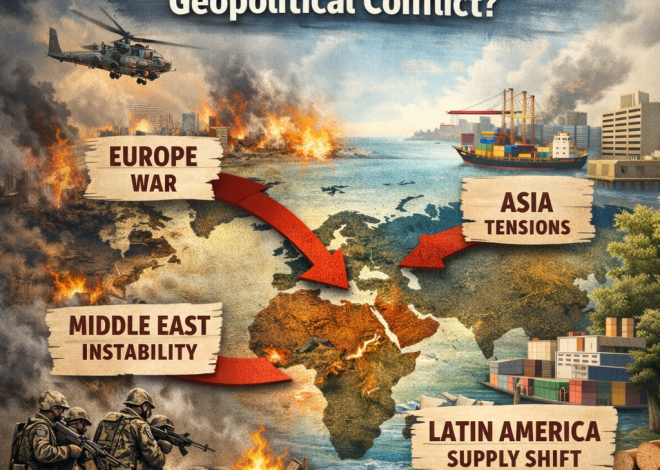
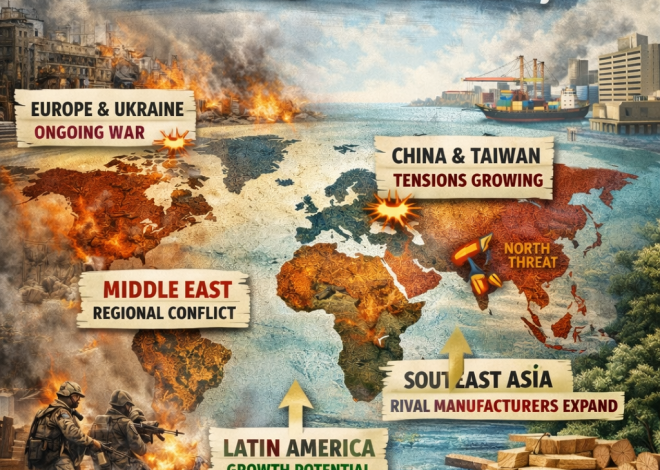
The ongoing conflict involving the United States, Israel, and Iran is already shaking global energy markets, international trade routes, and economic stability.
While the war’s immediate focus is political and military, its economic consequences could ripple across industries worldwide. Among the most vulnerable sectors is the global furniture industry, which relies heavily on international supply chains, raw materials, and consumer demand.
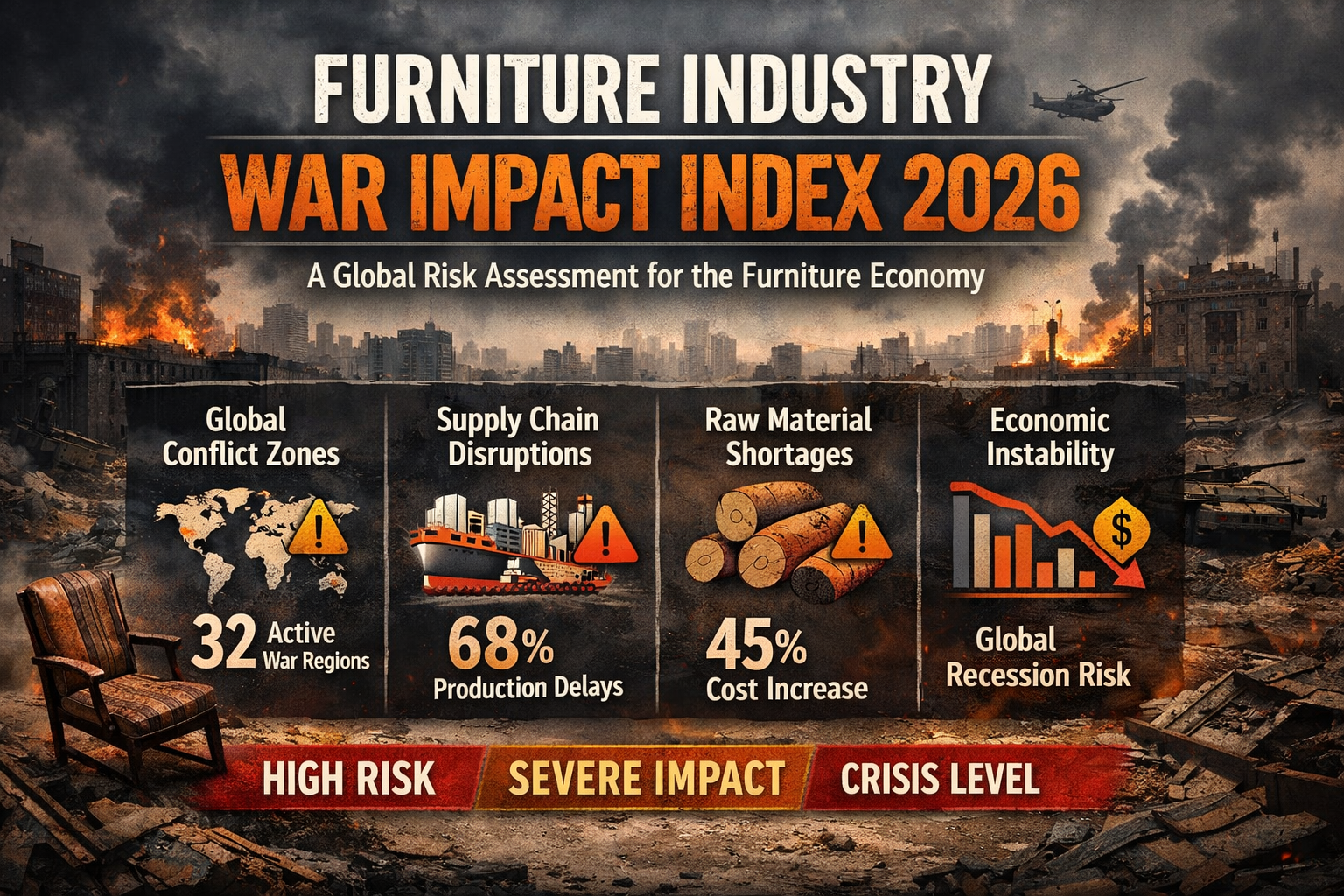
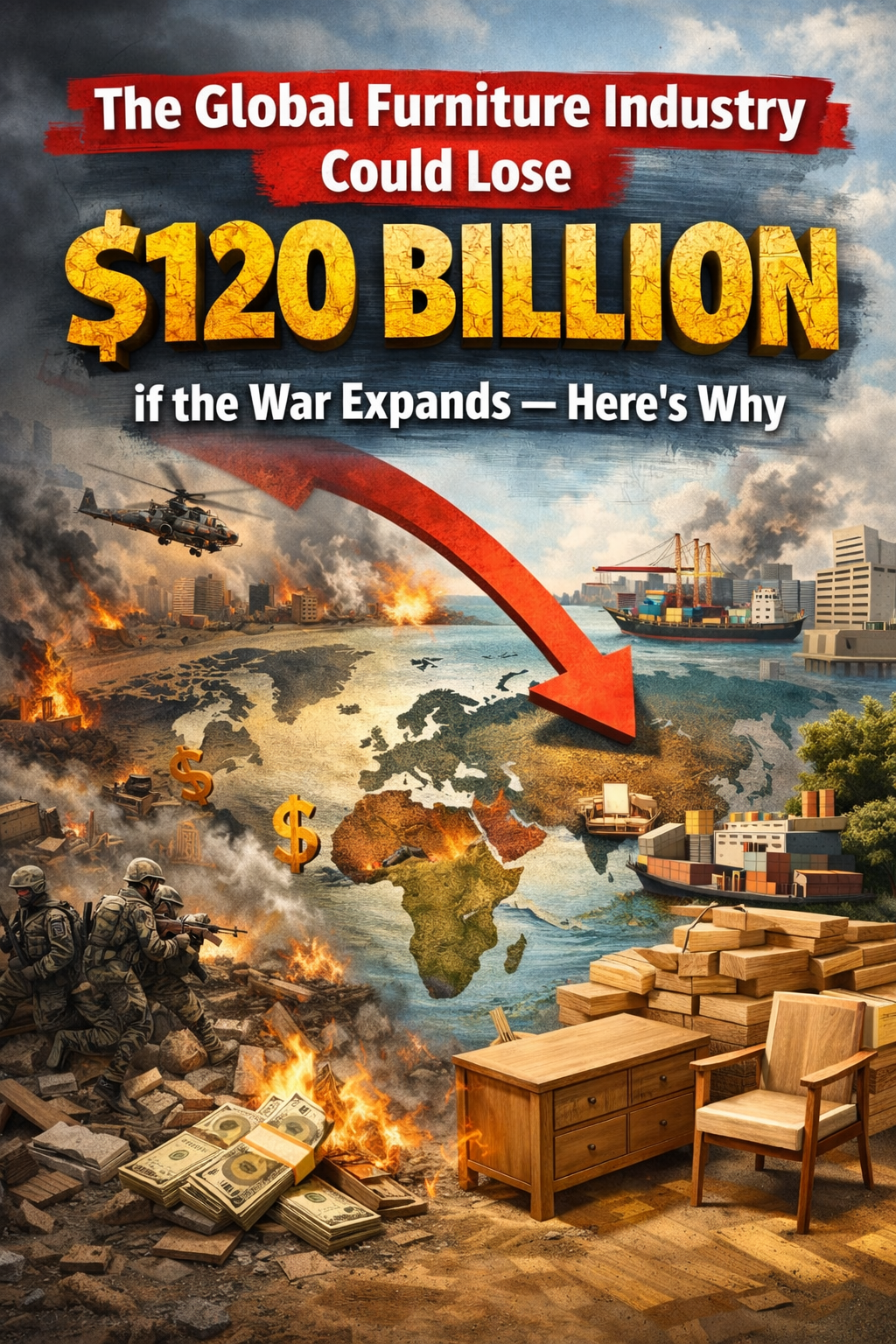
According to analysis by The Furniture Times, the industry could face losses exceeding $120 billion globally if the conflict expands or triggers a prolonged economic slowdown.
Why the Furniture Industry Is So Vulnerable
Unlike many other manufacturing sectors, furniture production depends on a combination of energy, logistics, construction markets, and global consumer spending.
When geopolitical conflicts destabilize these systems simultaneously, the furniture industry experiences a cascading effect of disruption.
Key vulnerabilities include:
• energy price volatility
• shipping and logistics disruptions
• rising raw material costs
• declining consumer spending
• slowing housing construction
Together, these factors can create a perfect storm for furniture manufacturers and retailers worldwide.
Energy Shock Could Increase Manufacturing Costs
Furniture manufacturing requires significant energy resources.
Factories rely on electricity and fuel for:
• wood processing
• kiln drying
• metal fabrication
• upholstery production
• logistics and transportation
If conflict-driven instability drives oil and gas prices significantly higher, manufacturing costs could rise sharply.
Petroleum-based materials used in furniture—including foam, plastics, adhesives, and coatings—would also become more expensive.
For manufacturers operating on narrow profit margins, sustained energy price increases could result in reduced production or higher retail prices.
Global Shipping Routes Under Pressure
Furniture is one of the most globally traded consumer goods.
Products frequently travel thousands of kilometers between manufacturing hubs and retail markets.
Conflict-related disruptions could affect:
• shipping insurance costs
• container availability
• freight rates
• delivery timelines
When maritime logistics slow down, the entire furniture supply chain becomes vulnerable to delays and shortages.
This could significantly impact exporters in Asia and retailers in Europe and North America.
Raw Material Markets Could Become Unstable
Furniture production depends on a wide range of materials whose prices are closely tied to global commodity markets.
These include:
• timber
• steel
• aluminum
• textiles
• petrochemical foams
Geopolitical conflicts often trigger sudden fluctuations in commodity prices.
If raw material costs rise sharply, manufacturers may face difficult decisions between absorbing higher expenses or passing them on to consumers.
Consumer Spending Could Collapse
Perhaps the most significant threat lies in consumer behavior.
Furniture purchases are often postponed during economic uncertainty.
If geopolitical conflict drives global inflation, financial instability, or recession fears, households may delay major purchases such as:
• sofas
• beds
• dining tables
• office furniture
Retailers could experience declining sales across multiple markets simultaneously.
Housing and Construction Could Slow Down
The furniture industry is closely tied to the real estate sector.
New homes, hotels, offices, and retail spaces require furniture.
However, geopolitical instability often leads to:
• higher interest rates
• reduced investment in construction projects
• slower housing markets
A slowdown in construction activity could further reduce furniture demand worldwide.
A Potential $120 Billion Industry Shock
When combining the potential impacts of:
• higher manufacturing costs
• disrupted logistics
• raw material inflation
• declining consumer demand
• slower construction activity
the total economic impact could exceed $120 billion globally, according to industry projections analyzed by The Furniture Times.
Such a scenario would represent one of the largest disruptions the furniture industry has faced in decades.
Industry Response: Adaptation and Resilience
Despite the risks, the industry is already exploring strategies to mitigate future disruptions.
These include:
• regionalizing manufacturing closer to consumer markets
• diversifying supply chains across multiple countries
• investing in automation and efficiency
• adopting sustainable and recycled materials
Companies that successfully adapt to geopolitical volatility may emerge stronger in the long term.
The Furniture Times Perspective
For The Furniture Times, the unfolding geopolitical situation represents more than a short-term crisis.
It signals a fundamental shift in how global industries must operate.
The furniture sector—once driven primarily by design, craftsmanship, and cost efficiency—must now also navigate energy markets, geopolitics, and supply chain resilience.
If the current conflict expands or prolongs economic instability, the industry could face a historic turning point.
The question is no longer whether global conflict affects furniture.
It is how deeply it will reshape the industry in the years ahead.