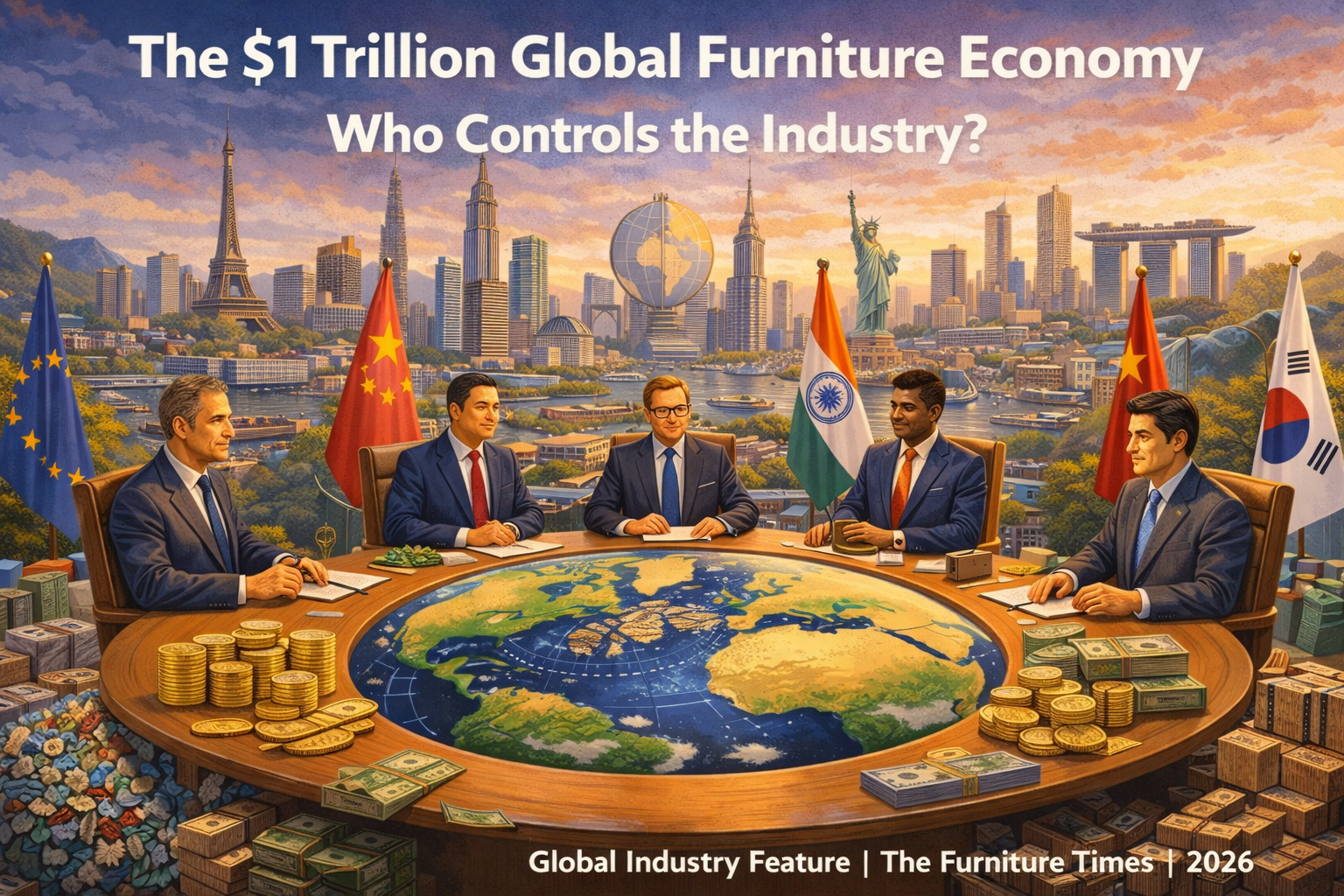
The $1 Trillion Global Furniture Economy
Who Controls the Industry?
Global Industry Feature | The Furniture Times | 2026
The furniture industry may appear to revolve around design, comfort, and aesthetics, but behind every sofa, table, and cabinet lies a vast global economic system. Today, the furniture sector represents one of the largest consumer manufacturing industries in the world, generating hundreds of billions of dollars annually and employing millions of people across continents.
Industry analysts estimate that the global furniture market is approaching $800 billion in value and could surpass $1 trillion within the next decade. This enormous ecosystem spans raw material suppliers, manufacturers, designers, logistics companies, retailers, and technology platforms.
But the critical question remains: who truly controls the global furniture economy?
The Four Pillars of the Furniture Economy
The furniture industry is shaped by four interconnected pillars that determine how products are designed, manufactured, distributed, and sold.
Manufacturing Powerhouses
Manufacturing remains the backbone of the furniture economy. Large-scale factories across Asia, Europe, and North America produce millions of furniture products each year.
Some of the most influential companies include:
- IKEA
- Ashley Furniture Industries
- Steelcase
- Herman Miller
- Natuzzi
These organizations operate massive manufacturing networks and global distribution systems that supply furniture to markets around the world.
Global Design Leaders
Design has always been one of the most powerful forces in the furniture industry. Cities such as Milan, Copenhagen, and Paris serve as creative hubs where designers shape global trends.
Influential designers such as Philippe Starck and Patricia Urquiola have helped redefine modern furniture aesthetics through innovative materials and forms.
Design leadership plays a critical role in determining which brands achieve global recognition.
Retail Giants
Retail companies determine how furniture reaches consumers. Some retailers operate thousands of showrooms, while others rely on digital platforms to sell products globally.
Major players include:
- Wayfair
- Ashley HomeStore
- Crate & Barrel
- West Elm
Retail innovation—especially through e-commerce—has dramatically changed how furniture is marketed and purchased.
Logistics and Global Trade
Furniture products travel long distances before reaching consumers. Raw materials are often sourced from one country, manufactured in another, and sold in markets thousands of miles away.
Global shipping routes connect manufacturing hubs in Asia to consumer markets in North America, Europe, and the Middle East.
Efficient logistics networks have become essential for maintaining competitive pricing and reliable supply chains.
Asia’s Growing Influence
Over the past two decades, Asia has become the dominant force in furniture manufacturing.
Countries such as:
- China
- Vietnam
- Malaysia
- India
have built powerful manufacturing ecosystems capable of producing furniture at massive scale.
These regions combine skilled labor, industrial infrastructure, and export logistics that allow them to supply global markets.
Europe’s Role in Design and Luxury
While Asia dominates production, Europe remains the heart of premium furniture design.
Italian manufacturers in particular are internationally respected for combining craftsmanship with contemporary design.
European furniture brands often focus on:
• high-end residential furniture
• luxury hospitality interiors
• architectural furniture systems
This design leadership allows European companies to command premium prices in global markets.
The Rise of Technology in Furniture
Technology is increasingly shaping the future of the furniture industry.
Emerging innovations include:
- AI-assisted furniture design
- smart connected furniture
- robotic manufacturing systems
- augmented reality shopping tools
These technologies allow companies to produce furniture more efficiently while offering consumers more personalized experiences.
Sustainability and the Next Furniture Economy
Environmental responsibility is becoming one of the most important forces shaping the future of the furniture industry.
Manufacturers are investing in:
• recycled materials
• responsible forestry
• low-emission manufacturing
• circular production systems
Consumers are increasingly choosing products that demonstrate environmental responsibility.
The Next Decade of the Furniture Industry
The furniture industry is entering a new era defined by innovation, sustainability, and global connectivity.
Several trends are expected to shape the next decade:
- growth of smart furniture technologies
- expansion of digital retail platforms
- stronger sustainability regulations
- diversification of global supply chains
Companies that successfully adapt to these changes will likely dominate the next phase of industry development.
A Global Industry Built on Creativity and Commerce
Despite its vast economic scale, the furniture industry remains deeply connected to human creativity.
Behind every product lies the collaboration of designers, engineers, manufacturers, and retailers working together to shape how people live and interact with their spaces.
As the global furniture economy approaches the $1 trillion milestone, understanding the forces that control this industry will become increasingly important for businesses, investors, and consumers alike.