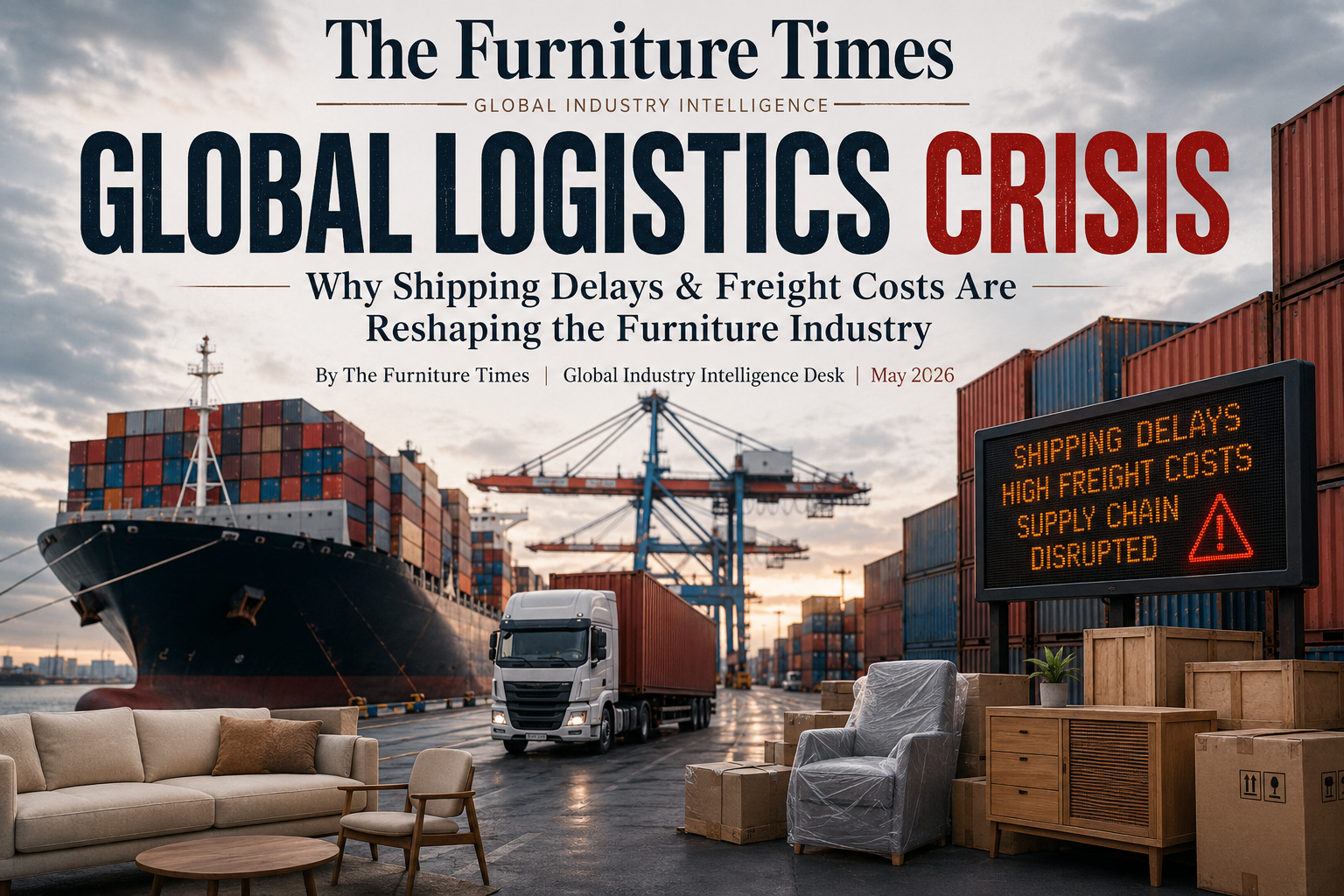
Why Shipping Delays & Freight Costs Are Reshaping the Furniture Industry
Global Logistics Crisis | The Furniture Times
By The Furniture Times | Global Industry Intelligence Desk | May 2026
The global furniture industry is facing one of the most serious logistics disruptions in modern history.
Shipping delays, rising freight costs, geopolitical instability, and global port congestion are reshaping how furniture moves across the world.
What was once considered a backend operational issue has now become one of the biggest strategic challenges affecting:
- manufacturers
- exporters
- retailers
- hospitality projects
- buyers
- consumers
Because furniture is not a lightweight product.
It depends heavily on:
- containers
- sea freight
- warehousing
- trucking
- port efficiency
- global shipping stability
When logistics break down, the entire furniture ecosystem feels the impact.
The furniture industry does not move without logistics.
And today, global logistics is under pressure.
The Red Sea Crisis Has Changed Global Shipping Dynamics
One of the biggest disruptions affecting global trade is the instability surrounding the Red Sea shipping corridor.
The Red Sea is one of the world’s most critical maritime trade routes, connecting:
- Asia
- Europe
- the Middle East
- Africa
For furniture exporters, this route is essential.
Why the Red Sea Matters
A large percentage of furniture shipments between:
- Asia and Europe
- Asia and the Middle East
traditionally move through:
- the Suez Canal
- the Red Sea corridor
When security risks increase in the region, shipping companies respond by:
- rerouting vessels
- avoiding high-risk zones
- increasing insurance costs
- extending delivery times
The Result
Furniture businesses globally face:
- slower shipping
- delayed inventory
- higher freight charges
- unpredictable delivery schedules
One geopolitical disruption in a shipping corridor can affect furniture pricing worldwide.
1. Container Pricing Has Become Volatile Again
Container shipping costs remain one of the biggest pain points for furniture businesses.
Because furniture occupies large shipping volume, freight costs significantly affect profitability.
What Businesses Are Facing
- rising container prices
- unpredictable freight rates
- booking delays
- container shortages in some regions
Why Furniture Is Especially Vulnerable
Unlike smaller consumer goods, furniture:
- takes more space
- requires careful handling
- depends heavily on full-container efficiency
When container prices rise sharply:
- profit margins shrink
- retail prices increase
- project budgets expand
Freight costs are now influencing furniture pricing almost as much as manufacturing costs.
2. Port Delays Are Slowing the Entire Supply Chain
Port congestion and operational delays continue affecting global logistics networks.
Furniture businesses are increasingly experiencing:
- delayed container unloading
- customs bottlenecks
- warehouse congestion
- trucking delays
The Ripple Effect
A delayed container does not only affect:
- one shipment
It affects:
- retailers waiting for stock
- hotels waiting for installation
- homeowners waiting for delivery
- factories waiting for payments
Time Has Become Expensive
Delays increase:
- storage costs
- operational stress
- customer frustration
- cash-flow pressure
In the modern furniture economy, delayed logistics often means delayed revenue.
3. Project-Based Furniture Businesses Are Under Pressure
The hospitality and commercial sectors are especially vulnerable to logistics disruption.
Projects involving:
- hotels
- offices
- restaurants
- retail spaces
- residential towers
depend heavily on:
- precise timelines
- coordinated installations
- synchronized deliveries
What Happens When Logistics Slow?
- projects delay
- penalties increase
- contractor pressure rises
- buyers lose confidence
The FF&E Challenge
Furniture, Fixtures & Equipment (FF&E) supply chains are highly time-sensitive.
One delayed container can disrupt:
- hotel openings
- office launches
- real estate handovers
Logistics uncertainty is becoming a project management crisis.
4. Rising Logistics Costs Are Reaching Consumers
Eventually, higher logistics costs reach the consumer.
Furniture retailers increasingly face difficult decisions:
- absorb costs
- reduce margins
- increase prices
Many are now forced to pass some costs to buyers.
Consumers Are Experiencing
- higher prices
- longer delivery times
- reduced inventory availability
- delayed customization orders
The Emotional Impact
Consumers increasingly feel uncertain about:
- delivery reliability
- pricing stability
- waiting times
This affects purchasing behavior. Logistics problems are becoming customer experience problems.
5. Manufacturers Are Being Forced to Rethink Strategy
Furniture manufacturers globally are adapting their logistics models.
Many companies are now:
- diversifying shipping routes
- increasing regional warehousing
- reducing dependence on single ports
- shifting closer to regional markets
The Rise of Regional Manufacturing
Countries such as:
- Vietnam
- Malaysia
- India
- United Arab Emirates
are becoming increasingly important in regional supply-chain diversification. The future supply chain may become more distributed and regionalized.
6. Visibility & Communication Matter More During Logistics Crisis
When delays happen, buyers demand:
- faster updates
- accurate tracking
- responsive communication
Furniture businesses that fail to communicate effectively risk losing trust quickly.
This Creates a New Industry Need
The industry increasingly requires:
- structured communication systems
- faster inquiry handling
- live updates
- connected supplier ecosystems
Why This Matters
In uncertain logistics environments:
- visibility creates trust
- communication creates confidence
- responsiveness creates competitive advantage
Businesses that communicate clearly during crisis build stronger customer relationships.
7. The Furniture Industry Is Entering the “Logistics Resilience Era”
The old furniture supply-chain model prioritized:
- low-cost production
- centralized sourcing
- efficiency
The new model prioritizes:
- resilience
- flexibility
- regional sourcing
- faster adaptation
Businesses Are Increasingly Focusing On
- supplier diversification
- backup logistics routes
- inventory flexibility
- digital infrastructure
- real-time visibility
TFT Deep Industry Insight
The logistics crisis is revealing a deeper truth:
The furniture industry is still too dependent on fragile global systems.
The future winners may not simply be:
- the cheapest manufacturers
- the largest factories
But the companies that can:
- adapt quickly
- source intelligently
- communicate transparently
- diversify supply chains
- operate inside connected digital ecosystems
Strategic Recommendations
For Manufacturers
Build regional sourcing flexibility and diversify logistics planning.
For Retailers
Improve delivery transparency and customer communication.
For Exporters
Reduce dependence on single shipping routes or ports.
For Industry Platforms
Connected communication infrastructure and supplier visibility systems will become increasingly critical during logistics uncertainty.
Final Thought
The global logistics crisis is no longer a temporary disruption.
It is reshaping how the furniture industry:
- manufactures
- ships
- sources
- sells
- communicates
The future furniture economy may belong to businesses that are not only efficient…
but resilient, visible, and adaptable under pressure.

Related Posts
Global Furniture Industry Shows Signs of Strategic Transformation Amid Economic Uncertainty
Why Core Values Will Become the New Competitive Advantage in the Furniture Industry