Global Furniture Risk Map 2026
How Geopolitical Conflict Could Reshape the Furniture Industry
Published by: The Furniture Times Research
Introduction
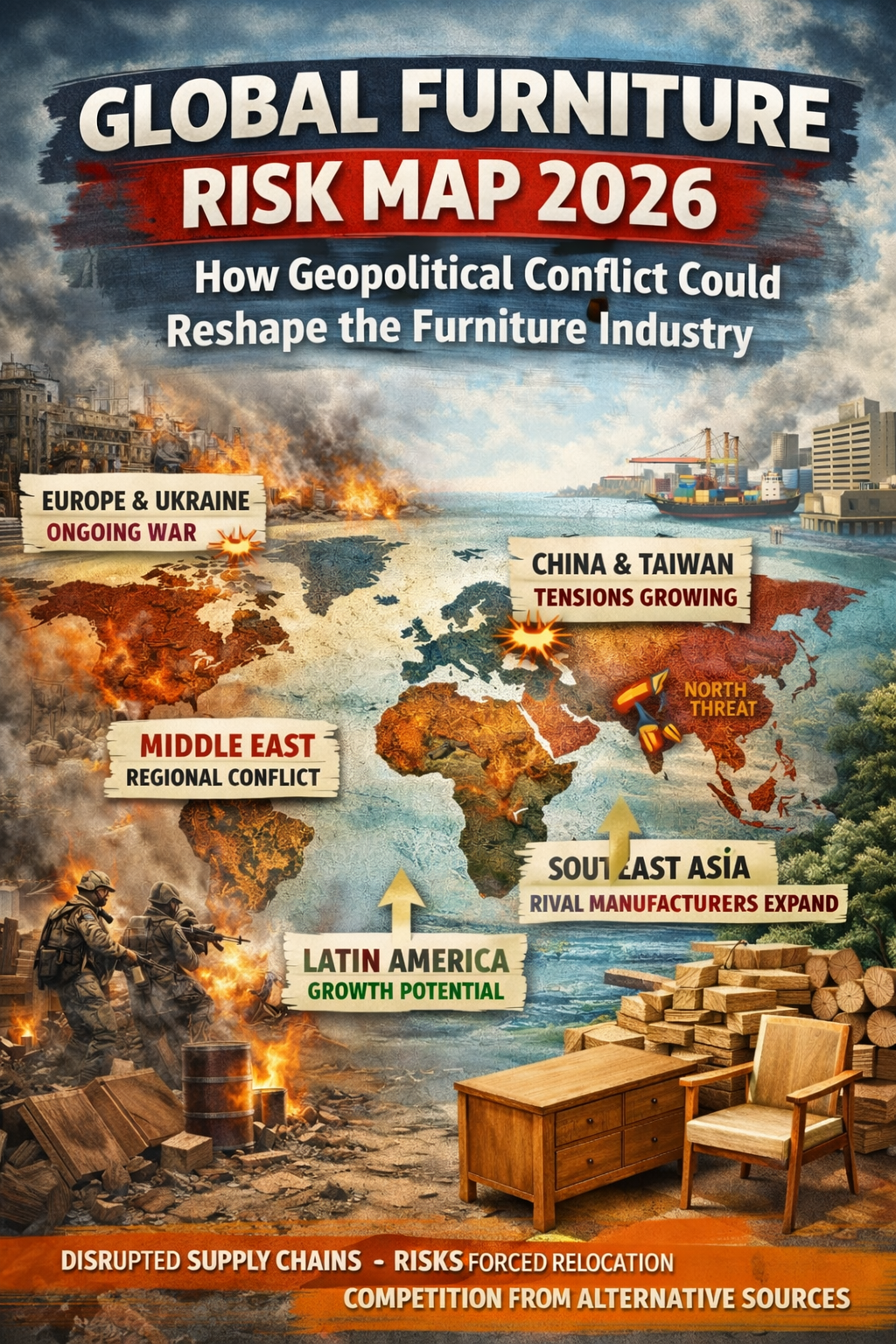
The Global Furniture Risk Map 2026 highlights how geopolitical tensions and military conflicts could affect furniture manufacturing, trade, logistics, and retail markets across the world.
With rising tensions involving the United States, Israel, and Iran, global supply chains are facing increasing uncertainty.
Because the furniture industry relies on international logistics, raw material supply, energy markets, and consumer demand, geopolitical shocks can rapidly impact production and trade worldwide.
This risk map categorizes regions based on their exposure to conflict-driven economic disruption.
Risk Levels Explained
Very High Risk
Regions directly exposed to geopolitical instability or heavily dependent on energy imports and shipping routes.
High Risk
Major furniture manufacturing hubs reliant on global exports and supply chains.
Moderate Risk
Markets with diversified supply chains and stronger domestic demand.
Lower Risk
Regions less dependent on global logistics networks.
Global Furniture Risk Map 2026
Very High Risk Regions
Middle East
Countries in the Middle East face the highest risk due to direct geopolitical tensions.
Key risks include:
• supply chain interruptions
• energy infrastructure threats
• reduced foreign investment
Furniture production in the region could slow significantly if the conflict escalates.
High Risk Regions
Asia-Pacific
The Asia-Pacific region is the largest global furniture manufacturing hub.
Major exporting nations include:
• China
• Vietnam
• Malaysia
• Indonesia
These economies rely heavily on global trade routes and container shipping networks.
Disruptions in energy markets and maritime transport could significantly affect exports.
Europe
Europe is a major furniture production and consumption market but remains vulnerable due to energy dependence and economic sensitivity to global instability.
Higher energy costs may impact:
• manufacturing
• transportation
• raw material processing
Moderate Risk Regions
North America
The furniture industry in the United States and Canada benefits from relatively strong domestic demand.
However, risks remain:
• higher logistics costs
• imported component disruptions
• inflation-driven consumer demand slowdown
Latin America
Some countries could benefit from near-shoring opportunities as companies diversify supply chains away from long-distance manufacturing hubs.
This could increase investment in regional furniture production.
Emerging Opportunity Regions
South Asia
Countries like India and Bangladesh may see increased interest from global companies seeking alternative production hubs.
Lower labor costs and growing domestic markets could attract new investments.
Key Global Industry Risks
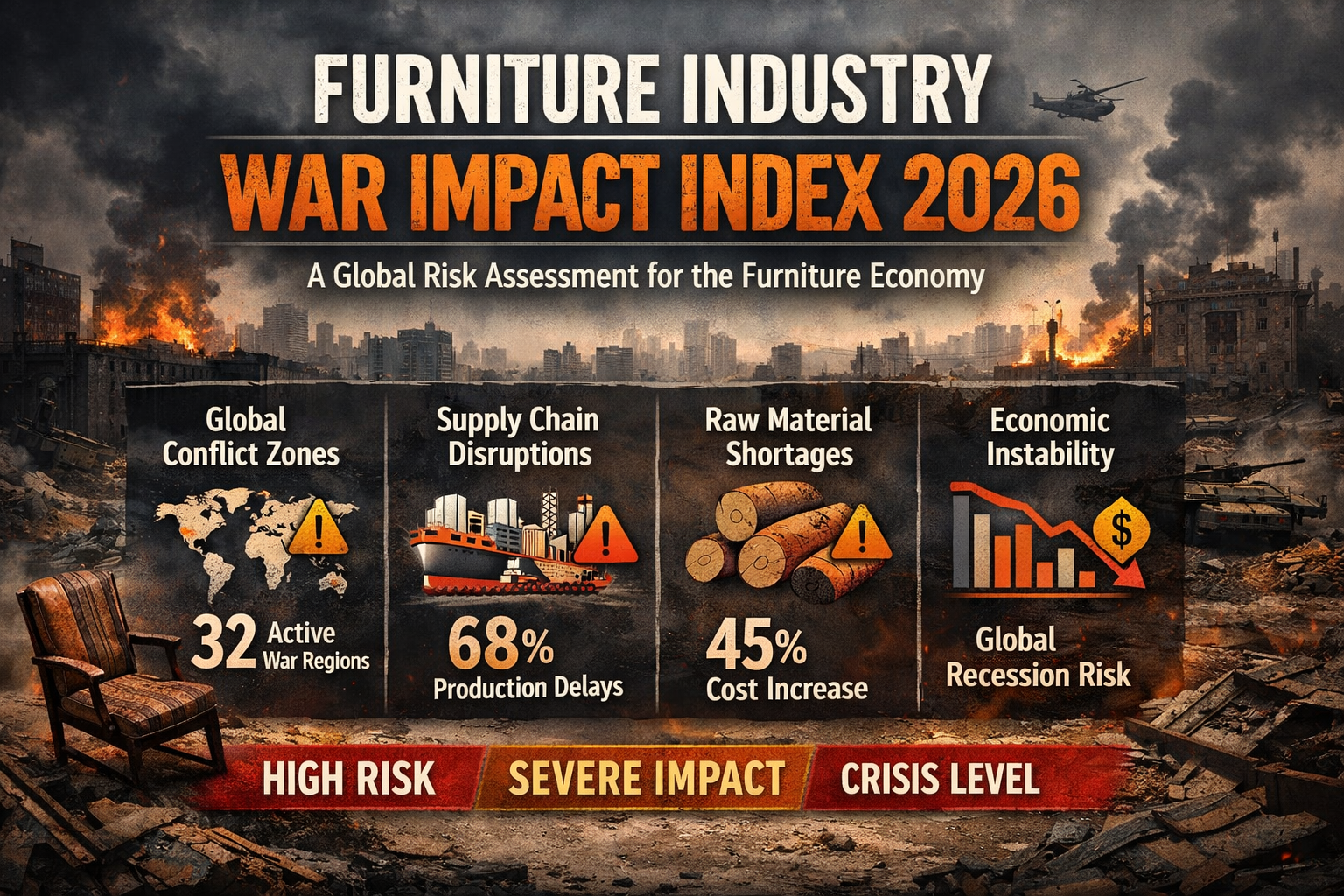
According to the Furniture Industry War Impact Index 2026, five critical risks could reshape the industry:
Energy Price Shock
Rising oil prices affect:
• transportation costs
• foam and plastics production
• factory energy consumption
Shipping Disruptions
Global furniture trade depends heavily on maritime routes linking Asia, Europe, and North America.
War-related disruptions could delay shipments and increase freight costs.
Raw Material Inflation
Materials such as steel, aluminum, and petrochemicals are highly sensitive to geopolitical instability.
Consumer Spending Decline
Economic uncertainty may cause households to postpone furniture purchases.
Construction Slowdown
Furniture demand is closely tied to housing development and commercial construction.
A global slowdown could reduce demand for furniture across residential, hospitality, and office sectors.
Strategic Implications for the Industry
The Global Furniture Risk Map 2026 suggests that the industry may move toward:
Regional Manufacturing
Companies may build production closer to key consumer markets.
Supply Chain Diversification
Manufacturers may source materials from multiple countries to reduce geopolitical exposure.
Investment in Logistics Technology
Tracking systems and predictive supply chain analytics could become essential.
The Furniture Times Perspective
For The Furniture Times, the Global Furniture Risk Map 2026 highlights a major shift in how the furniture industry must think about risk.
Historically driven by cost efficiency and global trade, the industry may now need to prioritize resilience, diversification, and geopolitical awareness.
As international tensions reshape global commerce, companies that adapt quickly will be best positioned to navigate the challenges ahead.
The furniture industry is entering a new era where geopolitical strategy may become as important as design, manufacturing, and marketing.