Furniture Startups Redefining the Global Industry
By The Furniture Times Editorial Board
The Future of Furniture: Innovation, Markets & Movers
Introduction: A Once-Traditional Industry at a Turning Point
The global furniture industry is undergoing one of the most significant transformations in its history. Once dominated by legacy manufacturers, physical showrooms, and long product cycles, the sector is now being reshaped by a new generation of furniture startups that are digital-first, sustainability-driven, and deeply customer-centric.
From customizable modular furniture and AI-powered design platforms to subscription-based ownership models and circular resale ecosystems, startups are redefining not only how furniture is sold, but also how it is designed, owned, reused, and valued.
At The Furniture Times, we see this shift not as disruption alone, but as evolution—one that established brands, manufacturers, and policymakers must understand and adapt to.
Why Furniture Startups Are Gaining Momentum
Furniture startups are succeeding because they are built for modern lifestyles and modern consumers. Their growth is driven by three core forces:
1. Digital-First Consumer Behavior
Today’s buyers research online, compare instantly, and expect transparency. Furniture startups meet these expectations through:
- Online configurators and customization tools
- AR/VR visualization before purchase
- Direct-to-consumer (D2C) models eliminating intermediaries
This digital fluency has significantly reduced friction in a category once considered “difficult” to buy online.
2. Personalization Over Mass Production
Unlike traditional mass manufacturing, startups focus on made-to-fit, made-to-order, and made-for-you furniture. Customers can choose dimensions, materials, colors, and finishes—transforming furniture from a commodity into a personal expression of lifestyle.
3. Sustainability as a Core Principle
Circular economy models—such as buy-back programs, refurbished furniture, rental services, and modular designs—are not add-ons for startups. They are foundational. This aligns strongly with global sustainability goals and evolving consumer values.
Key Startup Models Transforming the Furniture Ecosystem
🔹 Customization & Design-Tech Startups
These companies leverage AI, AR, and digital configuration tools to allow customers to design furniture in real time. This approach:
- Reduces returns
- Improves customer confidence
- Shortens design-to-production cycles
🔹 Marketplace & Platform-Based Brands
Furniture marketplaces aggregate thousands of sellers and manufacturers, offering scale, variety, and competitive pricing. They empower small manufacturers to reach global audiences without building their own digital infrastructure.
🔹 Subscription & Furniture-as-a-Service Models
Urbanization, mobility, and remote work have fueled demand for flexible furniture ownership. Subscription-based startups allow users to rent, swap, or return furniture—reshaping the concept of ownership itself.
🔹 Circular & Second-Hand Furniture Startups
Refurbishment, resale, and recommerce platforms are gaining traction globally, proving that sustainability and profitability can coexist in the furniture sector.
What Legacy Furniture Brands Must Learn—Now
Furniture startups are not replacing traditional manufacturers—but they are raising expectations. To remain competitive, established brands must:
- Invest in digital infrastructure and omnichannel retail
- Integrate customization and personalization
- Embrace circular economy strategies
- Shift branding from product-led to experience- and lifestyle-led
- Use data to understand evolving consumer behavior
Those who adapt will scale faster and build resilience. Those who resist risk long-term irrelevance.
Regional Signals: Where Change Is Accelerating
- Asia-Pacific is emerging as both a manufacturing powerhouse and a digital innovation hub, driven by urban growth and export-focused startups.
- North America is leading in subscription models, resale platforms, and AI-driven customer experience.
- Europe continues to influence sustainability standards and circular furniture regulations.
The global furniture market is no longer linear—it is interconnected, digital, and borderless.
The Furniture Times Editorial Insight
Furniture startups are not just building businesses; they are redefining the furniture lifecycle. Their success signals a broader shift toward flexibility, sustainability, and personalization—values that will define the industry’s next decade.
For manufacturers, retailers, designers, investors, and policymakers, the message is clear:
Innovation is no longer optional. It is the cost of relevance.
At The Furniture Times, we will continue to bring you global furniture news, startup insights, expert interviews, success stories, press releases, awards, and market intelligence—keeping you ahead of the curve in a rapidly evolving industry.

Related Posts
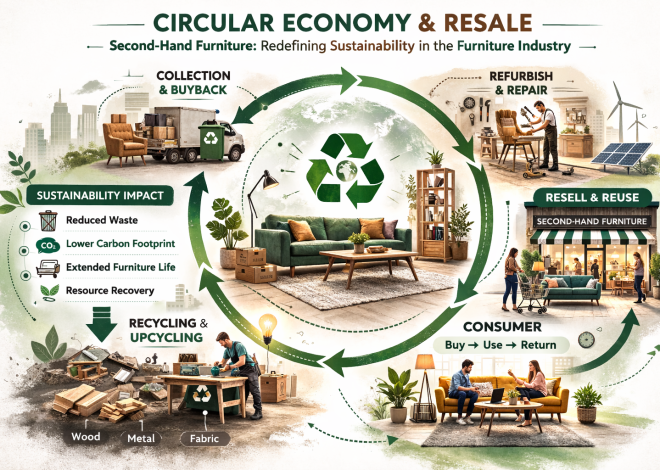
Circular Economy, Resale & Second-Hand Furniture: Redefining Sustainability in the Furniture Industry
Malaysia’s Furniture & Furnishing Industry — Size, Opportunities, and Why Now Is the Time to Build