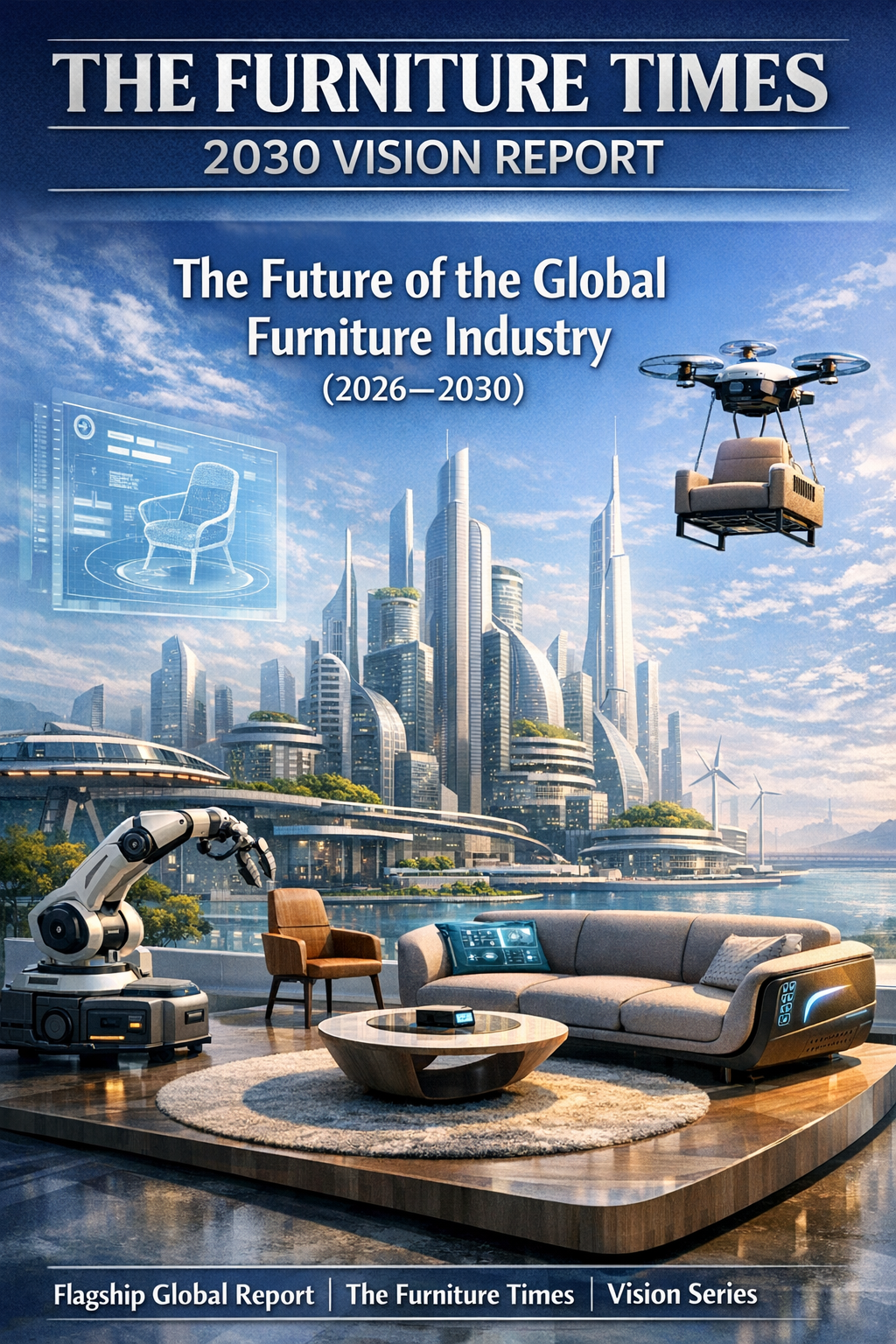
The Furniture Times 2030 Vision Report
The Future of the Global Furniture Industry (2026–2030)
Flagship Global Report | The Furniture Times | Vision Series
The global furniture industry is entering one of the most transformative decades in its history. Driven by technology, sustainability, changing lifestyles, and evolving economic conditions, the sector is rapidly moving toward a new model of production, consumption, and innovation.
By 2030, the furniture industry is expected to surpass $1 trillion in global market value, reshaping how people live, work, and interact with their spaces.
This Furniture Times 2030 Vision Report explores the major forces that will define the future of the industry.
1. The Rise of Smart Furniture Ecosystems
Furniture will no longer be passive—it will become interactive and intelligent.
By 2030, smart furniture is expected to include:
- beds that monitor sleep and health
- desks with integrated productivity systems
- sofas with embedded technology
- connected home furniture ecosystems
Furniture will integrate seamlessly into smart homes, creating a more responsive living environment.
2. The Shift from Ownership to Access
The concept of ownership is changing.
Consumers—especially in urban areas—are increasingly choosing:
- rental furniture
- subscription models
- flexible upgrade systems
Companies like Furlenco represent the early stages of this transformation.
By 2030, furniture may become a service-based industry rather than purely product-based.
3. Sustainable and Circular Manufacturing
Sustainability will move from a trend to a requirement.
Future furniture production will focus on:
- recycled and renewable materials
- circular production systems
- waste-to-furniture innovation
- carbon-neutral manufacturing
Governments and consumers will push companies toward more responsible production models.
4. AI and Design Automation
Artificial intelligence will redefine how furniture is designed.
AI tools will enable:
- rapid prototyping
- personalized furniture design
- predictive design trends
- optimized material usage
Designers will collaborate with AI to create more efficient and innovative products.
5. Hyper-Automated Manufacturing
Factories will become more advanced and automated.
By 2030, furniture manufacturing will increasingly rely on:
- robotics
- digital production systems
- smart factories
- real-time data monitoring
This will improve efficiency, reduce waste, and increase production speed.
6. The Growth of Modular Living
Urbanization is reshaping living spaces.
As homes become smaller, furniture must become more adaptable.
Key trends include:
- multifunctional furniture
- modular systems
- space-saving designs
- transformable furniture
This will be especially important in high-density cities.
7. Digital Furniture Retail Revolution
Furniture retail will become fully integrated across digital and physical platforms.
Future retail experiences will include:
- augmented reality shopping
- virtual showrooms
- AI-driven recommendations
- direct-to-consumer models
Showrooms will evolve into experience centers rather than inventory spaces.
8. Regional Manufacturing Shifts
Global production will become more diversified.
While Asia will remain dominant, manufacturing will expand into:
- India
- Eastern Europe
- Latin America
- Africa
Companies will reduce risk by building multi-region supply chains.
9. Furniture as Part of Lifestyle Ecosystems
Furniture will no longer be sold as individual items but as part of integrated living solutions.
Future offerings may include:
- bundled home solutions
- subscription-based living packages
- smart home integration
- personalized interior systems
Furniture brands will become lifestyle platforms.
10. The Rise of Sustainable Consumers
Consumer expectations are changing rapidly.
By 2030, buyers will prioritize:
- sustainability
- durability
- ethical sourcing
- brand transparency
Companies that fail to meet these expectations risk losing market relevance.
The Global Furniture Industry in 2030
By the end of the decade, the furniture industry will be defined by:
- intelligent products
- flexible ownership models
- sustainable production
- digital ecosystems
- global connectivity
The industry will shift from a product-driven model to a service-driven, experience-focused ecosystem.
Strategic Implications for Businesses
Manufacturers Must:
- invest in automation
- adopt sustainable materials
- diversify supply chains
Retailers Must:
- integrate digital and physical channels
- explore subscription models
- focus on customer experience
Designers Must:
- embrace technology
- design for flexibility and sustainability
- innovate for smaller living spaces
Final Insight
The furniture industry is not just evolving—it is transforming.
The companies that succeed by 2030 will be those that understand one key principle:
👉 Furniture is no longer just about what people buy.
👉 It is about how people live.
The Furniture Times Vision
The Furniture Times 2030 Vision Report is designed to guide industry leaders, entrepreneurs, designers, and investors through the next phase of global furniture evolution.
As the industry approaches the $1 trillion milestone, those who embrace change, innovation, and sustainability will define the future.