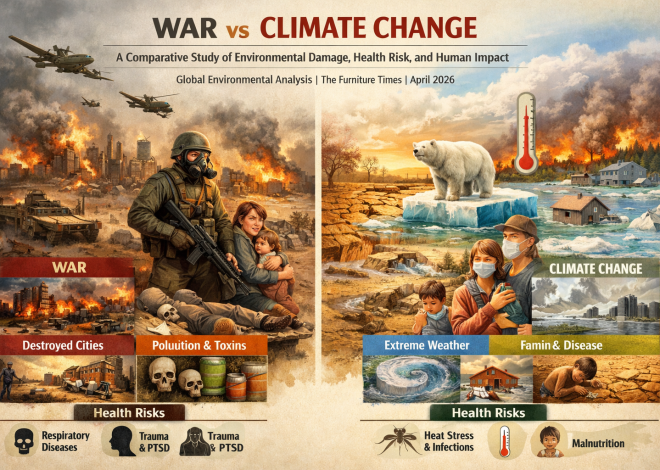
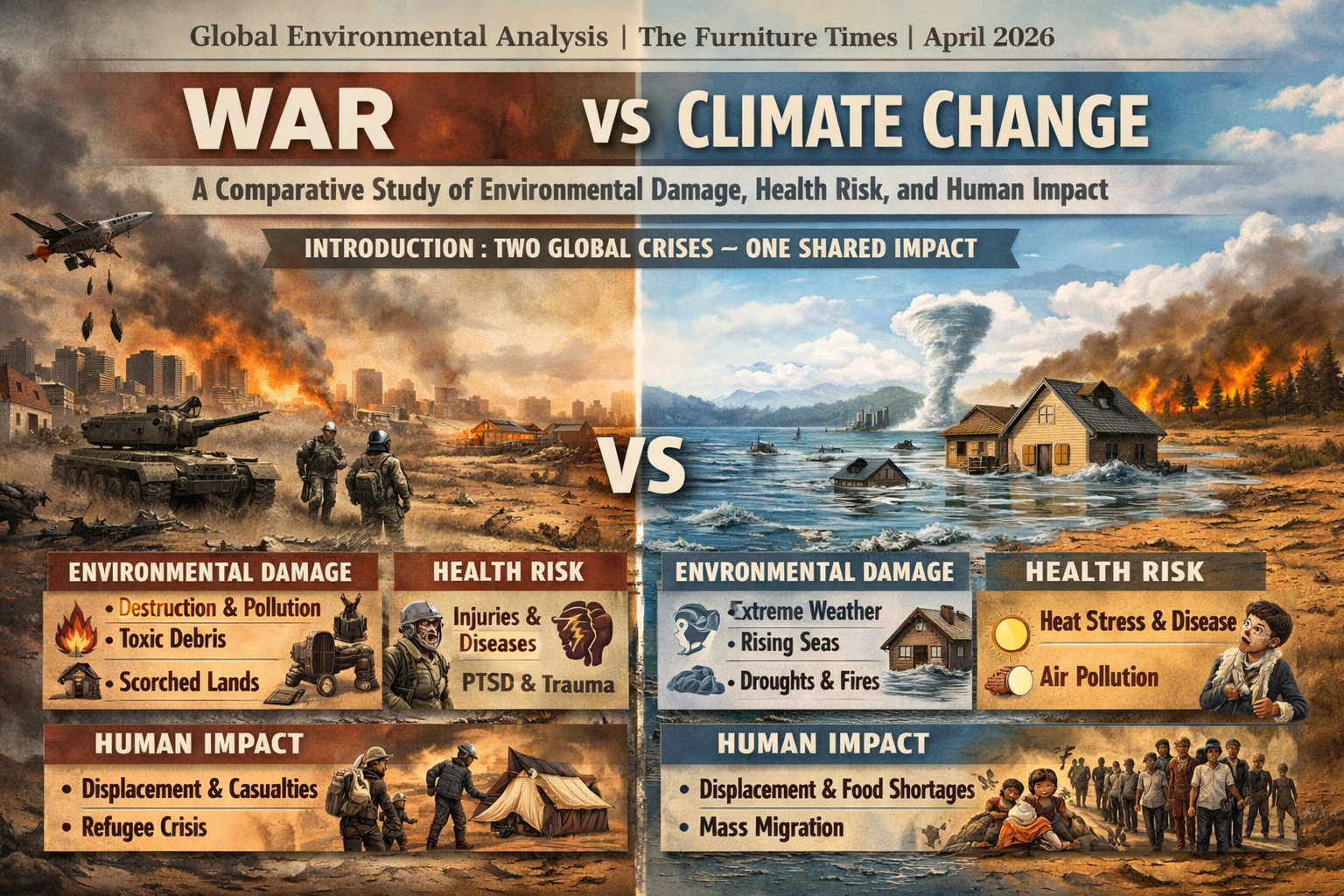
A Comparative Study of Environmental Damage, Health Risk, and Human Impact
Environmental Shock vs Slow Collapse: War vs Climate Change Explained
Global Environmental Analysis | The Furniture Times | April 2026
INTRODUCTION: TWO GLOBAL CRISES — ONE SHARED IMPACT
The world today faces two defining forces:
War — sudden, destructive, immediate Climate Change — slow, persistent, global
Both are reshaping:
- ecosystems
- economies
- human survival
1. SPEED OF DESTRUCTION
WAR:
- instant damage
- infrastructure collapse
- pollution spikes
CLIMATE CHANGE:
- gradual degradation
- long-term stress
- invisible accumulation
War shocks. Climate change erodes.
2. SCALE OF IMPACT
WAR:
- regional destruction
- global ripple effects
CLIMATE CHANGE:
- global impact
- affects every country
Climate change is borderless
War is localized but explosive
3. ENVIRONMENTAL DAMAGE MECHANISM
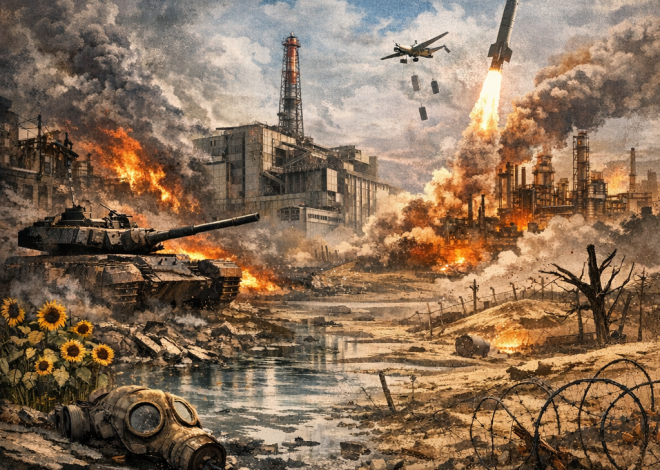
WAR CAUSES:
- explosions & fires
- toxic emissions
- water contamination
- soil degradation
CLIMATE CHANGE CAUSES:
- extreme heat
- floods
- droughts
- sea-level rise
War breaks systems instantly
Climate change weakens them over time
4. HEALTH & DISEASE IMPACT
WAR:
- respiratory illness (pollution)
- waterborne disease
- healthcare collapse
- mental trauma
CLIMATE CHANGE:
- heat stress
- malnutrition
- disease spread
- long-term health decline
War = immediate crisis
Climate = prolonged pressure
5. CARBON & ENVIRONMENTAL IMPACT
WAR:
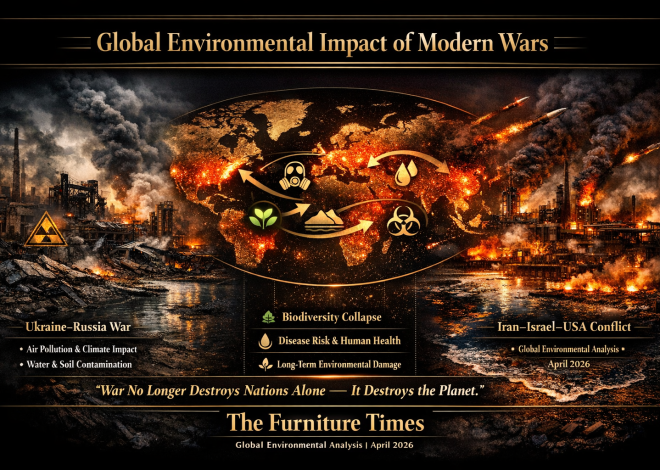
- massive emissions from destruction
- energy disruptions
- reliance on fossil fuels
CLIMATE CHANGE:
- driven by continuous emissions
- global industrial activity
War worsens climate change
Climate change amplifies instability
6. ECONOMIC & HUMAN IMPACT
WAR:
- displacement
- infrastructure loss
- economic collapse
CLIMATE CHANGE:
- food insecurity
- poverty increase
- long-term economic stress
Both create human suffering at scale
7. WHICH IS WORSE?
SHORT TERM:
War causes greater immediate destruction
LONG TERM:
Climate change poses greater global threat
TRUTH:
These are not separate crises
They are interconnected risks
8. THE COMBINED THREAT
War increases:
- emissions
- pollution
- environmental damage
Climate change increases:
- resource scarcity
- instability
- conflict risk
Together they create:
compounded global vulnerability
FINAL INSIGHT
War destroys quickly – Climate change destroys slowly
But both lead to the same outcome: pressure on human survival systems
“War shocks the planet. Climate change reshapes it. Together, they redefine the future of humanity.”