
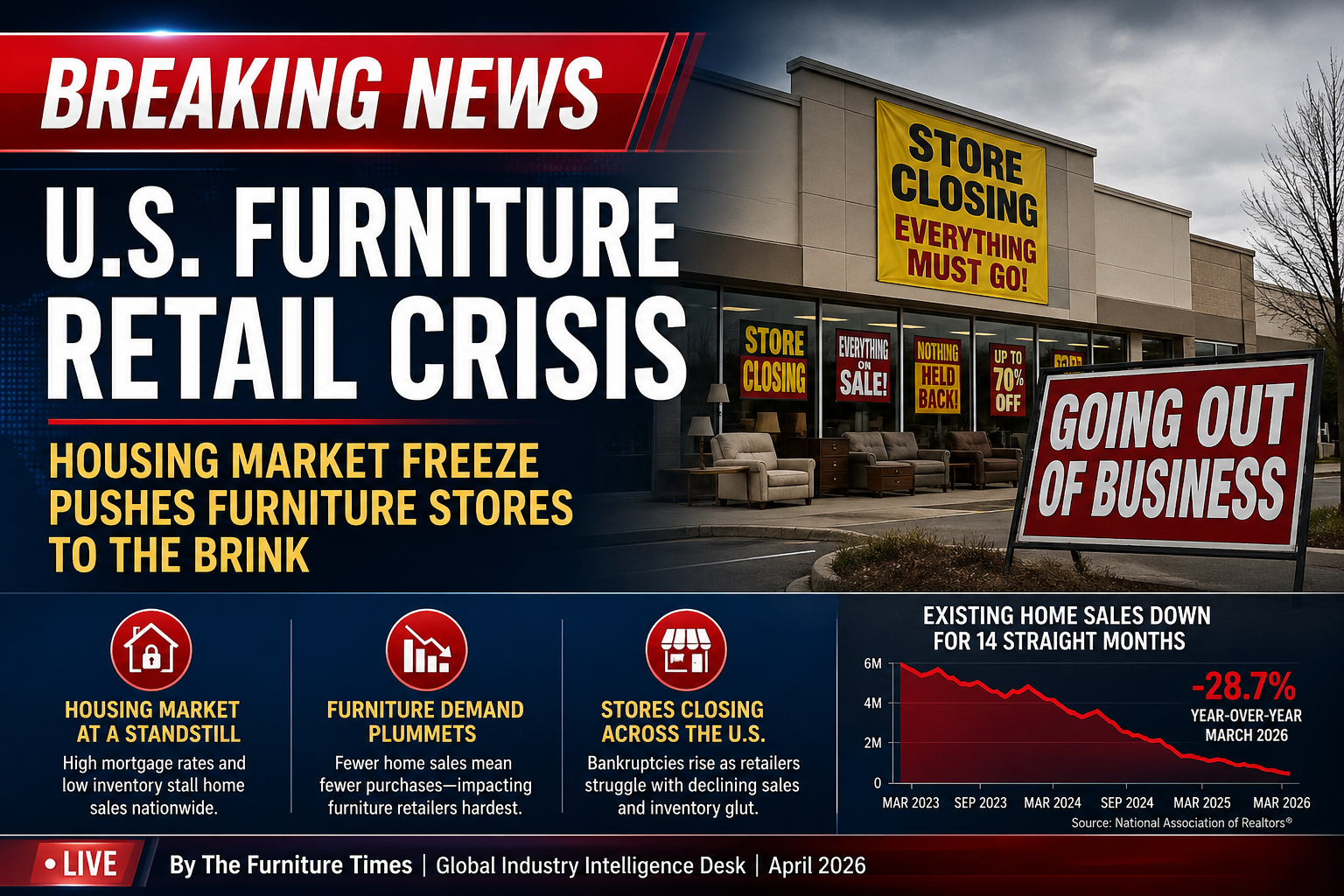
Housing Market Freeze Pushes Furniture Stores to the Brink
Breaking News | U.S. Furniture Retail Crisis
By The Furniture Times | Global Industry Intelligence Desk | April 2026
Introduction: A Crisis Beyond Retail
A major shift is unfolding across the United States as furniture retailers face mounting pressure from what industry analysts are calling a “frozen housing market.”
Recent reporting highlights a stark reality:
Furniture stores across the U.S. are struggling to survive—not because of lack of products, but because customers are no longer moving homes.
And when people don’t move, they don’t buy furniture.
The Core Problem: A Frozen Housing Market
At the heart of this crisis lies a simple but powerful link:
No home sales = No furniture demand
- High mortgage rates
- Elevated home prices
- Limited housing supply
- Reduced buyer activity
These factors have slowed the housing market dramatically, creating a ripple effect across the furniture industry.
Consumers who would typically spend thousands on furnishing new homes are now staying put—delaying or cancelling purchases altogether.
The Impact: Falling Sales & Store Closures
The consequences are already visible:
- Furniture store sales are down approximately 8% since 2022
- January 2026 recorded one of the weakest starts since the pandemic
- Multiple furniture retailers have filed for bankruptcy or shut down operations
Industry analysts describe the current environment as:
“A matter of survival”
This is no longer a slowdown—it is a structural stress point.
The Domino Effect Across the Industry
The housing crisis is triggering a chain reaction:
1. Retailers Under Pressure
Lower footfall, declining orders, and shrinking margins are forcing stores to close or restructure.
2. Manufacturers Facing Reduced Orders
Factories that depend on steady retail demand are now experiencing slower production cycles.
3. Supply Chain Disruptions
Logistics, materials, and distribution networks are being impacted as volumes decline.
4. Employment Risks Rising
As demand weakens, layoffs and hiring freezes are increasing across the ecosystem.
A “Perfect Storm” for Furniture Businesses
The housing slowdown is not happening in isolation.
It is being compounded by:
- Tariffs increasing import costs
- Global conflicts affecting supply chains
- Inflation reducing consumer spending power
- Rising operational costs for businesses
Even major players are feeling the pressure. Industry leaders have described the current environment as one of the “most challenging housing markets in decades.”
Consumer Behavior Shift: From Buying to Waiting
Today’s consumer is cautious.
Instead of:
- Buying new furniture
- Upgrading homes
- Investing in large purchases
They are:
- Postponing decisions
- Opting for smaller upgrades
- Holding onto existing furniture longer
This shift is fundamentally changing demand patterns.
The Bigger Picture: Why Housing Drives Furniture
The relationship is clear:
- A new home purchase triggers multiple furniture purchases
- Renovations drive interior upgrades
- Property transactions fuel entire supply chains
When housing slows, the furniture industry feels it immediately—and deeply.
TFT Global Analysis: A Structural Industry Warning
This crisis reveals a deeper truth:
1. Furniture Is Not Independent
It is directly tied to real estate cycles.
2. Demand Is Event-Driven
Furniture buying depends on life events—moving, upgrading, investing.
3. The Industry Needs Diversification
Relying solely on housing-linked demand is risky.
4. Retail Models Must Evolve
Physical stores must adapt to digital-first consumer behavior.
What Comes Next?
While the short-term outlook remains uncertain, there are possible recovery signals:
- Lower interest rates could revive housing activity
- Improved affordability may bring buyers back
- Pent-up demand could trigger a rebound
Some economists remain cautiously optimistic that housing recovery could support furniture demand in 2026 if conditions stabilize.
Conclusion: A Defining Moment for the Industry
The current crisis is not just about furniture stores struggling.
It is about an entire ecosystem being tested.
The furniture industry is entering a phase where:
- Adaptability will define survival
- Speed of strategy will determine growth
- Diversification will reduce risk
Because in today’s market:
The future of furniture depends on the future of housing.

Related Posts

Ireland’s €53 Million Government Jet Ignites Debate on Cost, Capability and National Priorities
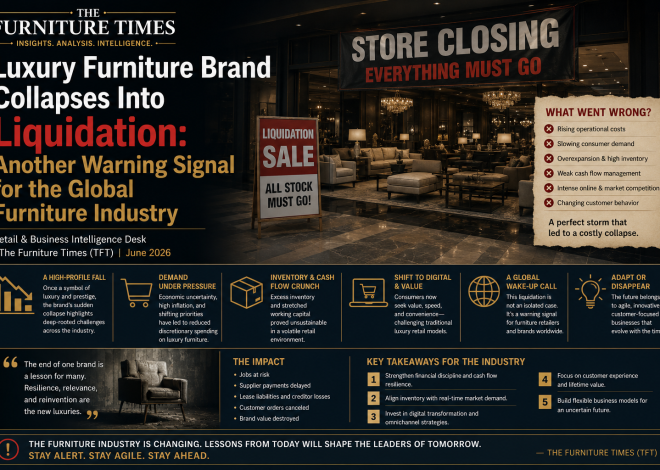
UK Luxury Furniture Brand Pure White Lines Collapses Into Liquidation Owing More Than £1.4 Million