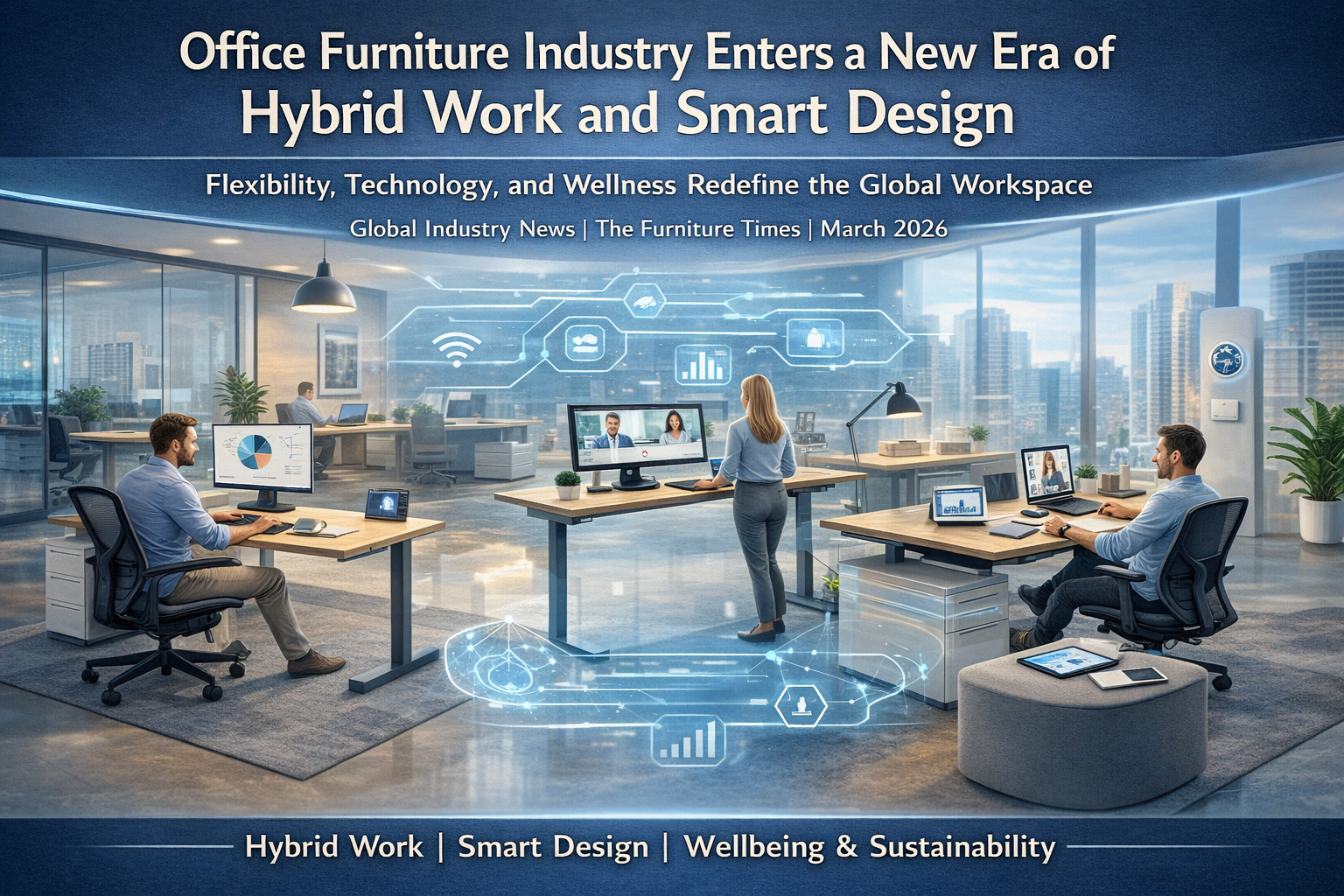
Office Furniture Industry Enters a New Era of Hybrid Work and Smart Design
Flexibility, Technology, and Wellness Redefine the Global Workspace
Global Industry News | The Furniture Times | March 2026
The global office furniture industry is undergoing a major transformation, driven by the rise of hybrid work models, increasing demand for employee wellness, and rapid technological integration into workplace environments.
What was once a traditional, static sector is now evolving into a dynamic, experience-driven industry, where flexibility and functionality are at the core of every design.
The Shift: From Office Spaces to Work Experiences
The definition of the “office” has fundamentally changed.
Organizations worldwide are moving from:
- fixed office layouts
- traditional cubicles
👉 toward:
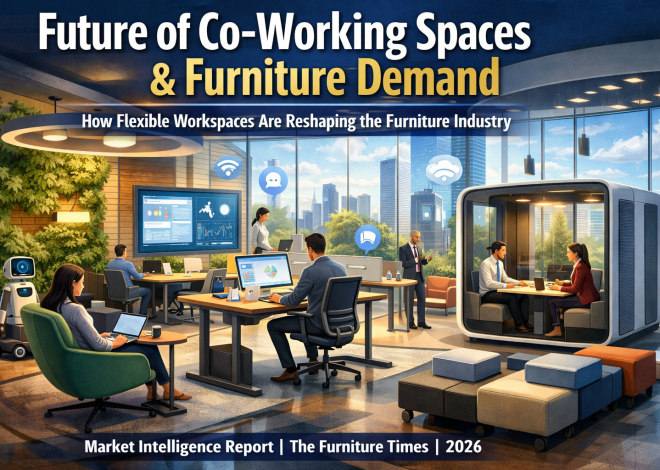
- flexible workspaces
- collaborative environments
- hybrid office models
This shift is reshaping demand for office furniture, with companies prioritizing:
- modular furniture systems
- adaptable workstations
- multi-purpose meeting spaces
Demand for Ergonomics & Employee Wellness
Employee health and productivity are now central to workplace design.
Companies are investing in:
- ergonomic chairs and desks
- height-adjustable workstations
- posture-support furniture
👉 The goal: improve employee well-being while boosting productivity.
Smart Office Furniture on the Rise
Technology is becoming deeply integrated into office furniture.
Emerging innovations include:
- smart desks with sensors
- furniture with built-in charging systems
- connected workstations
👉 Offices are becoming intelligent ecosystems, not just physical spaces.
Hybrid Work Driving Market Growth
The hybrid work model is one of the biggest drivers of change.
Companies are redesigning offices to:
- support collaboration
- optimize space usage
- create flexible work zones
At the same time, there is increasing demand for home office furniture, as remote work continues to grow.
Sustainability in Office Furniture
Sustainability is now a key factor in corporate procurement decisions.
Businesses are focusing on:
- eco-friendly materials
- recyclable furniture
- low-emission manufacturing
👉 ESG considerations are shaping purchasing strategies.
Market Outlook
The office furniture market is expected to grow steadily over the next decade, supported by:
- corporate workspace redesign
- startup ecosystem expansion
- co-working space growth
- digital transformation
Companies that align with these trends will capture significant market share.
Challenges Facing the Industry
Despite growth opportunities, the sector faces several challenges:
- economic uncertainty affecting corporate spending
- rising material and logistics costs
- changing office space requirements
👉 Companies must remain agile and innovative to stay competitive.
The Future of Office Furniture (2026–2030)
Looking ahead, the office furniture industry will be defined by:
- smart and connected workspaces
- highly flexible furniture systems
- wellness-driven design
- sustainable production
👉 The office of the future will be adaptive, intelligent, and human-centric.
Final Insight
The office furniture industry is no longer about desks and chairs.
👉 It is about creating environments where people can work better, feel better, and collaborate smarter.
And in this new era, the companies that understand people—not just products—will lead the future.