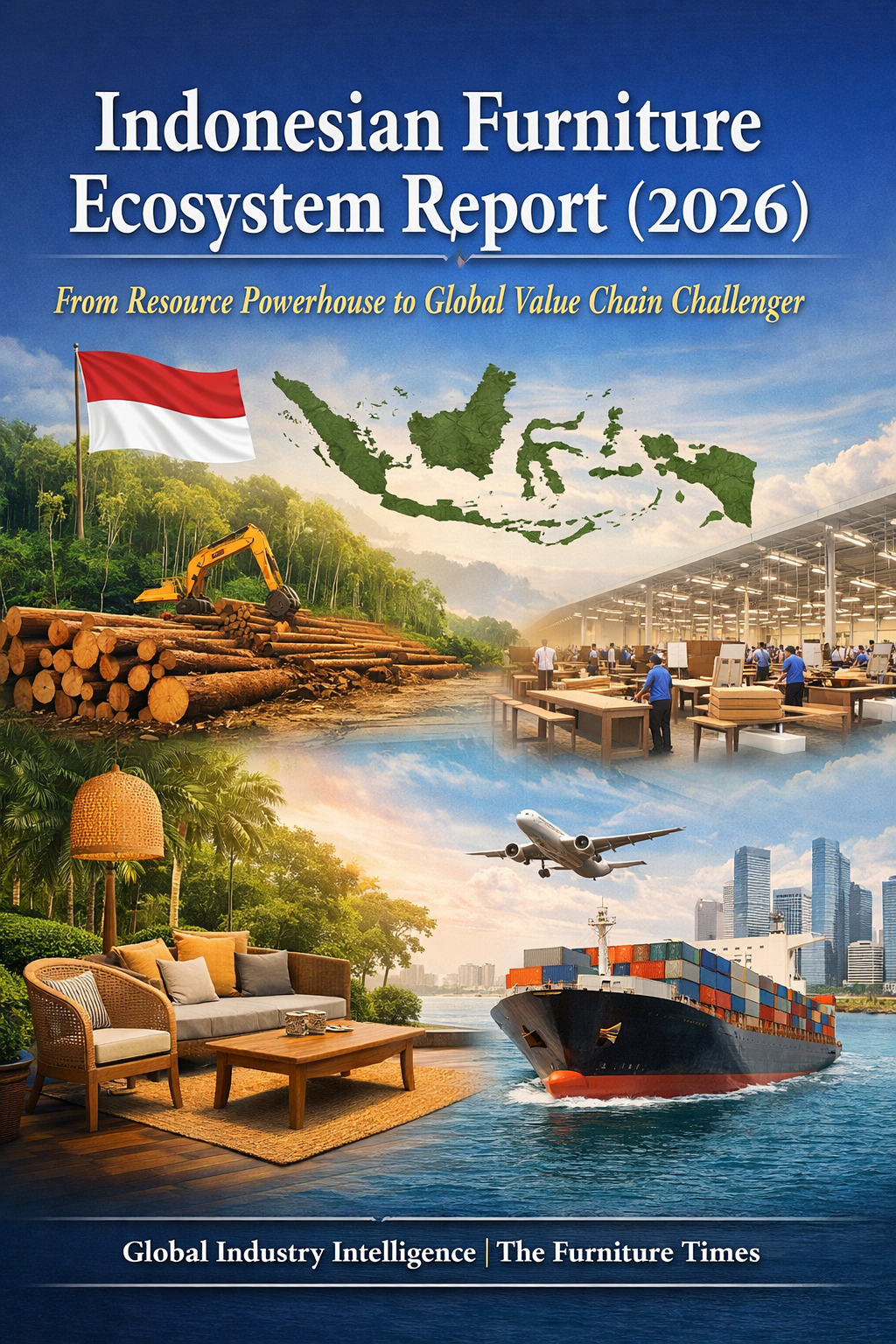
Indonesian Furniture Ecosystem Report (2026)
From Resource Powerhouse to Global Value Chain Challenger
Global Industry Intelligence | The Furniture Times
1. EXECUTIVE OVERVIEW
Indonesia’s furniture ecosystem is one of the most structurally unique in the world, combining:
- Natural resource dominance (teak, rattan, bamboo)
- Deep artisanal heritage
- Export-driven manufacturing
- Fragmented SME ecosystem
Key Data (2026):
- Market size (2025): ~USD 9.1B
- Forecast: ~USD 15.2B by 2034
- Growth rate: ~5.8%–6.4% CAGR
- Export reach: 150+ countries
Indonesia is not just a market.
It is a multi-layer ecosystem combining resources + craftsmanship + exports.
2. ECOSYSTEM STRUCTURE (FULL VALUE CHAIN)
2.1 UPSTREAM – RAW MATERIAL POWER
Core Strength:
- Teak (global premium wood)
- Rattan (Indonesia is world leader)
- Bamboo & natural fibers
This gives Indonesia a structural cost + differentiation advantage
Strategic Reality:
- Unlike Vietnam (imports materials),
Indonesia owns the raw material layer
2.2 MIDSTREAM – MANUFACTURING ECOSYSTEM
Key Clusters:
| Region | Specialization |
| Jepara | Wood carving & premium furniture |
| Cirebon | Rattan furniture |
| Surabaya | Industrial furniture |
| Central Java | Export manufacturing |
These clusters function like industrial districts, combining:
- SMEs
- Family businesses
- Export traders
Structure Insight:
- SMEs account for ~75% of production units
- Highly fragmented ecosystem
- Strong craftsmanship but limited scalability
2.3 DOWNSTREAM – EXPORT & DISTRIBUTION
Export Model:
- B2B OEM / ODM
- Global buyers (USA, EU, Australia)
- Export share heavily US-driven (~50%)
Channels:
- Exporters & agents
- Retail chains
- E-commerce (fast growing)
3. DOMESTIC MARKET ECOSYSTEM
3.1 Home Furniture Market
- Size (2026): ~USD 5.15B
- Growth driven by:
- Urbanization
- Housing programs
- Middle-class expansion
Living & dining furniture = largest segment (~31%)
3.2 Retail Transformation
Shift:
- Traditional retail → Omnichannel
- Offline stores → E-commerce
- Online share rising (~20%)
Digitalization is reshaping the ecosystem
4. EXPORT ECOSYSTEM ANALYSIS
4.1 Global Position
- Ranked among top global furniture exporters
- Strong in:
- Solid wood furniture
- Rattan furniture
- Outdoor/hospitality furniture
4.2 Export Markets
| Market | Role |
| USA | Largest buyer |
| EU | Premium segment |
| Australia | Strong demand |
| Japan | Quality-focused market |
4.3 Strategic Advantage
✔ Unique materials (teak, rattan)
✔ Handcrafted differentiation
✔ Strong cultural identity
5. KEY GROWTH DRIVERS
5.1 Urbanization & Housing Boom
- Government housing programs driving demand
5.2 Tourism & Hospitality
- Resorts, villas, hotels increasing demand
- Outdoor furniture = major opportunity
5.3 E-Commerce Expansion
- Digital retail expanding reach
- Younger consumers driving demand
5.4 Sustainability Trend
- Certified wood (SVLK, FSC)
- Eco-friendly production rising
6. STRUCTURAL CHALLENGES
6.1 Fragmentation
- Thousands of SMEs
- Lack of consolidation
- Weak global branding
6.2 Low Automation
- Compared to China & Vietnam
- Limits scalability
6.3 Export Dependency
- Heavy reliance on US market
6.4 Logistics Constraints
- Port inefficiencies
- Higher lead times
7. COMPETITIVE POSITIONING (GLOBAL)
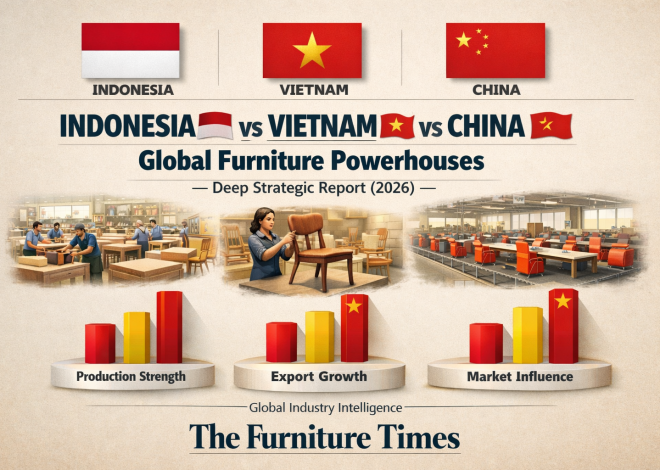
| Factor | Indonesia | Vietnam | China |
| Raw Material | ⭐⭐⭐⭐⭐ | ⭐⭐ | ⭐⭐ |
| Cost Efficiency | ⭐⭐⭐ | ⭐⭐⭐⭐ | ⭐⭐⭐ |
| Automation | ⭐⭐ | ⭐⭐⭐ | ⭐⭐⭐⭐⭐ |
| Craftsmanship | ⭐⭐⭐⭐⭐ | ⭐⭐⭐ | ⭐⭐ |
| Export Efficiency | ⭐⭐⭐ | ⭐⭐⭐⭐ | ⭐⭐⭐⭐⭐ |
Indonesia wins in:
- Craftsmanship
- Natural materials
But loses in:
- Scale
- Speed
- Systemization
8. FUTURE ECOSYSTEM TRANSFORMATION (2026–2035)
8.1 DIGITAL ECOSYSTEM EVOLUTION
Future will be driven by:
- AI sourcing platforms
- Global search systems (FISE-type models)
- Digital supplier databases
8.2 BRAND TRANSFORMATION
Shift from:
❌ OEM manufacturing
To:
✅ Global Indonesian brands
8.3 SUPPLY CHAIN INTEGRATION
Future model:
- Indonesia → raw materials & premium products
- Vietnam → manufacturing scale
- China → automation & volume
Integrated ecosystem = global dominance
9. INVESTMENT OPPORTUNITIES
High-Growth Segments:
1. Premium Solid Wood Furniture
2. Rattan & Sustainable Furniture
3. Hospitality & Outdoor Furniture
4. Custom OEM/ODM Manufacturing
5. Digital Furniture Platforms
Strategic Investment Insight:
Indonesia offers higher margins vs Vietnam
But requires system + branding upgrades
10. FINAL STRATEGIC CONCLUSION
Indonesia’s furniture ecosystem is at a critical inflection point:
From:
Resource + craft-based industry
To:
Integrated global supply chain + branding powerhouse
TFT FINAL POWER STATEMENT
“Indonesia does not need to compete with China or Vietnam…
It needs to become what they cannot be — the world’s premium furniture identity.”