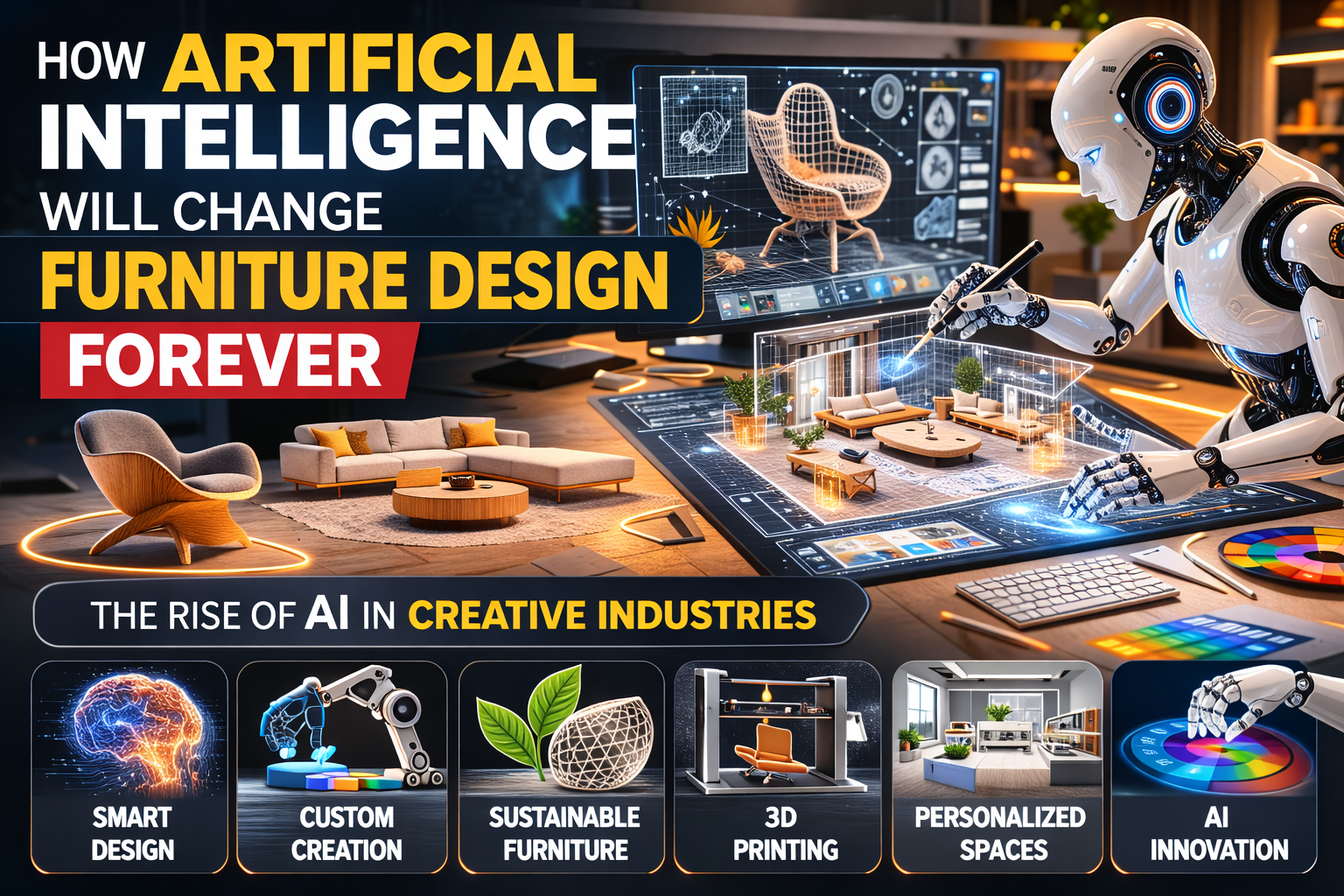
How Artificial Intelligence Will Change Furniture Design Forever
The Rise of AI in Creative Industries
Artificial intelligence is rapidly transforming many creative fields, including architecture, fashion, and industrial design.
The furniture industry is now entering a similar transformation.
AI technologies are enabling designers to analyze data, generate design concepts, and simulate product performance faster than ever before.
AI-Assisted Design Tools
AI-powered design systems can generate thousands of furniture design variations in seconds.
These tools help designers explore possibilities that would normally take months to develop.
Predicting Consumer Preferences
AI can analyze consumer data to identify emerging design trends.
By studying purchasing patterns and lifestyle behavior, AI systems can recommend furniture styles likely to succeed in the market.
Optimizing Materials and Sustainability
AI can also improve sustainability by optimizing material usage and reducing waste.
Algorithms can calculate the most efficient structural designs, minimizing raw material consumption.
Rapid Prototyping and Simulation
AI systems allow designers to test furniture durability, weight distribution, and ergonomics digitally before physical prototypes are built.
This dramatically reduces product development time.
Collaboration Between Humans and Machines
Despite its capabilities, AI will not replace human creativity.
Instead, it will act as a collaborative partner, helping designers experiment with new ideas and refine concepts more efficiently.
A New Era of Design Innovation
The integration of AI into furniture design represents a fundamental shift in how products are created.
Designers will increasingly rely on intelligent systems to explore possibilities while maintaining the artistic vision that defines great furniture.
Conclusion: The Future Furniture Ecosystem
Across technology, manufacturing, and design, the furniture industry is entering a transformative era.
Smart furniture, AI-assisted design, automation, and sustainable production are reshaping how furniture is conceived and delivered to consumers.Over the next decade, the companies that succeed will be those that embrace innovation while preserving the craftsmanship and creativity that define the furniture industry.