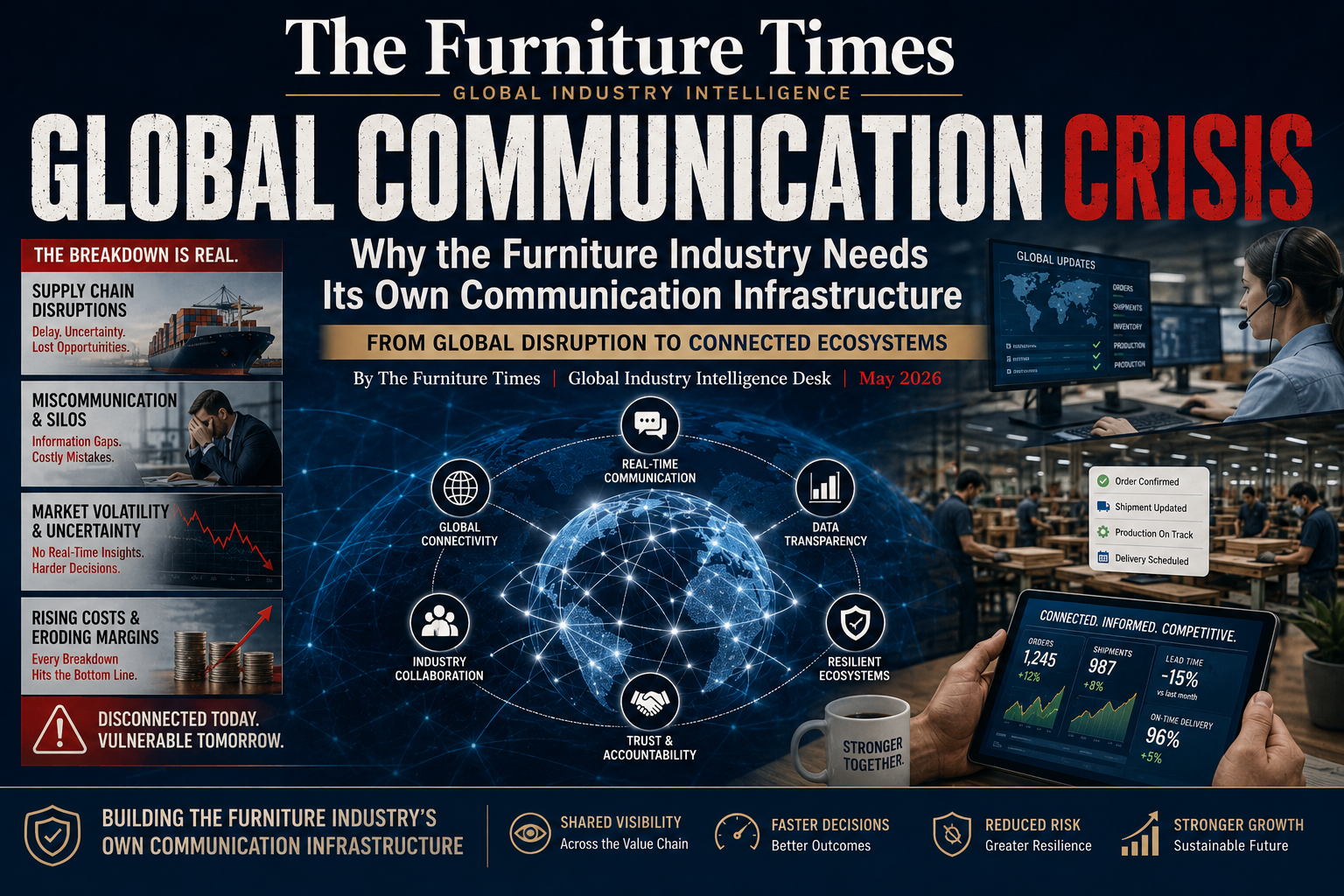
Why the Furniture Industry Needs Its Own Communication Infrastructure
Global Communication Crisis | The Furniture Times
From Global Disruption to Connected Ecosystems
By The Furniture Times | Global Industry Intelligence Desk | May 2026
The global furniture industry is facing a communication crisis.
And most businesses do not fully realize how much it is costing them.
Across the global ecosystem:
- leads are being lost
- quotations are delayed
- buyers are waiting for responses
- conversations disappear
- project coordination becomes fragmented
- opportunities quietly collapse
For decades, the furniture industry relied heavily on:
- emails
- phone calls
- scattered messaging
- disconnected follow-ups
That model may no longer be sustainable in a world facing:
- geopolitical disruption
- logistics uncertainty
- supply-chain volatility
- digital transformation
- AI-driven business systems
The furniture industry is still operating with fragmented communication inside an increasingly connected global economy.
The result is growing operational chaos.
Global Disruption Has Exposed a Deeper Industry Weakness
The recent wave of global instability has revealed a major structural weakness inside the furniture ecosystem.
When:
- shipping delays happen
- projects change suddenly
- supply chains shift
- buyers become cautious
communication becomes critical.
But the industry still relies heavily on fragmented systems not designed specifically for:
- furniture trade
- RFQs
- supplier coordination
- project management
- manufacturing communication
The Hidden Cost of Broken Communication
Many businesses underestimate how much they lose through:
- delayed replies
- missed messages
- scattered conversations
- unclear follow-ups
- disconnected buyer records
The Real Damage
Communication problems lead to:
- lost deals
- slower conversions
- project delays
- weaker trust
- operational inefficiency
In today’s economy, slow communication can destroy fast-moving opportunities.
1. The Furniture Industry Still Operates on Fragmented Messaging
Many furniture businesses still depend on:
- WhatsApp groups
- personal numbers
- scattered emails
- informal chats
This creates major operational risk.
What Happens Daily Across the Industry
- RFQs get buried inside chats
- Buyers wait for quotations
- Files disappear
- Teams lose conversation history
- Follow-ups become inconsistent
Why This Becomes Dangerous
As businesses scale internationally:
- conversations multiply
- suppliers increase
- projects become more complex
But communication systems remain disconnected. The industry is growing globally while communicating manually.
2. The WhatsApp Dependency Problem
The furniture ecosystem has become heavily dependent on generic messaging platforms.
But global businesses increasingly face challenges such as:
- account restrictions
- lost access
- lack of structured communication
- poor lead tracking
- no industry workflow integration
The Bigger Problem
Generic communication apps were never designed specifically for:
- furniture sourcing
- RFQ systems
- supplier management
- project coordination
- B2B deal infrastructure
The Result
Critical business communication becomes:
- scattered
- temporary
- unstructured
- difficult to manage
The industry is using consumer messaging tools to manage billion-dollar ecosystems.
3. The Industry Is Becoming Too Complex for Informal Systems
The furniture ecosystem is no longer small or localized.
Today’s furniture trade involves:
- multiple countries
- factories
- suppliers
- logistics providers
- project managers
- designers
- procurement teams
Modern Furniture Trade Requires:
- structured communication
- lead tracking
- supplier coordination
- RFQ workflows
- file sharing
- visibility systems
But Most Businesses Still Use:
- random chats
- disconnected spreadsheets
- manual follow-ups
The complexity of the industry has outgrown its communication systems.
4. Logistics & Supply-Chain Pressure Make Communication Even More Critical
In uncertain global conditions, businesses need:
- faster updates
- shipment visibility
- coordinated supplier communication
- real-time response systems
When delays happen, communication becomes the difference between:
- trust and frustration
- retention and cancellation
- confidence and uncertainty
Buyers Need More Transparency
Today’s buyers increasingly expect:
- fast replies
- delivery updates
- organized conversations
- structured quotation handling
Businesses That Respond Faster Gain Advantage
Communication speed is becoming:
- a trust factor
- a conversion factor
- a competitive advantage
In the modern furniture economy, communication infrastructure is becoming business infrastructure.
5. The Future Industry Will Operate Through Connected Ecosystems
The next generation of furniture infrastructure is moving toward:
- connected supplier systems
- structured communication
- integrated RFQs
- live commerce
- intelligent lead flow
The Industry Shift
The ecosystem is evolving from:
- disconnected messaging
toward:
- organized communication networks
Why This Matters
Future-ready furniture businesses increasingly require:
- searchable supplier ecosystems
- structured conversations
- centralized lead management
- integrated communication systems
6. The Rise of Industry-Specific Communication Infrastructure
This is where the next transformation begins.
The furniture industry may no longer rely entirely on generic messaging systems.
Instead, the future may belong to:
- industry-specific communication infrastructure
- connected supplier ecosystems
- deal-focused communication platforms
What the Industry Actually Needs
A system where:
- buyers search suppliers
- RFQs are structured
- communication is centralized
- conversations connect to listings
- quotations are trackable
- deals move faster
The future of communication is not random messaging. It is a structured business flow.
7. Introducing the Next Layer: Connected Furniture Communication
The furniture industry is now entering the era of:
- connected ecosystems
- intelligent communication
- structured deal infrastructure
This is where platforms such as:
FISE Connect
begin to represent a new category of industry infrastructure.
What FISE Connect Represents
A private communication network built specifically for the global furniture ecosystem.
Designed for:
- buyers
- suppliers
- manufacturers
- exporters
- designers
- project teams
- industry professionals
The Vision
Search → Connect → Discuss → Deal
Instead of:
- scattered chats
- missed follow-ups
- fragmented communication
The ecosystem moves toward:
- structured conversations
- RFQ-driven communication
- lead visibility
- connected workflows
The industry is moving from communication chaos toward communication infrastructure.
8. The Bigger Transformation
The furniture industry is entering a new phase.
The future may no longer be controlled only by:
- factories
- products
- pricing
But increasingly by:
- visibility
- communication
- intelligence
- infrastructure
- connected ecosystems
TFT Deep Industry Insight
The communication crisis is not only a technology issue.
It is an operational issue.
A trust issue.
A growth issue.
A survival issue.
Businesses that communicate:
- faster
- clearer
- more structurally
may increasingly dominate the next generation of global furniture trade.
Strategic Recommendations
For Suppliers
Move beyond fragmented messaging systems.
For Buyers
Prioritize suppliers with structured communication and faster response systems.
For Industry Platforms
Communication infrastructure will become a core competitive layer of the furniture economy.
For the Furniture Ecosystem
The future requires:
- connected systems
- structured workflows
- intelligent communication infrastructure
Final Thought
The global furniture industry has spent decades building:
- factories
- products
- exhibitions
- supply chains
Now it must build something equally important:
Communication infrastructure designed specifically for the industry itself.
The future belongs to ecosystems that can:
- connect faster
- communicate smarter
- organize better
- build trust digitally

Related Posts
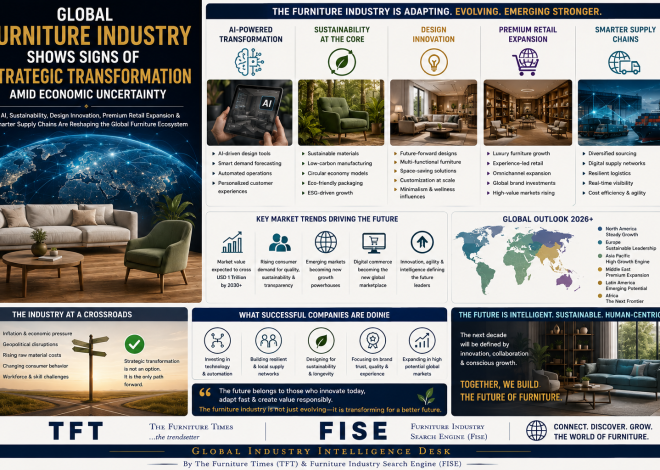
Global Furniture Industry Shows Signs of Strategic Transformation Amid Economic Uncertainty
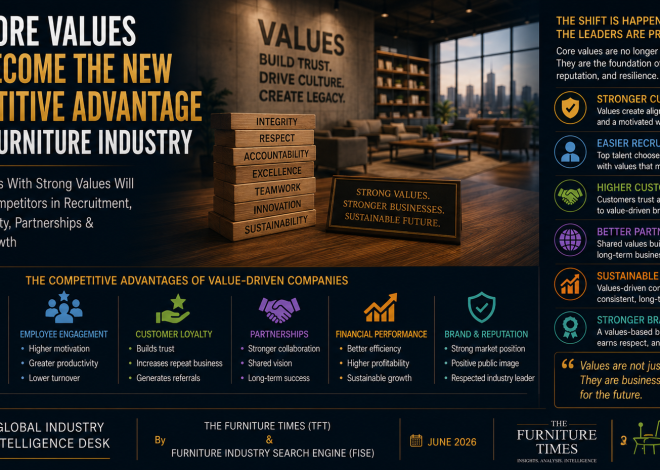
Why Core Values Will Become the New Competitive Advantage in the Furniture Industry