
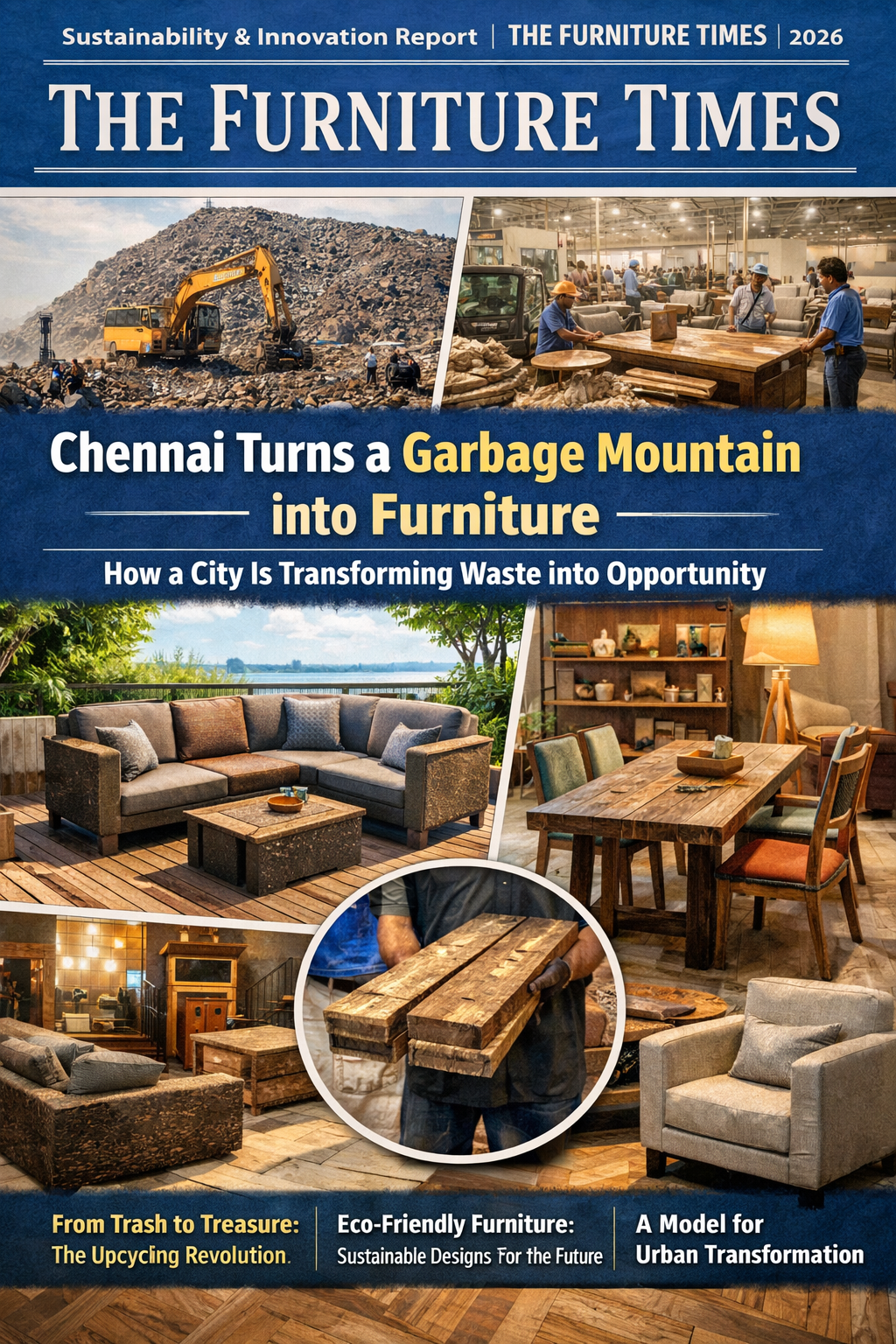
Chennai Turns a Garbage Mountain into Furniture
How a City Is Transforming Waste into Opportunity
Sustainability & Innovation Report | The Furniture Times | 2026
In an ambitious effort to tackle decades of waste accumulation, the southern Indian city of Chennai has begun transforming one of its largest landfill sites into a source of useful products—including furniture. The initiative at the Perungudi landfill, long considered a symbol of the city’s waste crisis, is now being repositioned as a model for circular economy practices.
The project demonstrates how innovative waste-management technologies can turn urban environmental problems into sustainable economic opportunities.
From Garbage Mountain to Resource Hub
For years, the Perungudi landfill has been one of Chennai’s primary dumping grounds for municipal waste. Spread across roughly 250 acres, the site receives thousands of tonnes of garbage daily and has accumulated decades of untreated waste.
City authorities have now launched a large-scale reclamation program to clear the massive landfill through a process known as biomining. This scientific method excavates legacy waste, separates recyclable materials, and converts remaining waste into usable resources.
According to officials overseeing the project, approximately 3,000 metric tonnes of waste have historically been dumped at the site each day, making the cleanup one of the most complex urban waste management efforts in India.
Turning Trash into Furniture
One of the most striking outcomes of the Perungudi project is the transformation of recovered materials into new products.
Recycled materials from the landfill are now being converted into:
- outdoor furniture
- plastic boards
- storage pallets
- construction materials
- road medians
- alternative fuel sources
This process allows materials that would otherwise remain buried in landfills to be reintegrated into the economy.
Recycled plastics, in particular, are being molded into durable outdoor furniture used in public spaces and infrastructure projects.
Environmental and Urban Impact
The Perungudi landfill lies near the Pallikaranai Marshland, an important ecological zone known for its biodiversity and migratory birds. For years, the landfill’s expansion raised environmental concerns among residents and environmental groups.
By removing legacy waste and processing it into reusable materials, the city hopes to reduce pollution while reclaiming land that could eventually be used for green spaces or infrastructure.
Early phases of the biomining initiative have already helped recover portions of land that were previously covered by waste, showing how large landfill sites can potentially be rehabilitated.
A Model for Circular Economy
The Perungudi initiative reflects a growing global trend: converting waste into valuable resources rather than simply disposing of it.
Cities around the world are increasingly exploring similar approaches to manage mounting waste volumes while supporting sustainable industries.
Experts say projects like this highlight the potential for circular economy models, where waste materials are continuously reused and recycled to create new products.
Technology Behind the Transformation
The success of the landfill reclamation effort relies heavily on advanced waste-processing technologies.
Biomining involves several steps:
- Excavating old landfill waste
- Mechanically separating materials
- Recovering recyclable metals, plastics, and glass
- Converting organic waste into fuel or compost
- Repurposing processed materials into new products
This systematic approach allows cities to recover valuable resources while reducing the environmental impact of landfills.
Inspiration for Other Cities
Urban waste management is one of the most pressing environmental challenges worldwide.
Chennai generates thousands of tonnes of municipal waste every day, and the Perungudi landfill project represents a significant step toward more sustainable waste practices.
Business leaders and environmental advocates have praised the initiative as an example of how innovation can address long-standing waste challenges while creating new economic value.
The Future of Waste-to-Furniture Innovation
As cities search for sustainable solutions to growing waste problems, projects like Perungudi may inspire similar initiatives elsewhere.
By converting landfill waste into usable materials and products such as furniture, the initiative demonstrates how environmental restoration and industrial innovation can work together.
For the global furniture industry, it also opens a new possibility: designing products not only from natural resources but also from recycled urban waste.
