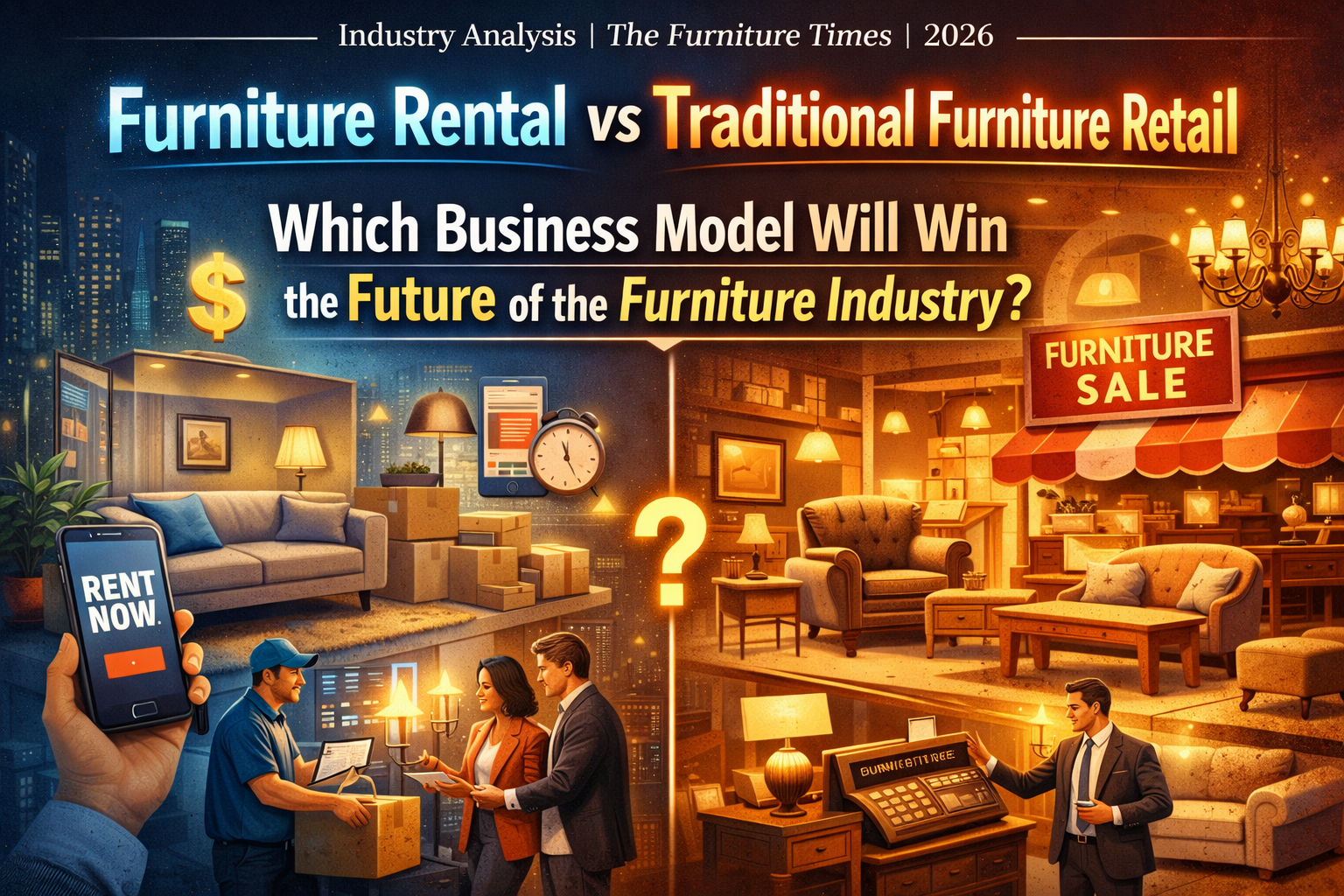
Furniture Rental vs Traditional Furniture Retail
Which Business Model Will Win the Future of the Furniture Industry?
Industry Analysis | The Furniture Times | 2026
The global furniture industry is undergoing a structural shift. For decades, traditional furniture retail—where customers purchase and own furniture—has dominated the market. However, a new model is emerging rapidly: furniture rental and subscription-based services.
Driven by changing lifestyles, urbanization, and digital platforms, the debate is no longer whether rental will grow—but how it will compete with traditional retail.
The Two Competing Models
Traditional Furniture Retail
This model has defined the industry for generations.
Key Characteristics:
- One-time purchase
- product ownership
- showroom-based experience
- long product life cycles
Strengths:
• high margins on premium products
• brand loyalty and craftsmanship
• emotional value of ownership
Challenges:
• high upfront cost for customers
• inventory-heavy operations
• slower adaptation to changing lifestyles
Furniture Rental & Subscription Model
This model is gaining traction, especially in urban markets.
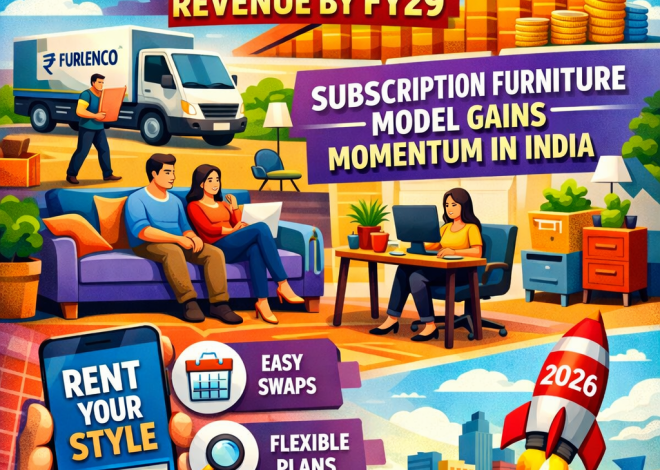
Companies like Furlenco are leading this shift by offering furniture on flexible monthly plans.
Key Characteristics:
- monthly subscription
- no ownership required
- flexible upgrades and returns
- bundled services (delivery, setup, maintenance)
Strengths:
• low upfront cost
• flexibility for customers
• recurring revenue for companies
• supports circular economy
Challenges:
• logistics complexity
• asset maintenance costs
• profitability pressure
• customer retention challenges
Changing Consumer Behavior
The rise of rental furniture is closely tied to how people are living today.
Urban Lifestyle Shift
Younger consumers are:
- moving cities more frequently
- living in rented apartments
- preferring flexibility over ownership
For them, renting furniture makes practical and financial sense.
Experience Over Ownership
A growing number of consumers prefer:
- convenience
- flexibility
- upgrade options
Furniture is no longer just a product—it is becoming a service.
Business Model Economics
Traditional Retail Economics
Revenue model:
- one-time purchase
Profit drivers:
- product margins
- volume sales
Risks:
- unsold inventory
- demand fluctuations
Rental Model Economics
Revenue model:
- recurring subscription
Profit drivers:
- long-term customer retention
- asset reuse and lifecycle management
Risks:
- operational complexity
- logistics and refurbishment costs
Sustainability Factor
One of the biggest advantages of the rental model is its alignment with sustainability.
Rental furniture enables:
• product reuse
• reduced waste
• longer product life cycles
• circular manufacturing systems
This gives rental platforms a strong advantage as sustainability becomes a core industry priority.
Technology as the Game Changer
Technology is accelerating both models—but especially rental.
Rental Platforms Use:
- data-driven inventory management
- AI-based demand forecasting
- digital customer platforms
Traditional Retail Uses:
- e-commerce expansion
- augmented reality shopping
- omnichannel retail strategies
Technology is narrowing the gap between the two models.
Regional Differences
Emerging Markets (India, Southeast Asia)
Rental models are growing rapidly due to:
- younger population
- urban migration
- affordability needs
Developed Markets (US, Europe)
Traditional retail still dominates, but rental and subscription models are gaining attention in urban areas.
Who Will Win?
The future is unlikely to be “winner takes all.”
Instead, the industry is moving toward a hybrid model:
Hybrid Future:
- customers buy core furniture
- rent flexible or temporary items
- upgrade through subscription services
Retailers may also adopt rental models to stay competitive.
Strategic Outlook
Traditional Retail Must:
- embrace digital transformation
- reduce inventory risks
- offer customization
Rental Platforms Must:
- improve logistics efficiency
- achieve profitability
- scale sustainably
The Bigger Picture
This shift is not just about business—it reflects a deeper change in how people live.
Furniture is evolving from:
ownership → access
product → service
static → flexible
Final Insight
The companies that succeed in the future furniture industry will not be defined by whether they sell or rent—but by how well they understand the modern consumer.
Flexibility, sustainability, and experience will define the next generation of furniture business models.