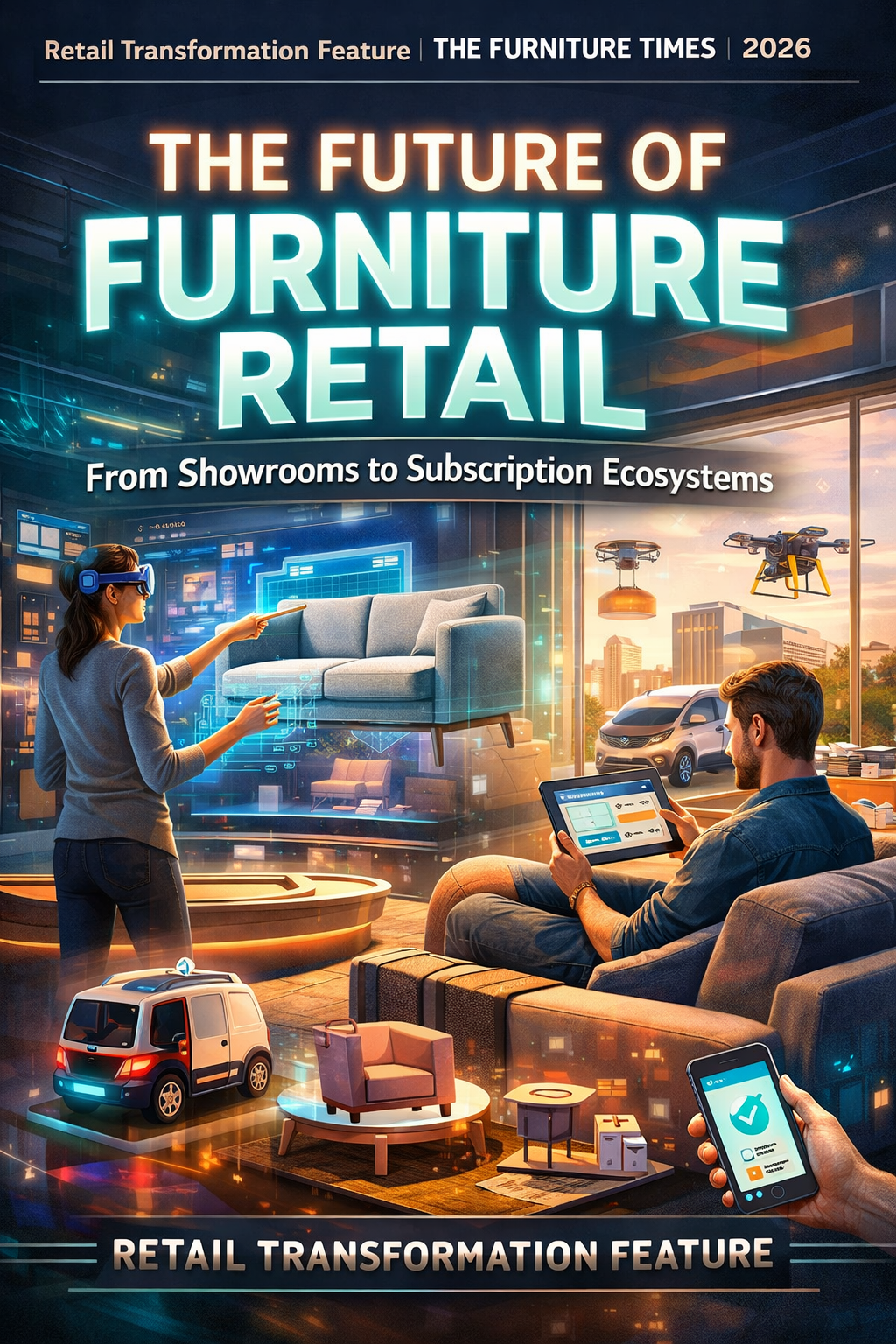
The Future of Furniture Retail
From Showrooms to Subscription Ecosystems
Retail Transformation Feature | The Furniture Times | 2026
The furniture industry is entering a new era—one where traditional showrooms are no longer the sole gateway to customers. Instead, the future of furniture retail is evolving into a hybrid ecosystem that blends physical experiences, digital platforms, and subscription-based services.
For decades, furniture retail revolved around large showrooms, in-store browsing, and one-time purchases. Today, driven by technology and changing consumer lifestyles, the industry is shifting toward flexibility, personalization, and continuous engagement.
The Evolution of Furniture Retail
Phase 1: Traditional Showroom Model
Furniture retail began with physical showrooms where customers could see, touch, and experience products before purchasing.
Key features:
- large display spaces
- one-time transactions
- inventory-driven sales
Phase 2: E-Commerce Expansion
The rise of digital platforms transformed how furniture is discovered and purchased.
Retailers introduced:
- online catalogs
- home delivery
- virtual product browsing
E-commerce expanded reach but reduced the physical experience.
Phase 3: Omnichannel Retail
Today’s leading furniture brands operate across both physical and digital channels.
Customers can:
- browse online
- visit showrooms
- order digitally
- receive home delivery
This integration creates a seamless buying experience.
Phase 4: Subscription Ecosystems (The Future)
The next evolution is already emerging: subscription-based furniture ecosystems.
Companies like Furlenco are leading this transformation by offering furniture as a service.
What Is a Furniture Subscription Ecosystem?
A subscription ecosystem goes beyond simple rental. It integrates multiple services into a continuous customer relationship.
Key Components:
- monthly furniture subscriptions
- flexible upgrades and exchanges
- bundled home solutions (furniture + appliances)
- maintenance and servicing
- digital customer platforms
This transforms furniture from a product into an ongoing service experience.
The New Role of Showrooms
Showrooms are not disappearing—they are evolving.
From Sales Spaces to Experience Centers
Future showrooms will focus on:
- immersive design experiences
- curated lifestyle environments
- brand storytelling
- customer engagement
Instead of holding large inventory, showrooms will act as experience hubs that drive online or subscription-based transactions.
Technology Driving the Transformation
Technology is the backbone of the new retail ecosystem.
Augmented Reality (AR)
Customers can visualize furniture in their homes before purchasing.
Artificial Intelligence (AI)
AI tools help:
- recommend products
- personalize designs
- optimize inventory
Data-Driven Retail
Retailers use customer data to:
- predict demand
- customize offerings
- improve customer experience
Why Subscription Models Are Growing
The rise of subscription-based furniture is closely tied to changing lifestyles.
Urban Mobility
People are moving cities more frequently, reducing the appeal of long-term ownership.
Cost Flexibility
Subscription models reduce upfront costs for customers.
Convenience
Customers prefer hassle-free solutions with delivery, setup, and maintenance included.
Sustainability
Subscription models support reuse and reduce waste, aligning with environmental goals.
Challenges Ahead
Despite strong growth potential, the subscription model faces challenges:
- logistics and transportation complexity
- asset maintenance and refurbishment
- customer retention
- achieving long-term profitability
Retailers must balance innovation with operational efficiency.
The Hybrid Future of Furniture Retail
The most likely outcome is a hybrid retail ecosystem:
Future Model:
• showrooms for experience
• e-commerce for convenience
• subscriptions for flexibility
Retailers that integrate all three will have a competitive advantage.
What This Means for the Industry
The transformation of furniture retail is redefining how companies operate:
Manufacturers
Must design products suitable for reuse, durability, and modularity.
Retailers
Must evolve into service providers, not just sellers.
Designers
Must create adaptable, multifunctional furniture for modern lifestyles.
The Human Shift Behind the Industry
At its core, this transformation reflects a deeper change in how people live.
Homes are becoming more flexible, lifestyles more dynamic, and consumers more conscious of sustainability and value.
Furniture is no longer just about ownership—it is about experience, adaptability, and lifestyle integration.
Final Insight
The future of furniture retail will not be defined by a single model. Instead, it will be shaped by companies that can combine:
- design excellence
- digital innovation
- operational efficiency
- customer-centric services
From showrooms to subscription ecosystems, the industry is moving toward a more connected and flexible future.