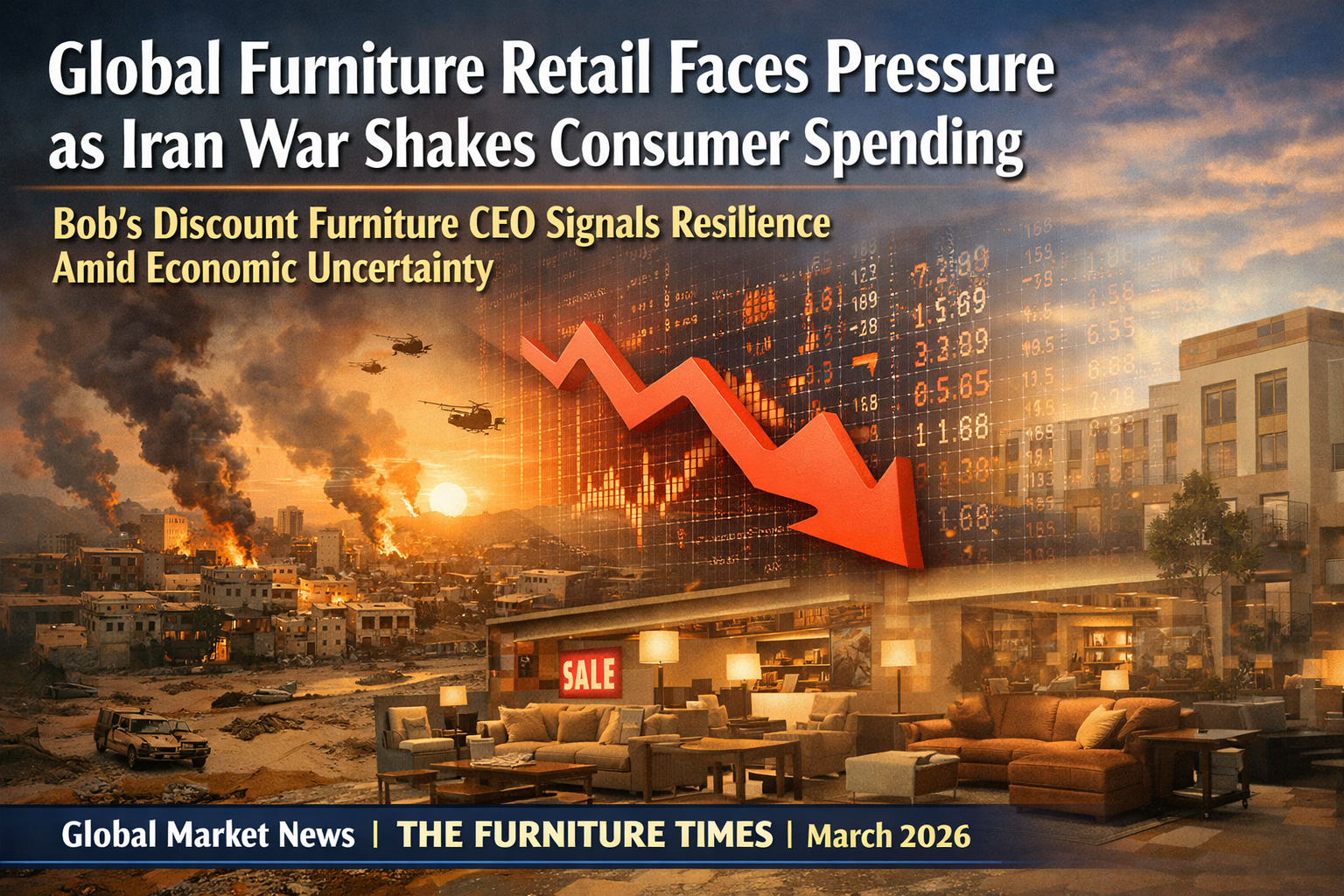
Global Furniture Retail Faces Pressure as Iran War Shakes Consumer Spending
Bob’s Discount Furniture CEO Signals Resilience Amid Economic Uncertainty
Global Market News | The Furniture Times | March 2026
The ongoing Iran–U.S.–Israel conflict is beginning to ripple across global consumer markets, with early signals showing pressure on retail spending, inflation, and supply chains. However, leaders in the furniture sector suggest the industry is showing unexpected resilience—at least for now.
In a recent discussion on Yahoo Finance, the CEO of Bob’s Discount Furniture highlighted a critical insight: while geopolitical tensions are reshaping economic conditions, value-driven furniture retailers continue to perform steadily, even as broader consumer confidence weakens.
A Global Shock with Local Impact
The 2026 Iran war has triggered one of the most significant economic disruptions in recent years, including:
- surging oil and gas prices
- rising inflation globally
- supply chain disruptions
- volatility in financial markets
The closure and disruption of key routes like the Strait of Hormuz, which handles a significant portion of global oil supply, has intensified energy price shocks worldwide.
This has created a cascading effect on industries tied to consumer spending—including furniture retail.
Furniture Industry: Between Pressure and Opportunity
Furniture is a discretionary category, meaning it is highly sensitive to changes in:
- fuel prices
- interest rates
- consumer confidence
Rising energy costs are increasing:
- transportation and logistics expenses
- raw material costs
- overall retail pricing pressure
At the same time, inflation is forcing consumers to rethink spending priorities.
Yet, according to insights shared in the Yahoo Finance segment, companies like Bob’s Discount Furniture are still “getting the job done,” indicating that affordable furniture segments remain active despite economic headwinds.
Consumer Behavior is Shifting
Retail analysts note that the war has led to a “global oil shock”, which is already impacting consumer behavior:
- reduced discretionary spending
- increased focus on essential purchases
- cautious buying decisions
Retail markets have already reacted, with sector declines reflecting investor concerns about weakened demand.
For furniture brands, this means:
👉 Premium segments may slow
👉 Value-driven brands may gain market share
The Cost Pressure Challenge
Furniture companies are facing a dual challenge:
1. Rising Costs
- logistics and shipping
- fuel-dependent supply chains
- production expenses
2. Pricing Constraints
- limited ability to pass costs to consumers
- fear of reducing demand
This creates a margin squeeze across the industry.
Why Affordable Furniture is Holding Strong
One of the key takeaways from the Yahoo Finance discussion is that affordability is becoming a competitive advantage.
Brands like Bob’s Discount Furniture are benefiting from:
- price-sensitive consumers
- demand for essential home products
- strong value positioning
👉 In uncertain times, consumers shift from aspirational buying → practical buying
Industry Outlook: Short-Term Pressure, Long-Term Transformation
While the short-term outlook remains uncertain, the long-term implications are significant.
The Iran war is accelerating structural changes:
- diversification of supply chains
- regional manufacturing strategies
- increased focus on cost efficiency
- shift toward digital and direct-to-consumer models
What This Means for the Global Furniture Ecosystem
The furniture industry is entering a new phase:
👉 From growth-driven markets → resilience-driven markets
👉 From expansion → efficiency
👉 From premium focus → value focus
At the same time, global disruptions are reinforcing the need for:
- stronger industry integration
- better data and intelligence systems
- adaptive business models
Final Insight
The Iran war is not just a geopolitical event—it is an economic stress test for global industries.
For furniture:
- the pressure is real
- the risks are rising
- but resilience is emerging
And as history shows, industries that adapt during crises often emerge stronger, smarter, and more structured.