Global Furniture Industry Faces Uncertainty as US–Israel Strikes on Iran Escalate Middle East Conflict
By Dr. Bilal Ahmad Bhat – The Furniture Times, Global Trade Analysis
A dramatic escalation in Middle East hostilities occurred on 28 February 2026, when United States and Israeli military forces jointly launched major air and missile strikes on targets across the Islamic Republic of Iran. This operation — widely reported internationally and labelled “Operation Epic Fury” by allied governments — has plunged the region into renewed conflict, with retaliatory attacks and rising regional tensions raising global economic and geopolitical concerns.
The coordinated strikes targeted military infrastructure, strategic facilities, and, according to Iranian state media, urban areas of Tehran, prompting Iran to respond with missile and drone attacks on U.S. and Israeli assets across the Gulf. Civilian casualties and widespread fear have accompanied the violence, with disruptions felt far beyond the battlefield.
Immediate Economic Impact on Markets and Supply Chains
One of the first observable effects of the conflict has been sharp volatility in global energy markets. Crude oil prices — sensitive to Middle Eastern supply disruptions — have seen significant swings following the strikes, with analysts warning of potential price spikes in the near term. This matters deeply for global manufacturing, including the furniture sector, where energy and transportation costs represent notable components of the supply chain.
Higher energy costs can cascade into increased production expenses for furniture makers who rely on power-intensive processes and long-distance logistics. Manufacturers in energy-importing regions — such as Europe, parts of Africa, and Southeast Asia — may face heightened operating costs, potentially reducing competitiveness or prompting price increases for consumers. In some markets, even raw material sourcing and freight insurance costs could rise as carriers factor in geopolitical risks.
Disruptions in Transportation and Trade
Conflict-related instability has also led to transportation interruptions. Airspace closures and flight cancellations across the Middle East — a major logistics hub connecting East and West — have already been reported, affecting freight routes and international connectivity. Given the furniture industry’s reliance on complex global supply chains involving sea and air cargo, prolonged disruptions can lead to delays in product delivery, disrupted inventory cycles, and increased shipping costs.
Exports of furniture components from major producers may also slow if shipping lines re-route vessels or impose risk surcharges. For suppliers in Asia — including Malaysia, Vietnam and China — this could mean reevaluating logistics timelines and increasing risk buffers to maintain delivery commitments.
Global Business Sentiment and Investment Risk
Beyond direct cost implications, geopolitical escalation tends to contract investor confidence in risk-exposed sectors. The furniture industry, particularly segments focused on discretionary spending and retail expansion, is vulnerable to tightened credit, reduced consumer demand, and slower investment flows in uncertain times. Safe-haven asset inflows — such as gold — often rise during conflict periods, while equities tied to consumer goods may experience increased volatility.
Regional Impacts: Middle East and Furniture Markets
In the Middle East itself, furniture markets — especially in the UAE, Saudi Arabia and Qatar — have been growing rapidly in recent years. Demand from affluent consumers, booming hospitality sectors, and commercial real estate fuel strong demand for interior products and furnishings. However, heightened security concerns and economic uncertainty could dampen new construction projects, delay hotel renovations, or slow corporate procurement — all key drivers of furniture sales in the region.
Conversely, conflict regions may see increased demand for industrial and institutional equipment as reconstruction and infrastructure resilience efforts grow, but this demand is often unpredictable and secondary to broader economic stability.
Strategic Responses for the Furniture Industry
In the face of rising geopolitical risk, furniture businesses — from manufacturers to retailers — should adopt proactive strategies:
- Supply chain diversification: Reducing dependence on single routes or regions by strengthening alternate logistics and sourcing options.
- Energy cost management: Exploring energy-efficient manufacturing technologies and hedging strategies to mitigate cost volatility.
- Market risk analysis: Continual monitoring of geopolitical developments and their economic footprints to inform pricing and inventory decisions.
- Insurance and contract strategies: Enhancing risk coverage for freight and supply disruptions, and negotiating flexible contracts with suppliers and carriers.
Long-Term Implications
While the short-term effects are emerging clearly, prolonged conflict could influence long-term realignments in global trade patterns. Manufacturers may accelerate near-shoring or regional production hubs to sidestep exposure to geopolitical chokepoints. Market demand could shift toward those regions perceived as more stable, shaping future investment and expansion plans.
The furniture industry — inherently global in design, production and distribution — must therefore balance resilience with opportunity, ensuring adaptability in the face of uncertainty. The unfolding Middle East conflict underscores how geopolitical events far outside the sector can ripple across markets, affect costs, reshape logistics, and alter consumer behavior worldwide.

Related Posts
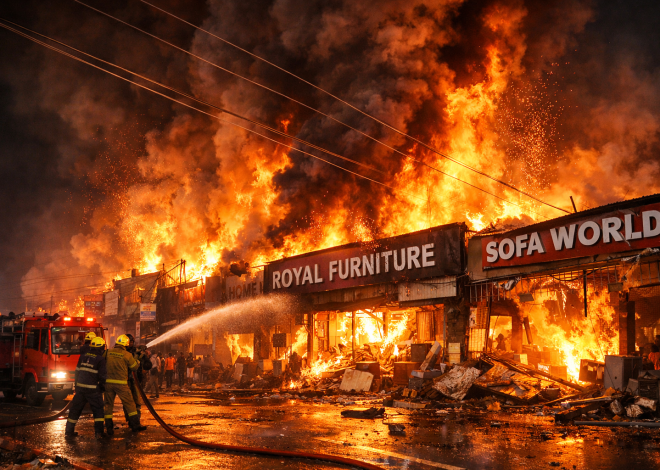
Massive Blaze Guts Furniture Shops in Bachupally, Hyderabad — No Casualties Reported

Global Furniture Industry Roundup — Current Trends, Challenges, and Market Momentum (March 2026)