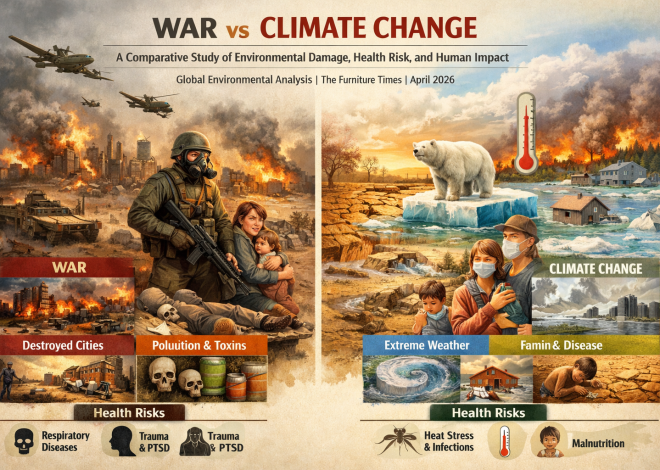
Global Environmental Impact of Modern Wars
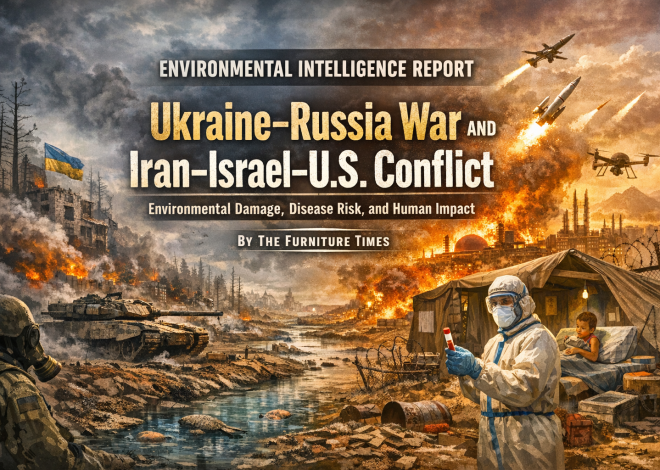
Ukraine–Russia War & Iran–Israel–USA Conflict: A Deep Analysis of Environmental Damage, Disease Risk & Human Impact
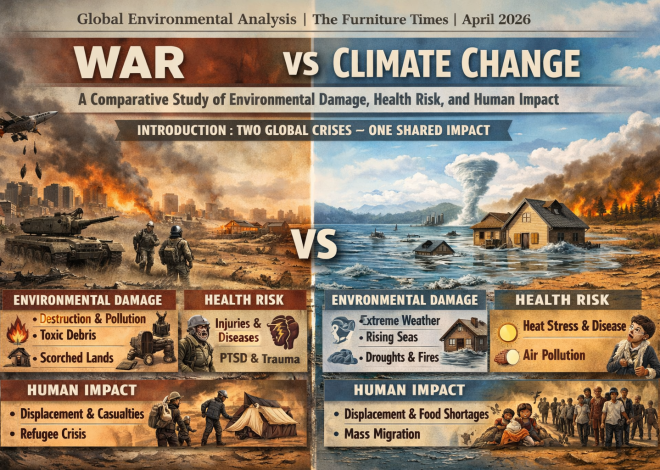
Global Environmental Analysis | The Furniture Times | April 2026
INTRODUCTION: WAR IS NO LONGER JUST HUMAN — IT IS ECOLOGICAL
Modern wars are no longer confined to battlefields.
They are multi-dimensional crises affecting:
- environment
- climate
- public health
- global ecosystems
The ongoing Ukraine–Russia war and the Iran–Israel–USA conflict have created a dual environmental shock, with consequences extending far beyond regional borders.
CORE REALITY:
War today is not just destruction of infrastructure
It is destruction of environmental systems that sustain life
1. ENVIRONMENTAL DAMAGE AT THE SOURCE
1. Air Pollution & Toxic Emissions
Both conflicts have caused:
- burning fuel depots
- industrial explosions
- chemical releases
Result:
- toxic gases released into the atmosphere
- particulate pollution spreading across regions
War zones become high-risk air quality zones
2. Water Contamination
Ukraine–Russia War:
- damage to dams and water systems
- industrial chemical leakage
Middle East Conflict:
- oil-related risks
- potential marine pollution in key waterways
Impact:
Contaminated water =
✔ unsafe drinking water
✔ ecosystem destruction
3. Land & Soil Degradation
- military operations damage agricultural land
- explosives contaminate soil
Result:
- reduced crop production
- long-term land unusability
4. Marine Ecosystem Threat
- oil spills
- disrupted shipping
- naval conflict risks
Marine biodiversity faces long-term damage
2. GLOBAL ENVIRONMENTAL SPILLOVER
War does not stay local.
GLOBAL IMPACT:
1. Increased Fossil Fuel Dependency
- oil supply shocks
- shift back to fossil fuels
Slows climate progress
2. Shipping Route Disruption
- rerouted ships
- longer routes
Higher emissions globally
3. Climate Impact Acceleration
War increases:
- carbon emissions
- energy consumption
Global warming risk intensifies
3. DISEASE & HEALTH IMPACT
THIS IS THE MOST CRITICAL HUMAN IMPACT
1. Airborne Diseases
Pollution leads to:
- respiratory illness
- asthma
- lung disease
2. Waterborne Diseases
Contaminated water increases:
- cholera
- dysentery
- infections
3. Epidemic Risks in Conflict Zones
War conditions create:
- overcrowded camps
- poor sanitation
- weak healthcare
Perfect environment for disease outbreaks
4. Mental Health Crisis
War leads to:
- trauma
- stress
- anxiety
Long-term psychological impact
4. HUMAN LIFE IMPACT
DIRECT IMPACT:
- displacement of millions
- destruction of homes
- loss of livelihoods
INDIRECT IMPACT:
Food Insecurity
- disrupted agriculture
- supply chain breakdown
Economic Pressure
- inflation
- job losses
Healthcare Collapse
- damaged infrastructure
- limited access
Result:
- multi-layered humanitarian crisis
5. REGIONAL vs GLOBAL IMPACT
🇺🇦 Ukraine–Russia War
Regional:
- land destruction
- water contamination
- infrastructure damage
Global:
- food supply disruption
- energy crisis
Iran–Israel–USA Conflict
Regional:
- risk to oil routes
- environmental pollution
Global:
- energy shock
- logistics disruption
- emission increase
6. THE WORST LONG-TERM IMPACT
ENVIRONMENTAL DAMAGE IS NOT TEMPORARY
Effects last:
- years
- decades
- generations
KEY RISKS:
1. Permanent Ecosystem Damage
2. Long-Term Health Issues
3. Climate Setbacks
4. Food Security Crisis
7. THE GLOBAL WAKE-UP CALL
WHAT THIS MEANS:
War is now a:
- climate issue
- health issue
- economic issue
NECESSARY SHIFT:
Governments:
- stronger environmental protection
Businesses:
- sustainable supply chains
Global Systems:
- crisis response integration
FINAL INSIGHT
Modern war is no longer just about territory— It is about the survival of environmental systems that sustain humanity
“Wars may end on battlefields—but their damage continues in the air we breathe, the water we drink, and the lives we try to rebuild.” by Dr. Bilal Aahmad Bhat