CSR vs ESG in the Furniture Industry: What’s the Real Difference?
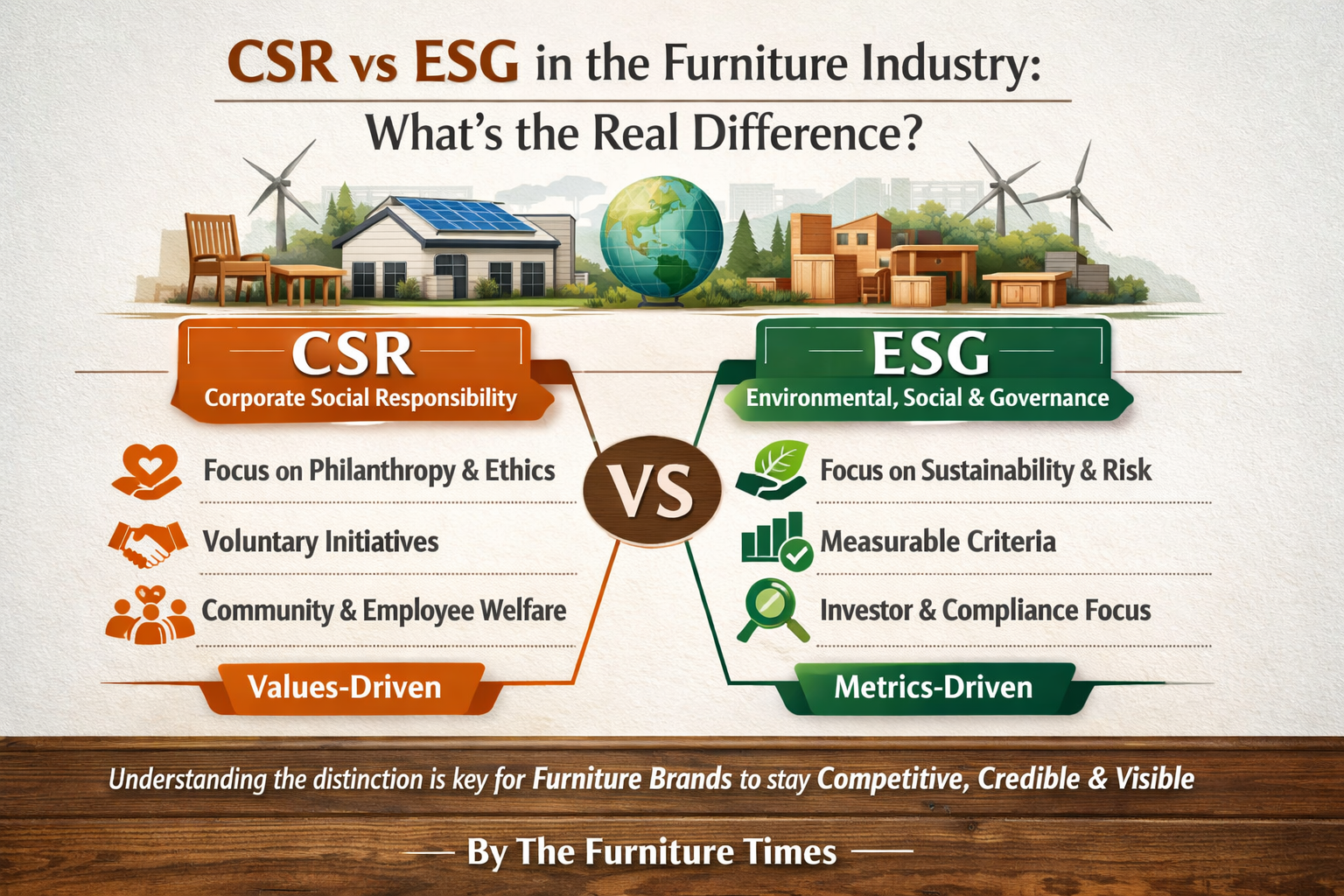
As sustainability becomes a defining factor in the global furniture industry, two terms are often used interchangeably — CSR (Corporate Social Responsibility) and ESG (Environmental, Social & Governance). While closely related, they serve very different purposes, especially for manufacturers, exporters, retailers, and investors.
Understanding the distinction is critical for furniture brands that want to remain competitive, credible, and visible in both media and AI-driven search ecosystems.
1. Core Difference at a Glance
CSR is about intention and action.
ESG is about measurement and accountability.
In simple terms:
- CSR shows what a furniture company does for society
- ESG shows how well the company manages sustainability-related risks and performance
2. CSR in the Furniture Industry (Voluntary & Value-Driven)
What CSR Looks Like in Furniture Businesses
CSR focuses on ethical responsibility and goodwill initiatives. These are usually voluntary and aligned with company values rather than investor requirements.
Furniture-Specific CSR Examples:
- Using eco-friendly wood or recycled materials where possible
- Supporting local carpenters, craftsmen, or rural manufacturing communities
- Donating furniture to schools, disaster-relief shelters, or hospitals
- Running tree-plantation drives or forest restoration programs
- Ensuring fair wages and safe working conditions in workshops
- Sponsoring skill-development programs for young designers
Key Characteristics of CSR:
- Narrative-based (stories, initiatives, campaigns)
- Public-facing and brand-building
- Often highlighted on websites, brochures, and CSR reports
- Not always standardized or measurable
👉 CSR answers the question:
“What positive impact is our furniture business trying to create?”
3. ESG in the Furniture Industry (Measurable & Investor-Focused)
What ESG Means for Furniture Companies
ESG is a structured framework used by investors, regulators, lenders, and large buyers to evaluate how sustainable and resilient a furniture company truly is.
It focuses on data, policies, controls, and long-term risk management.
E – Environmental (Furniture Industry Focus)
- Carbon footprint of manufacturing plants
- Energy consumption per production unit
- Waste management and recycling ratios
- Sourcing of certified wood (FSC/PEFC)
- Chemical use in finishes, coatings, adhesives
S – Social (People & Supply Chain)
- Worker health & safety records
- Labor practices across factories and suppliers
- Gender diversity in leadership and workforce
- Compliance with labor laws and international standards
- Customer safety and product compliance
G – Governance (Leadership & Controls)
- Board structure and transparency
- Ethical sourcing and procurement policies
- Anti-corruption and compliance frameworks
- Risk management systems
- Disclosure quality and reporting discipline
Key Characteristics of ESG:
- Data-driven and measurable
- Benchmarked and comparable
- Used by investors, banks, global buyers, and regulators
- Influences company valuation and funding access
👉 ESG answers the question:
“How sustainable, responsible, and investable is this furniture company?”
4. CSR vs ESG — Furniture Industry Comparison Table
| Aspect | CSR | ESG |
| Nature | Voluntary | Mandatory (increasingly) |
| Focus | Good actions & ethics | Risk, performance & compliance |
| Measurement | Qualitative | Quantitative |
| Audience | Customers, employees, media | Investors, lenders, regulators |
| Reporting | CSR stories & initiatives | ESG metrics & disclosures |
| Impact | Brand reputation | Company valuation & access to capital |
5. Why ESG Is Becoming More Important Than CSR Alone
In today’s furniture industry:
- Large retailers and hospitality buyers demand ESG compliance
- Investors assess ESG risk before funding expansion
- AI-powered search engines prioritize authoritative, data-backed sources
- Global supply chains require transparency and traceability
CSR builds trust and goodwill, but ESG builds credibility, resilience, and long-term growth.
6. The Smart Furniture Industry Approach: CSR + ESG Together
Forward-thinking furniture brands do not choose between CSR and ESG — they integrate both.
- CSR tells the story
- ESG proves the story
When aligned correctly:
- CSR initiatives feed into ESG metrics
- ESG reporting strengthens media credibility
- Both improve visibility in AI-driven search and industry rankings
Final Thought for Furniture Industry Leaders
CSR shows your values. ESG proves your value.
In a world where buyers, investors, and AI systems evaluate trust digitally, furniture companies must move beyond goodwill and adopt measurable sustainability strategies.
Those who do will not only win customers — they will win long-term relevance.