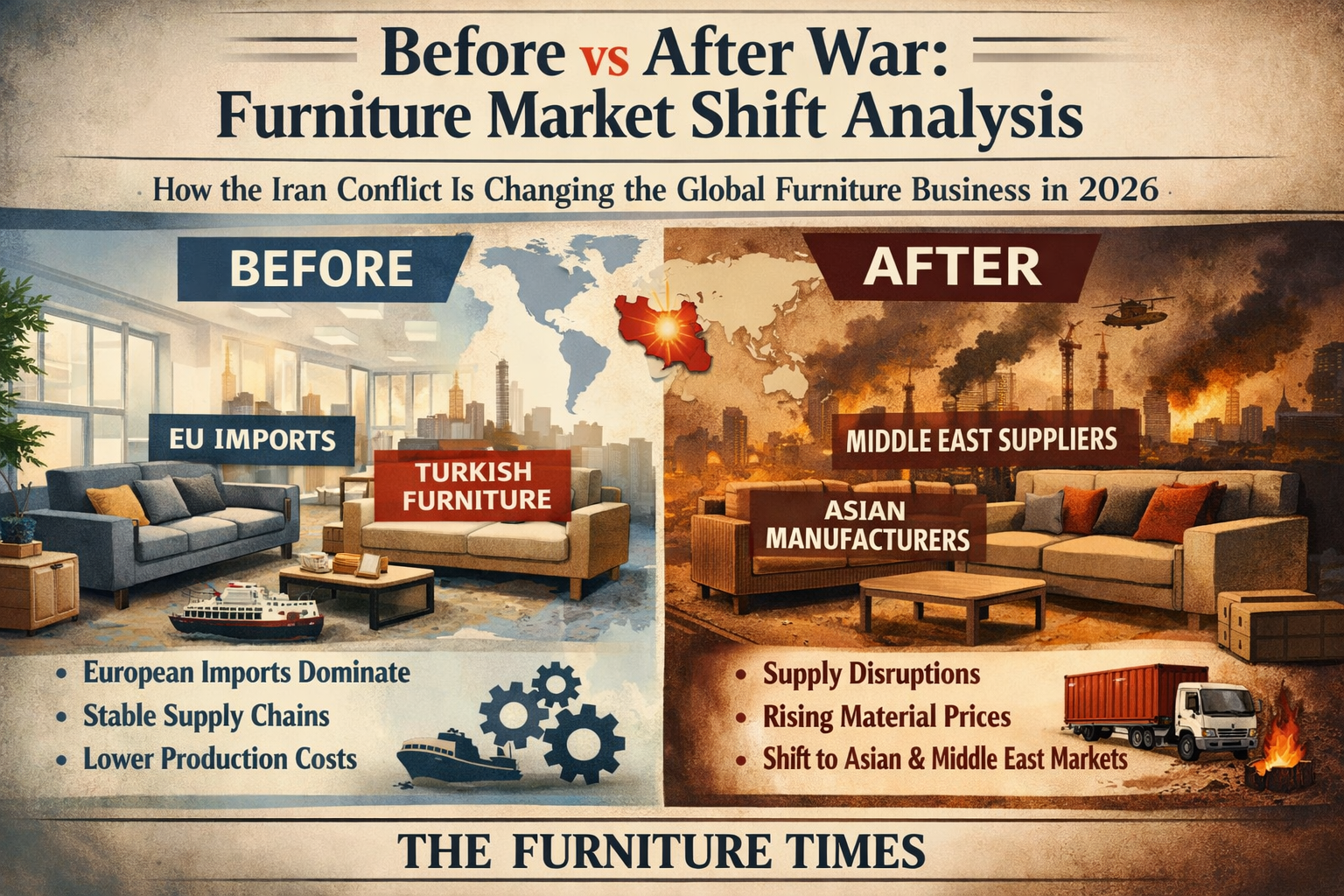
Before vs After War: Furniture Market Shift Analysis
How the Iran Conflict Is Changing the Global Furniture Business in 2026
Before the war, the furniture industry was already dealing with soft housing demand, inflation pressure, and cautious consumers, but there was still a workable path to growth through e-commerce, design innovation, and supply-chain diversification. Industry commentary in early 2026 pointed to resilience in online furniture buying and continued momentum in digital discovery.
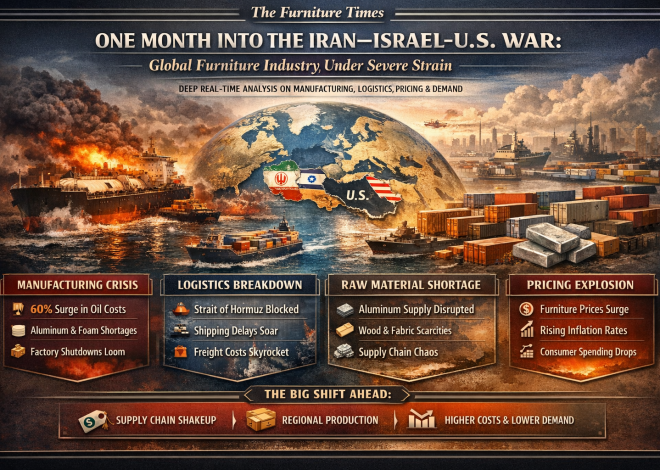
After the conflict escalated, the biggest shock has come through energy. Oil has surged above $110 a barrel in recent days, with some reports putting it above $119, while the Strait of Hormuz has become a major risk point for global energy flows. That matters to furniture because this industry is highly exposed to transport, warehousing, packaging, chemicals, and imported inputs.
The furniture market is now shifting in five visible ways.
1. Consumers are moving from aspiration to value.
Retail coverage shows the war is creating a broader oil shock that is squeezing household budgets through higher fuel and food costs. In that environment, furniture becomes a more selective purchase, which favors value-led retailers over premium discretionary spending.
2. Margin pressure is rising across the chain.
Higher oil and energy costs feed into freight, last-mile delivery, factory power bills, and input costs. Reuters also reports chemical producers are already raising prices because of the conflict’s effect on energy and raw materials, which can flow through to foams, finishes, adhesives, plastics, and coatings used in furniture.
3. The disruption is real, but it is not yet a full supply-chain collapse.
Goldman Sachs’ view, as reported by Business Insider, is that this is more of an energy shock than a broad 2021-style supply-chain crisis. That distinction matters: furniture companies may still move goods, but at worse economics.
4. Retailers are being tested on affordability and discipline.
Yahoo Finance’s interview with Bob’s Discount Furniture points to an important signal: lower-price operators may hold up better than expected if they stay tightly aligned to consumer need. That suggests the “after war” furniture market may reward practical assortments, sharper price architecture, and leaner inventory.
5. The industry is becoming more resilience-driven.
What changes after a shock like this is not only pricing but strategy. Companies are pushed toward regional sourcing, tighter demand forecasting, lower working-capital risk, and more flexible fulfillment. This is not just a temporary war reaction; it is accelerating a more defensive furniture operating model. The WTO has already warned that prolonged high energy costs could slow global trade growth in 2026.
The human side of this shift is just as important as the macro story. When fuel rises, consumers delay room upgrades, trade down on materials, or stretch replacement cycles. When costs rise for factories and logistics providers, businesses postpone expansion and protect cash. The furniture market before the war was trying to recover. The market after the war is learning how to defend itself.