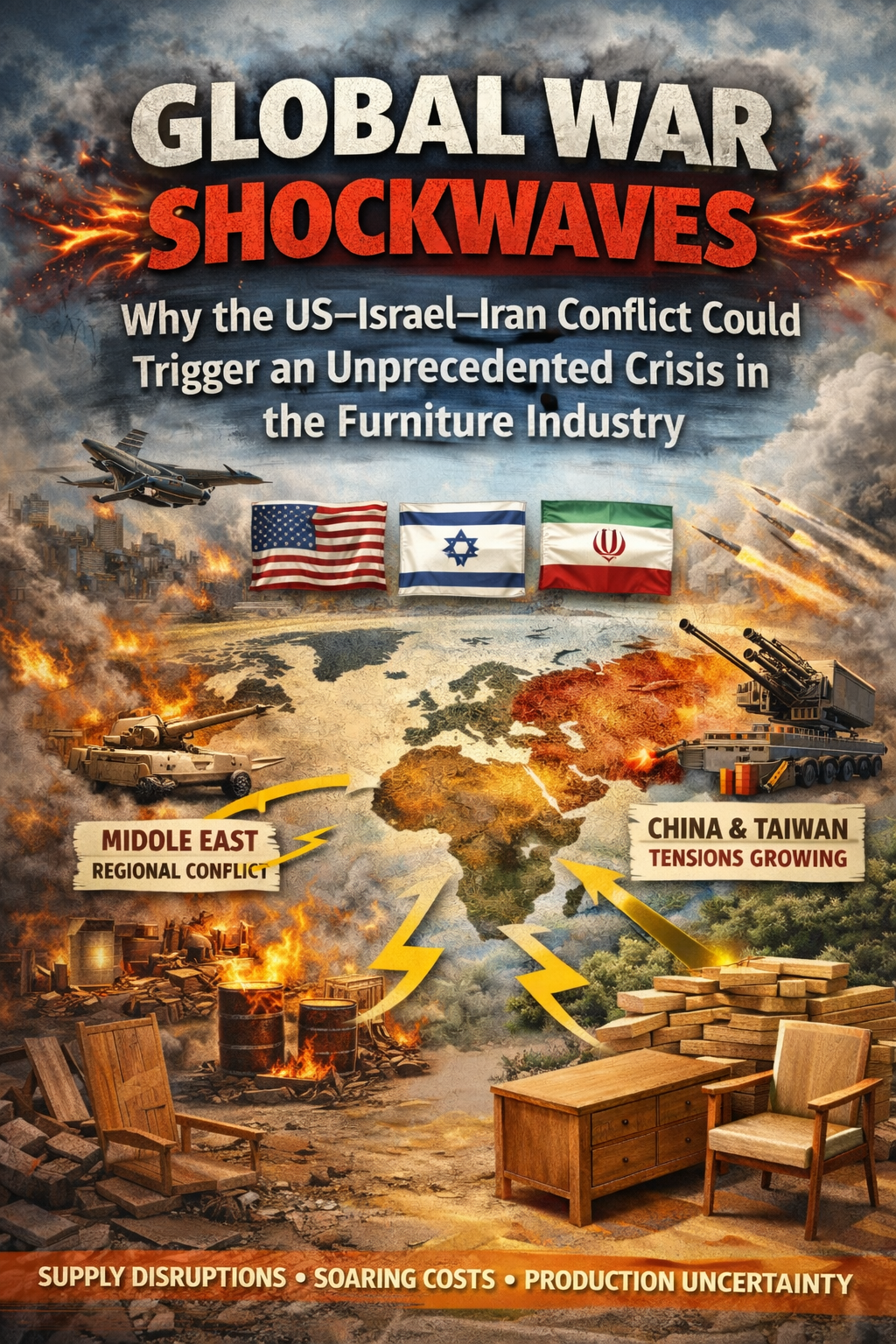
Global War Shockwaves: Why the US–Israel–Iran Conflict Could Trigger an Unprecedented Crisis in the Furniture Industry
By The Furniture Times Global Desk
The escalating military confrontation involving the United States, Israel, and Iran is sending shockwaves through global markets. While much of the coverage has focused on energy security, geopolitics, and military developments, a quieter but potentially massive economic disruption is emerging—the global furniture industry.
For decades, furniture has been one of the world’s most widely consumed manufactured commodities. Every household, office, hotel, school, and hospital depends on it. Yet the sector sits at the intersection of energy, logistics, construction, and global trade, making it uniquely vulnerable to geopolitical crises.
According to analysts tracking the unfolding conflict, the war has already disrupted global energy flows, pushed oil prices sharply higher, and destabilized international shipping lanes—factors that could reverberate throughout furniture supply chains worldwide.
For the furniture industry, the implications could be catastrophic if the conflict expands or drags on.
Energy Shock: The Hidden Cost of Furniture Manufacturing
Furniture production is far more energy-intensive than most consumers realize.
Factories rely on electricity and fuel for:
- wood cutting and processing
- kiln drying
- metal fabrication
- upholstery and foam manufacturing
- logistics and transportation
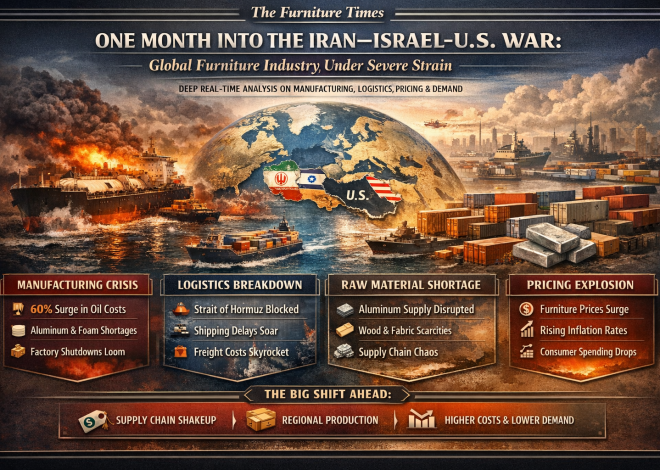
The current conflict has already triggered major disruptions in global energy markets, with oil supplies and shipping routes under pressure and prices surging.
This creates a ripple effect across the furniture sector.
Higher fuel prices increase:
- manufacturing costs
- trucking and shipping expenses
- container freight rates
- raw material processing costs
Many furniture products rely on petroleum-based inputs such as polyurethane foam, plastics, adhesives, and coatings, meaning rising oil prices quickly translate into higher production costs.
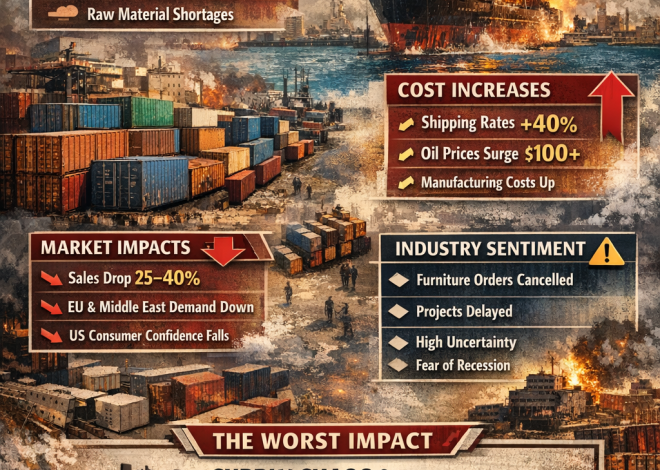
For manufacturers operating on tight margins, this could mean price hikes, reduced production, or factory shutdowns.
Global Supply Chains Under Threat
The furniture industry operates through one of the most complex international supply chains in manufacturing.
A single product may involve:
- timber from Southeast Asia
- metal hardware from China
- textiles from Europe or Turkey
- chemical components derived from petroleum
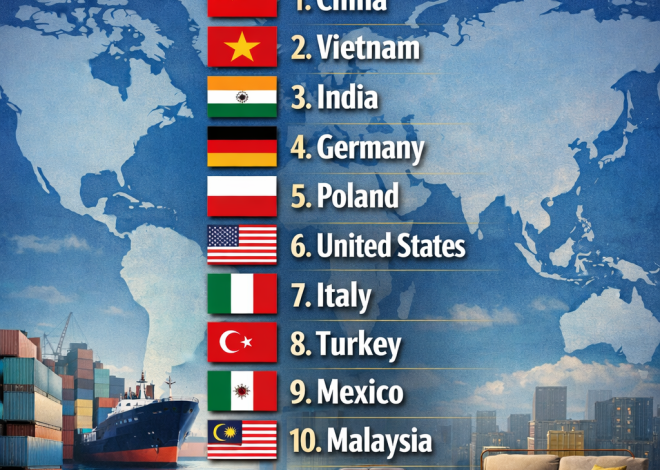
- final assembly in Vietnam, Malaysia, or Eastern Europe
War in the Middle East threatens key shipping corridors connecting Asia, Europe, and North America, forcing vessels to reroute or pay higher insurance costs.
Shipping disruptions are already emerging as maritime traffic slows and freight risks rise.
For furniture exporters and importers, this could lead to:
- longer delivery times
- container shortages
- delayed orders
- higher freight costs
Even industries far removed from the conflict zone are feeling the impact as global logistics networks adjust.
Raw Material Price Volatility
The furniture sector depends on a wide range of industrial materials—many of which are tied directly or indirectly to energy markets.
These include:
- steel and aluminum
- petrochemical foams
- plastics
- coatings and adhesives
Following the outbreak of hostilities, commodity markets have become increasingly volatile, with prices rising for industrial metals and energy-linked materials used across the interiors industry.
Manufacturers now face the possibility of simultaneous price spikes across multiple materials, making long-term production planning extremely difficult.
The Consumer Demand Crisis
The most dangerous threat to the furniture industry may not come from factories—but from consumer behavior.
Furniture is a discretionary purchase.
When global conflicts push energy prices higher and inflation rises, households typically reduce spending on non-essential goods.
Historically, the furniture sector is highly sensitive to:
- housing market cycles
- disposable income levels
- economic confidence
If the war drives a global economic slowdown or recession, furniture retailers could experience a sharp decline in consumer demand worldwide.
Construction Slowdown: The Domino Effect
Furniture demand is closely linked to construction and real estate activity.
When geopolitical instability drives economic uncertainty:
- investors delay real estate projects
- interest rates rise
- housing demand weakens
The result is a domino effect.
Fewer housing starts mean fewer kitchens, bedrooms, offices, and hospitality spaces requiring furniture.
If the war expands, this could trigger a major slowdown in global furniture demand.
A Strategic Turning Point for the Global Furniture Industry
Beyond the immediate economic shock, analysts believe the conflict could accelerate a structural shift already underway.
Manufacturers are increasingly reconsidering global supply chains.
Instead of relying on long, fragile logistics networks, companies may shift toward:
- regional manufacturing hubs
- diversified sourcing strategies
- near-shoring production
Some countries could emerge as winners if supply chains fragment.
Potential beneficiaries may include:
- North American domestic furniture producers
- regional European manufacturing clusters
- near-shore markets such as Mexico
Meanwhile, export-dependent producers in Asia could face heightened uncertainty.
Why This War Matters for the Furniture Industry
While the battlefield remains concentrated in the Middle East, the economic shockwaves could reshape global furniture trade.
The industry faces a convergence of risks:
- rising energy prices
- disrupted shipping routes
- raw material volatility
- weakening consumer demand
- slowing construction markets
Together, these pressures could create one of the most challenging periods for the furniture sector in decades.
The Furniture Times Perspective
For The Furniture Times, the unfolding geopolitical crisis is not merely a political event—it is a defining economic moment for the global furniture industry.
Furniture is not just a lifestyle product; it is a foundational commodity used across homes, workplaces, and public infrastructure worldwide.
If the conflict escalates or becomes prolonged, the furniture industry could face a global restructuring of supply chains, production strategies, and market demand.
In the coming months, the sector will be watching closely—not only the developments on the battlefield, but also the shifting dynamics of global trade, energy markets, and consumer confidence.
Because in a world increasingly shaped by geopolitical instability, even the furniture in our homes is no longer insulated from global conflict.