How Geopolitical Conflict Is Reshaping the Furniture Industry
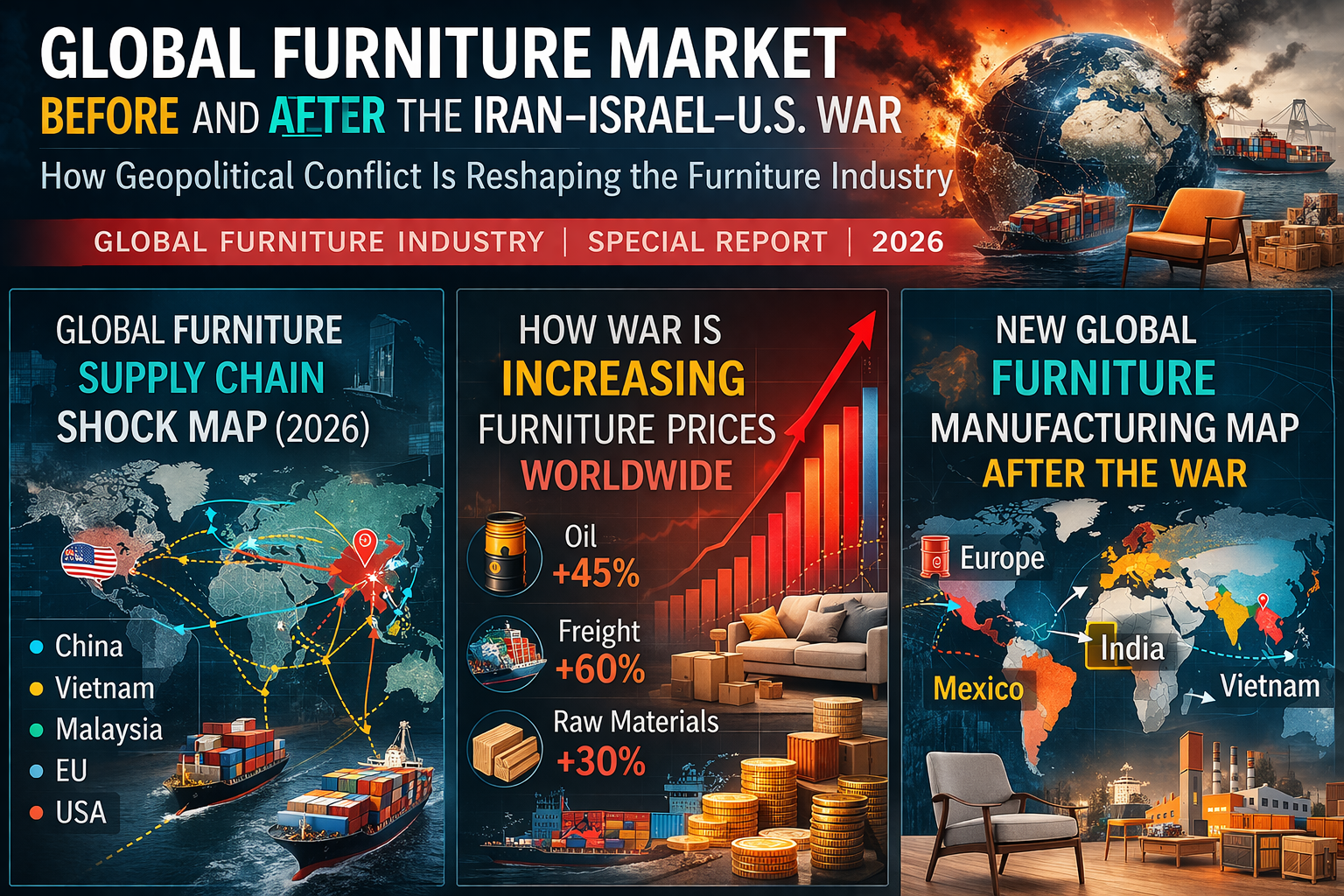
Global Furniture Market Before and After the Iran–Israel–U.S. War
Global Furniture Industry | Special Report | 2026
The global furniture industry, valued in the hundreds of billions of dollars, depends heavily on stable international trade, affordable raw materials, and efficient logistics networks. However, the recent escalation of conflict involving Iran, Israel, and the United States has introduced significant uncertainty across global markets.
While the war is primarily geopolitical, its economic ripple effects are already reaching industries far beyond the Middle East—including furniture manufacturing, logistics, and retail.
This report examines how the global furniture market looked before the conflict and how it is beginning to change as geopolitical tensions reshape supply chains and costs.
The Global Furniture Market Before the Conflict
Before the escalation of military tensions in early 2026, the furniture industry was experiencing steady recovery and growth after pandemic-era supply chain disruptions.
Market Stability and Growth
The global furniture market was estimated to exceed $700–800 billion annually, with projections suggesting it could approach $1 trillion within the next decade. Growth was driven by:
- expanding urban populations
- rising middle-class spending
- booming e-commerce furniture platforms
- strong hospitality and real estate sectors
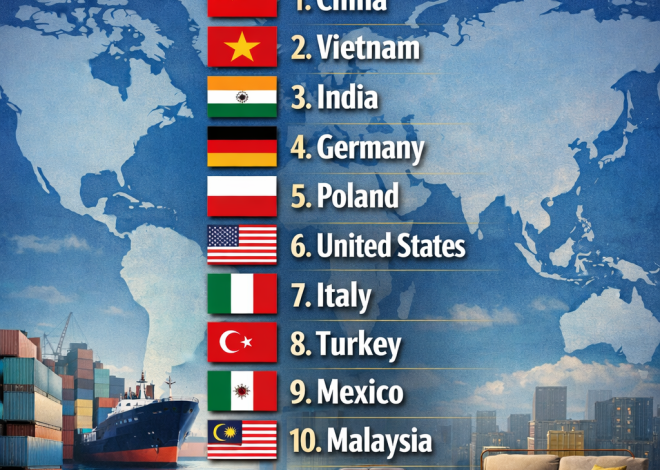
Asia, particularly China, Vietnam, and Malaysia, remained the backbone of global furniture manufacturing.
Stable Global Trade Routes
Before the war, international logistics routes connecting Asia, Europe, and North America were relatively stable. The Strait of Hormuz and the Red Sea shipping corridors were critical for transporting energy, raw materials, and manufactured goods.
Furniture companies relied on these routes for:
- timber and raw material supply
- container shipping between Asia and Europe
- global distribution of finished products
The War Shock: Immediate Impact on Global Trade
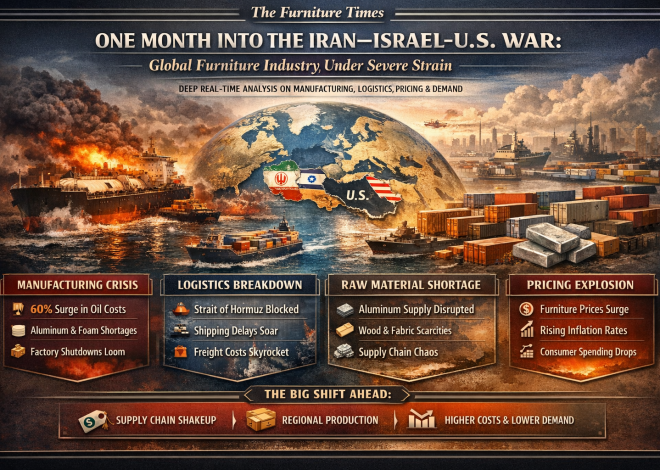
The escalation of conflict between Iran, Israel, and the United States has disrupted critical trade routes and increased uncertainty across global markets.
Global shipping and air cargo networks have already experienced disruptions as attacks and military operations affected transportation routes across the Middle East.
Some shipping companies have begun rerouting vessels away from the region, while airlines have canceled flights across affected airspace.
These disruptions have direct consequences for industries with complex international supply chains—including furniture.
Rising Energy Costs and Manufacturing Pressure
One of the most immediate effects of the conflict has been rising energy prices.
Energy analysts warn that prolonged conflict could lead to severe disruptions in oil supply, particularly around the Strait of Hormuz, one of the world’s most important shipping chokepoints.
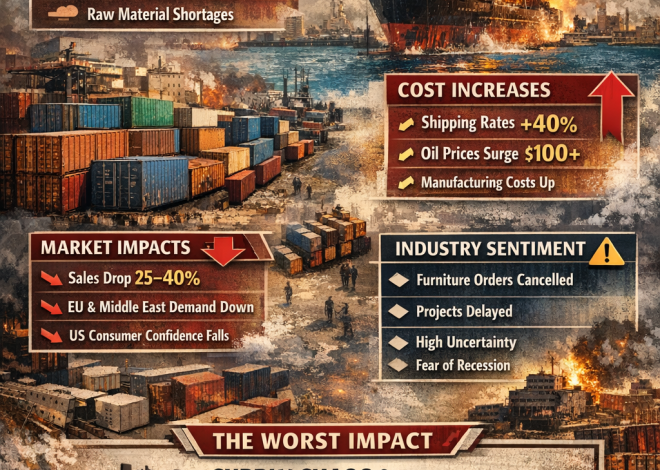
For furniture manufacturers, higher oil prices translate into:
- increased factory energy costs
- higher transportation expenses
- rising container shipping rates
Shipping insurance and fuel costs have already increased due to heightened risk in key shipping lanes.
Raw Material Disruptions Affect Furniture Production
Furniture production depends on a wide range of materials including metals, plastics, fabrics, and chemicals.
The conflict has begun disrupting global supplies of certain industrial materials. For example, shortages in aluminum shipments from Middle Eastern producers have pushed prices higher for products that rely on metal components.
Many furniture products—from office desks to outdoor furniture—depend on aluminum and steel frames.
In addition, disruptions to global chemical supply chains, including sulfur used in industrial processes, have already driven price spikes.
These cost increases could eventually push furniture manufacturing costs higher worldwide.
Logistics Delays and Furniture Supply Chains
Furniture supply chains are complex and often global.
A typical furniture product might involve:
- wood from Southeast Asia
- fabrics from Europe
- manufacturing in China or Vietnam
- retail sales in North America or Europe
However, logistics disruptions caused by the conflict are slowing global freight movement.
Companies have reported port disruptions, cargo delays, and flight cancellations affecting furniture shipments.
Shipping detours around conflict zones can add 10–14 days to delivery times, increasing transportation costs and inventory pressure.
Global Trade Uncertainty and Inflation Risks
The broader economic effects of the conflict may also influence consumer spending.
Economists warn that rising oil prices, higher logistics costs, and supply chain disruptions could contribute to global inflation and economic instability.
For the furniture industry, this may lead to:
- higher retail furniture prices
- slower housing market growth
- reduced discretionary spending on home furnishings
These factors could weaken demand in some markets while increasing costs for manufacturers.
How Furniture Companies Are Responding
Despite the challenges, many companies are adapting quickly.
Some strategies include:
Supply Chain Diversification
Companies are expanding sourcing beyond traditional regions to reduce geopolitical risk.
Inventory Buffering
Manufacturers are increasing inventory levels to avoid supply interruptions.
Alternative Shipping Routes
Logistics companies are exploring alternative shipping routes to bypass conflict zones.
Digital Supply Chain Management
Technology tools are helping companies track disruptions and adjust production planning.
The Long-Term Outlook for the Furniture Industry
While geopolitical tensions may disrupt markets in the short term, analysts believe the global furniture industry will continue evolving.
Several trends are likely to shape the next phase of growth:
- regional manufacturing diversification
- increased automation in factories
- stronger focus on sustainable materials
- expansion of digital furniture retail
Companies that can build resilient supply chains and flexible production networks will be best positioned to navigate geopolitical uncertainty.
A Global Industry Navigating Uncertainty
The furniture industry has historically proven resilient through economic crises, trade disruptions, and technological transformation.
The Iran–Israel–U.S. conflict represents another challenge for a sector that depends on global cooperation and supply chains.
While the long-term impact remains uncertain, one reality is clear: the future furniture market will depend not only on design and craftsmanship but also on geopolitical stability and supply chain resilience.