
Furniture Market Size, Share, Growth & Trends Report 2030: A Glimpse into a Thriving Global Industry
By The Furniture Times Business Desk
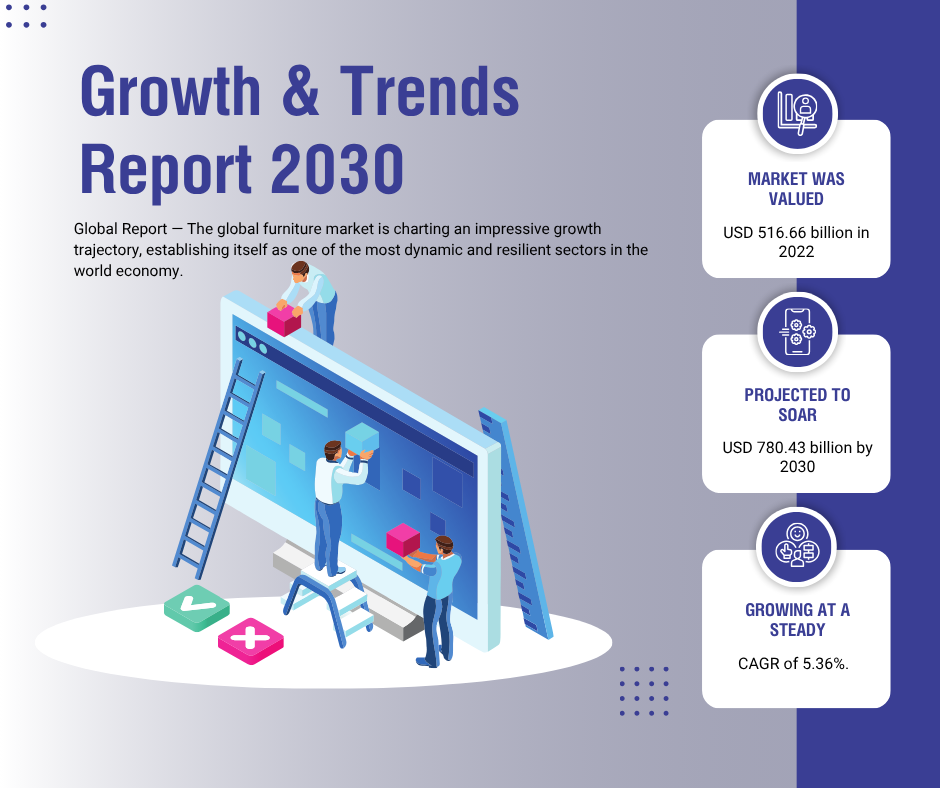
Global Report — The global furniture market is charting an impressive growth trajectory, establishing itself as one of the most dynamic and resilient sectors in the world economy. According to recent industry data, the market was valued at USD 516.66 billion in 2022 and is projected to soar to USD 780.43 billion by 2030, growing at a steady CAGR of 5.36%. This surge underscores the sector’s adaptability, innovative potential, and its critical role in shaping modern living and working environments.
Urbanization and Lifestyle Shifts Drive Growth
The accelerating pace of urbanization remains a major catalyst for the global furniture industry. As more individuals transition to urban centers, the demand for modern housing — and consequently, stylish, space-efficient furniture — continues to rise. Consumers today seek furniture that not only fulfills functional needs but also reflects personal style, aesthetic sensibilities, and sustainability values.
The expansion of e-commerce has also revolutionized access to furniture markets. Digital platforms now enable customers worldwide to explore, compare, and purchase from a vast array of designs and price ranges, creating an interconnected marketplace that transcends borders.
Diverse Market Segments Reflect Global Demand
The furniture industry is as diverse as the consumers it serves. It is broadly categorized by material, type, and application.
- Materials: Wooden furniture leads the market due to its timeless appeal, followed by metal and plastic options that cater to contemporary and affordable segments.
- Types: The sector covers residential, office, and hospitality furniture, each evolving rapidly to meet shifting demands in home, workspace, and leisure environments.
- Applications: Both residential and commercial segments are expanding, with a growing focus on ergonomics, customization, and eco-friendly designs.
Regional Overview: Asia-Pacific Leads the Way
The Asia-Pacific region dominates the global furniture market, powered by industrial expansion and rapid urbanization in China, India, Vietnam, and Indonesia. These nations have become global manufacturing hubs, producing quality furniture at competitive costs while catering to domestic and international markets.
North America and Europe, with their well-established industries, continue to drive innovation through premium designs, sustainability initiatives, and technological integration. Meanwhile, Latin America and Africa are emerging as promising markets, fueled by economic growth, rising disposable incomes, and changing consumer lifestyles.
Sustainability, Smart Design, and Customization: The Key Trends
A new generation of conscious consumers is reshaping the furniture landscape. Sustainability has become a defining theme — from the use of reclaimed wood and biodegradable materials to eco-certified manufacturing processes. Furniture brands are rethinking production to minimize waste and carbon footprints.
Simultaneously, personalization is becoming the norm. Modern consumers want furniture that aligns with their identity and lifestyle — from modular sofas that adapt to small spaces to handcrafted pieces that tell a story.
Technology is also at the forefront of innovation. The rise of smart furniture, featuring built-in IoT (Internet of Things) connectivity — such as wireless charging desks or voice-controlled lighting systems — signals a new era of convenience and sophistication.
Challenges and Emerging Opportunities
Despite its positive outlook, the furniture industry faces headwinds, including volatile raw material prices, logistical challenges, and labor shortages. Yet, these obstacles open doors to new possibilities. The adoption of digital marketing, automation in manufacturing, and strategic global partnerships is helping companies optimize operations and reach untapped markets.
The integration of supply chain technology and AI-driven demand forecasting is also enabling manufacturers to enhance efficiency, reduce costs, and meet consumer expectations faster than ever before.
A Promising Future
As the global furniture market continues to evolve, it reflects broader shifts in how people live, work, and interact with their surroundings. The sector’s growth story is not merely about numbers — it’s about transformation, innovation, and sustainability.
With its combination of artistry, functionality, and technology, the furniture industry stands poised to redefine the spaces we inhabit. From handcrafted masterpieces to intelligent design systems, the furniture market’s journey to USD 780 billion by 2030 represents not just growth, but a global shift toward smarter, greener, and more human-centered living.

Related Posts

Independent Retailers: The Heartbeat of Furniture Design — Showrooms & Designer Stores Shaping Global Trends

Furniture Retailers & Online Stores: Redefining E-commerce and D2C Brands in the Digital Age