
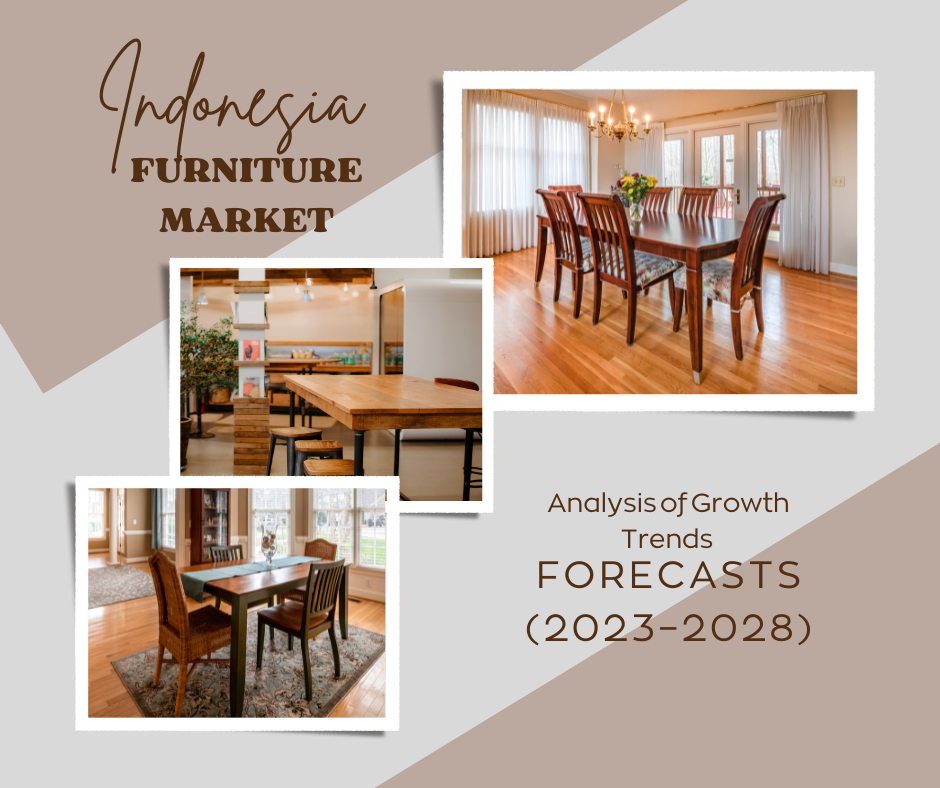
Indonesia Furniture Market: A Comprehensive Analysis of Growth Trends and Forecasts (2023–2028)
By The Furniture Times Research Desk
Jakarta, Indonesia — Indonesia’s furniture industry, long celebrated for its craftsmanship, creativity, and export strength, is now under the spotlight with a new comprehensive analysis revealing key growth patterns, market segmentation, and emerging opportunities. The report, Indonesia Furniture Market: Growth Trends and Forecasts (2023–2028), offers a detailed examination of the nation’s thriving furniture sector, focusing on materials, applications, and distribution dynamics shaping its evolution.
A Market Rooted in Craftsmanship and Innovation
Indonesia’s furniture industry has earned a global reputation for its rich heritage and artisanal excellence. Today, that tradition is being enhanced by innovation and modern market strategies. The report highlights how the country’s manufacturers — from Jepara’s woodcarving artisans to contemporary producers across Java and Bali — are combining craftsmanship with technology to meet domestic and international demand.
Material Composition: Wood Dominates, but Alternatives Rise
The study reveals that wood continues to dominate Indonesia’s furniture production, prized for its strength, sustainability, and timeless aesthetic. Teak, mahogany, and rattan remain staples in both export and domestic markets. However, metal and plastic furniture are rapidly gaining traction, driven by affordability and modern design trends suited for urban living.
The emergence of “other materials”, including eco-friendly composites and recycled elements, demonstrates the industry’s shift toward sustainability and innovation — an increasingly vital factor in global furniture competitiveness.
Diverse Applications: From Homes to Hospitality
The report segments the market into home, office, hospitality, and other furniture categories, each witnessing distinct growth drivers.
- Home furniture remains the largest segment, fueled by rising middle-class incomes, expanding housing development, and changing lifestyle preferences.
- Office furniture demand is rising as companies prioritize ergonomic designs and hybrid work solutions.
- Hospitality furniture continues to thrive, propelled by Indonesia’s booming tourism and hospitality sectors.
Meanwhile, niche categories under “other furniture” — including outdoor, institutional, and bespoke pieces — are emerging as new opportunities for targeted innovation.
Distribution Channels: A Changing Retail Landscape
The analysis identifies significant shifts in how Indonesian consumers buy furniture.
- Supermarkets and department stores continue to offer convenience and visibility for mass-market products.
- Specialty stores retain loyal clientele seeking customization and premium service.
- Online platforms, however, are transforming the industry, bringing accessibility, competitive pricing, and digital marketing into focus.
- Other distribution channels, such as trade fairs and interior design collaborations, remain vital for business-to-business networking and export growth.
Market Forecasts: Strong Growth Ahead
The report provides robust financial insights, projecting steady growth through 2028, with total market valuation expected to rise significantly in the coming years. Using detailed USD billion forecasts based on historical trends and current demand, the analysis positions Indonesia as one of the most promising furniture markets in the Asia-Pacific region.
Strategic Takeaways for Stakeholders
Armed with these findings, manufacturers can align production with high-demand materials and applications, while retailers can refine inventory and channel strategies to maximize reach. Investors and entrepreneurs can identify untapped niches in sustainable, customizable, and export-ready furniture lines.
The report emphasizes that success will hinge on innovation, efficiency, and adaptability — particularly in leveraging digital platforms and adopting sustainable practices.
Conclusion: Navigating a Promising Future
Indonesia’s furniture industry stands at a pivotal moment — where tradition meets transformation. This detailed market report from The Furniture Times provides not just statistical insights but a strategic roadmap for those ready to invest, innovate, and expand.
As global demand for quality, sustainable, and design-forward furniture continues to rise, Indonesia’s position as a key manufacturing hub remains unshakable. For stakeholders equipped with knowledge and vision, the next five years promise not only growth but leadership in one of the world’s most vibrant furniture markets.

Related Posts
Independent Retailers: The Heartbeat of Furniture Design — Showrooms & Designer Stores Shaping Global Trends

Furniture Retailers & Online Stores: Redefining E-commerce and D2C Brands in the Digital Age